DIY Freeze Dryer: A Home Guide to Freeze-Drying Food
Learn how to build a DIY freeze dryer at home with practical steps, safety tips, and maintenance guidance for safer, efficient food preservation.


You can build a DIY freeze dryer at home by combining a vacuum chamber, a reliable vacuum pump, and a controlled cold stage. You’ll pre-freeze foods, then sublimate moisture under reduced pressure with careful temperature management and drying cycles. Safety, seals, and initial testing are essential for consistent results. Expect a multi-step build and iterative testing.
What is a DIY Freeze Dryer?
A DIY freeze dryer is a home-built setup that uses vacuum and low temperatures to remove water from foods and other materials through sublimation. In practice, it combines three core ideas: pre-freezing the product to below its freezing point, reducing atmospheric pressure inside a sealed chamber, and controlled heat application to drive sublimation without melting the product. For hobbyists, the goal isn't to match commercial systems exactly, but to achieve stable product quality with reasonable energy use and predictable cycles. The term DIY freeze dryer covers a spectrum of builds—from repurposing a laboratory desiccator with a vacuum pump to assembling a stainless steel chamber with a dedicated cold stage. The underlying principle is the same: you convert ice directly to vapor without passing through a liquid phase. The Easy DryVent team notes that success hinges on achieving sufficient vacuum, maintaining safe cold temperatures, and preventing condensation on critical surfaces. With careful planning, a household system can preserve fruits, vegetables, herbs, and some prepared meals. The key is to manage expectations: home builds typically require slower cycles and more manual monitoring than industrial units, but they can be effective for small batches and experimental drying.
How the process works: freeze, vacuum, and sublimation
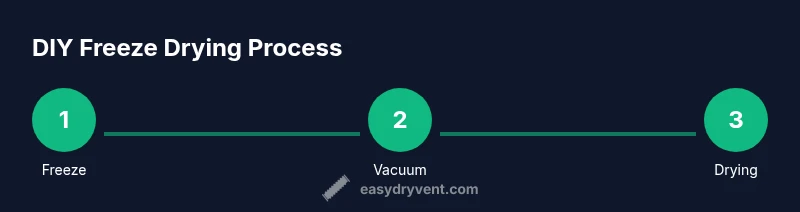
At the heart of any freeze-drying project is the transition of water from ice directly into vapor, bypassing the liquid phase. In a DIY setup, you begin by selecting a product and pre-freezing it to well below its freezing point, typically in a dedicated freezer. This step forms rigid ice crystals and protects the structure of more delicate foods, which helps preserve texture later in the process. Next, place the frozen product inside a sealed chamber connected to a vacuum pump. Lower the ambient pressure inside the chamber to a level where sublimation becomes efficient; the exact target depends on the system but the principle is the same: reduce pressure to enable ice to sublimate at moderate temperatures. During the primary drying stage, heat is applied gently to encourage moisture migration from the interior to the surface, where it can escape as vapor. A secondary drying phase removes bound water by slightly increasing temperature while maintaining low pressure. For safety and effectiveness, monitor both temperature and vacuum continuously, using data logging where possible. DIY enthusiasts often stage cycles with small batches to tune parameters—too much heat or too little vacuum can cause shrinkage, case hardening, or flavor loss. The big payoff is a lightweight, shelf-stable product that rehydrates with minimal texture loss when stored properly.
Safety considerations and risk management
Safety is non-negotiable when building and operating a DIY freeze dryer. Working with low-pressure systems and cold surfaces can pose several risks, including implosion of weak chambers, frostbite from icy surfaces, and electrical hazards from improvised wiring. Always plan a dedicated, non-portable workspace with good ventilation and a grounded power supply. Use only food-grade materials where the product contacts surfaces, and seal joints with appropriate gaskets designed for vacuum use. If you must vent, ensure you have a safe exhaust path that does not create frost or moisture buildup in living spaces. A vacuum pump can run hot; provide clearance and proper cooling to avoid overheating. In addition, protect yourself and others by wearing insulated gloves, eye protection, and hearing protection if you’re running noisy vacuum equipment. Finally, study local regulations regarding home experiments with pressurized or cryo-like equipment, and never attempt to seal a chamber that shows signs of structural weakness. Always perform a first test cycle with inert, non-food targets to verify seals and vacuum integrity before loading edible items.
Design options and scalability
DIY freeze dryer designs fall on a spectrum from small desiccator-based rigs to larger custom chambers. A desiccator approach uses a standard laboratory or cosmetic desiccator connected to a vacuum pump; it’s compact, affordable, and forgiving for beginners, but limited in capacity and cooling versatility. For bigger yields, builders repurpose a stainless steel chamber or construct a compact homeroom-size cabinet with proper insulation. The key design choices are sealing reliability, thermal management, and vacuum handling. Insulation reduces heat gain during drying and helps maintain stable temperatures on the product surface. A robust thermal stage—such as a refrigerated coil or a cooled shelf—can improve cycle efficiency by keeping the product cold during the sublimation stage. When planning, consider the type of foods you want to preserve, since moisture content and density affect drying rates. A flexible rack system that allows airflow around items will prevent dense clumps and ensure uniform drying. Finally, consider scalability: starting with a small batch and a common desiccator can be a stepping stone to a larger, more capable system. Always design with safety in mind; if you upgrade to a larger chamber, re-evaluate electrical loads, venting, and vacuum reliability to avoid overloading your home circuits.
Monitoring and control: temperature, pressure, and cycle timing
Effective monitoring is essential to achieve consistent results in a DIY freeze dryer. Use a combination of temperature sensors placed at the product surface and in the chamber, plus a vacuum gauge to monitor the chamber pressure. Data logging with a simple USB or wireless logger helps you observe how cycles evolve over time and identify trends such as gradual pressure rise or surface warming. Start with conservative settings: keep the food around -20°C to -40°C during the primary drying to facilitate sublimation, then shift to a slightly higher temperature for secondary drying while maintaining low pressure. If moisture remains in the product after several cycles, reduce heat during primary drying or add more time in secondary drying. Calibration is key: test a few small batches to refine your cycle parameters before processing larger loads. Visual cues also help: loss of shrinkage or rehydration characteristics can indicate coating damage or uneven drying. Document each run, including batch size, product type, and cycle times, so you can reproduce successful results. Finally, remember that a DIY system may not match the stability of commercial units, and occasional re-balance of seals and gaskets may be necessary to maintain performance.
Food quality, shelf-life, and storage considerations
Qualitatively, you can expect good flavor retention and a lighter texture when drying fruits and herbs with a DIY freezer-dryer approach, though outcomes vary by product. Foods with low moisture content, tight cellular structure, and high sugar content often produce better results, whereas leafy greens and high-water foods can be more challenging. A major advantage of properly freeze-dried foods is their rehydration quality; however, the process can still cause some texture changes, color fading, or surface bloom depending on how evenly a batch is dried. For shelf life, low moisture content and proper packaging—ideally in vacuum-sealed bags or moisture-barrier containers—are critical. Oxygen absorbers can improve long-term stability, but you should avoid repeated opening of storage sachets to minimize moisture ingress. In a DIY project, consider testing a few representative items to establish a baseline: berries versus mushrooms, herbs versus vegetables, and cooked meals versus raw ingredients. Finally, keep in mind that storage conditions matter as much as the product itself: store in a cool, dark, dry place away from heat, humidity, and strong odors to maximize quality and safety.
Maintenance, cleaning, and long-term care
Long-term success hinges on regular maintenance and careful cleaning. After each batch, inspect seals for cracks, lubricants for moving parts, and gaskets for wear. Vacuum lines should be checked for leaks, and the chamber needs occasional conditioning to dry out residual moisture that can freeze in joints. Clean the shelves and surfaces with food-safe cleaners, and avoid harsh chemicals that leave residues. Replace any worn components promptly, especially o-rings and seals that can compromise vacuum integrity. Consider preventive routines: a quarterly check of the vacuum pump’s intake filter, a yearly inspection of electrical connections, and tests of temperature sensors to ensure accuracy. If your system uses a cooling loop, flush the coolant lines as recommended by the supplier and inspect for signs of corrosion or mineral buildup. Documentation helps you stay consistent: mark dates of component changes, cycle counts, and observed product outcomes. Finally, maintain a dedicated storage area for spare components and avoid storing perishables next to your drying equipment to prevent cross-contamination or moisture exposure.
Troubleshooting common issues and failure modes
When a DIY freeze dryer isn’t performing as expected, approach problems methodically. If cycles stall because of insufficient vacuum, re-check seals, inspect the pump for wear, and verify that the chamber is clean and free of moisture. A rising chamber pressure over time often points to leaks around gaskets or connectors. Temperature inconsistencies usually signal a heat source too close to the product or an undersized cooling stage; relocate heaters and adjust cycle timing to give the product more time to sublimate at low temperatures. If moisture remains in the product after several cycles, reduce heat during primary drying or add more time in secondary drying. Calibration is key: test a few small batches to refine your cycle parameters before processing larger loads. Visual cues also help: loss of shrinkage or rehydration characteristics can indicate coating damage or uneven drying. Persistent off-flavors or color changes can indicate oxidation, exposure to air, or microbial growth—reassess packaging integrity and store cycles in a way that reduces oxygen ingress. Finally, if you’re unsure about a safety issue, pause operation and consult trusted sources. Quick fixes can save you time, but safety should always come first, especially with improvised vacuum systems and cooling equipment in a residential setting. Document all changes and test with inert materials before attempting edible items again.
Authority sources and further reading
- FDA: https://www.fda.gov/food-safety
- OSHA: https://www.osha.gov
- USDA extension: https://extension.illinois.edu/
Tools & Materials
- Vacuum chamber (food-grade)(Seal with compatible gasket; aim for a robust lid.)
- Vacuum pump(Prefer oil-free or well-lubricated; ensure compatible fittings.)
- Cooling stage (refrigeration coil or cold plate)(Maintain consistent low temperature; insulation around chamber.)
- Shelves/racks for product(Non-reactive material; allow air flow around items.)
- Temperature and vacuum sensors(Place at product surface and chamber; log data.)
- Gaskets and seals(Spare O-rings and vacuum-rated sealant.)
- Power supply with surge protection(Dedicated circuit; avoid overloading.)
- Food-safe cleaning supplies(Regular cleaning; no residues.)
- Safety gear(Goggles, insulated gloves, mask if needed.)
- Ventilation path or exhaust duct(Direct exhaust away from living spaces.)
Steps
Estimated time: varies widely; plan for multi-session setup and testing
- 1
Assess goals and select design
Define batch size, desired foods, and available space. Choose a desiccator-based or larger chamber design based on capacity and cooling needs; plan for upgrades if needed.
Tip: Start with a small-desiccator setup to validate the concept. - 2
Gather and prep components
Collect a vacuum chamber, gasket, pump, cooling stage, racks, sensors, and a data-logger. Inspect all parts for damage and ensure food-grade compatibility.
Tip: Test seals dry before any cycle with product. - 3
Assemble the vacuum and cold stage
Mount the chamber, connect the vacuum lines, and install the cooling stage. Ensure all fittings are tight and insulated to minimize heat gain.
Tip: Use thread sealant rated for vacuum if required. - 4
Run a dry-cycle test
Power up the system and run a vacuum cycle without food to verify the seal integrity and stable vacuum. Check for leaks and temperature drift.
Tip: Log baseline pressure and temperature readings. - 5
Load a small edible batch
Place a small amount of fruit or vegetables on racks, pre-frozen. Start primary drying with conservative temperatures to prevent case hardening.
Tip: Spread items evenly; avoid overcrowding. - 6
Monitor and adjust cycle
Track vacuum, temperature, and cycle duration. If needed, adjust heat and duration to optimize sublimation without overheating.
Tip: Document each run with batch details. - 7
Evaluate results and store
Test rehydration and packaging; store in vacuum-sealed containers. Note texture and aroma for future cycles.
Tip: Label batches clearly for reproducibility. - 8
Plan maintenance
Schedule seal inspections, pump maintenance, and sensor calibration to sustain performance.
Tip: Keep spare gaskets and filters handy.
Common Questions
What is a DIY freeze dryer?
A home-built system using vacuum and low temperatures to sublimate water from foods, preserving texture and flavor. It’s a niche project that requires careful design and safety.
It's a home-built vacuum-based dryer that freezes food and removes moisture through sublimation.
Is it safe to build at home?
With proper safeguards, dedicated space, and adherence to safety guidelines, it can be done. Always monitor seals, electrical loads, and venting.
Yes, but only with strict safety practices and careful testing.
What foods work best?
Fruits like berries and apples, mushrooms, and herbs tend to dry reliably; leafy greens are harder and may need adjustments.
Berries, apples, mushrooms, and herbs are good starters.
How long does a cycle take?
Cycle length varies with batch size and design; expect longer durations for DIY systems compared to commercial units.
It can take several hours, depending on batch and equipment.
What maintenance is required?
Regular seal checks, gasket replacements, pump maintenance, and sensor calibration keep performance steady.
Keep seals tight and equipment clean for safety and efficiency.
Watch Video
Key Points
- Plan cycles with safety and documentation in mind
- Use small batches to tune parameters first
- Regularly inspect seals and valves
- Store finished products properly in vacuum-sealed containers