How to Make a Freeze Dryer: A Practical DIY Guide
Learn how to make a freeze dryer at home with a practical, safe approach. This guide covers components, safety, step-by-step construction, loading, and maintenance for reliable food preservation.


Learn how to make a freeze dryer at home with a safe, practical approach. This guide outlines core components, essential precautions, and a step-by-step process to preserve fruits, herbs, and prepared meals through true freeze-drying. By following this structured plan, you will understand the basic design, operation, and maintenance needed for a DIY system.
What is a Freeze Dryer and Why DIY?
If you are exploring how to make a freeze dryer, you are entering a realm where food preservation meets precision engineering. A true freeze dryer removes water from frozen foods by sublimation under a controlled vacuum, which preserves texture, nutrients, and aroma far better than conventional drying. DIY enthusiasts often pursue this project to save money, learn about thermodynamics, and gain hands-on experience with sealed systems. According to Easy DryVent, a well-planned home build emphasizes safety, reliable vacuum performance, and robust insulation to achieve meaningful results. In this section we will set clear goals, outline the core physics, and describe what a successful DIY freeze dryer can accomplish for fruits, vegetables, herbs, and prepared meals.
Safety First: Prerequisites and Considerations
Before any component lands on your workbench, you must assess safety. A DIY freeze dryer involves high voltage, a vacuum system, and cold surfaces that can cause burns. Establish a dedicated workspace with good lighting, clear drainage, and proper ventilation. Use eye protection, heat-resistant gloves, and insulated protective gear when handling hot components or refrigerants. Never bypass seals or electrical safety features, and always disconnect power before inspecting any part of the unit. Planning and risk assessment reduce the chance of leaks, electrical faults, or accidental exposure to cryogenic surfaces during testing.
How Freeze-Drying Works (Core Principles)
Freeze-drying is a three-stage process: freezing, primary drying under vacuum, and secondary drying to remove residual moisture. First, the material is frozen solid, immobilizing the water inside. Then vacuum lowers the pressure so ice sublimes directly to vapor without passing through a liquid phase. The temperature is carefully controlled to avoid heat that could collapse the structure. Finally, a gentle warm-up removes bound water from the dried product. Understanding these principles helps you design a system that balances speed, energy use, and product quality. For a home project, expect longer cycles than industrial units, but you can still achieve good preservation with a well insulated chamber and reliable vacuum.
Major Components You Need
A DIY freeze dryer requires a sealed chamber, a vacuum pump, and a cold surface to condense vapor. The core stack typically includes a vacuum chamber, a cold trap or condenser, and a cooling loop or refrigerated coil. You also need sensors to monitor temperature and pressure, a control module to regulate setpoints, and food-grade trays for loading. Insulation reduces heat gain, while robust seals prevent leaks. Selecting compatible components from reputable suppliers helps you avoid frequent maintenance and performance issues. Safety interlocks and proper enclosure design are crucial when dealing with high vacuum and cold surfaces.
Materials and Layout Options
Your layout should keep heat sources away from cold surfaces to prevent condensation on the wrong parts. Plan a modular frame that allows easy access for inspection and cleaning. Choose food-grade materials such as stainless steel for trays and gaskets made from silicone or other compatible elastomers. Insulation should be continuous around the chamber and any exposed piping. Layout options vary from compact vertical stacks to larger horizontal configurations; in either case, a clear airflow path and minimal thermal bridges improve efficiency and reduce cycling time.
Step-by-Step Construction Overview
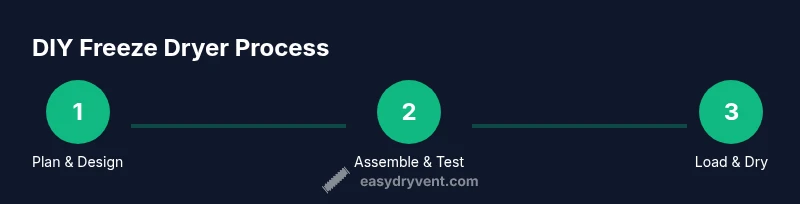
This block provides a high level blueprint rather than a blueprint sketch. Start by mapping your parts, confirming compatibility, and drawing a schematic that shows how the chamber, condenser, and vacuum lines connect. Identify a reliable power source, a safe enclosure for electronics, and a leak testing plan. At each phase keep a log of measurements and observations to guide adjustments. A methodical, documented approach minimizes sleepless troubleshooting and makes future improvements easier.
Operating Your DIY Freeze Dryer Safely
Once assembled, operate in short test runs to confirm vacuum integrity and temperature control. Use clean, dry trays and pre-chill items to reduce thermal shock. Monitor the vacuum level and chamber temperature, ensuring that no frost forms on non-target surfaces. If you notice unusual sounds or vibrations, stop the test and check seals, mounting hardware, and pump lubrication. Routine safety checks and cleanups are essential for long-term reliability.
Food Preparation and Loading Tips
Prepare foods by washing, cutting into uniform pieces, and pre-freezing to the target temperature. Freeze-drying works best with small, even sizes to ensure uniform sublimation. Avoid high-fat items that can smear or clump; pre-treat with blanching or drying steps as appropriate. Load trays in a way that allows free vapor flow and avoid overcrowding. Label batches with date and contents to simplify future rehydration and meal planning.
Monitoring, Maintenance, and Troubleshooting
Regular monitoring of temperature, pressure, and vacuum integrity helps catch problems early. Clean and inspect seals, gaskets, and hoses after each use. Replace worn parts such as O-rings, and verify that the condenser remains free of ice buildup. Document maintenance events, sensor calibrations, and any performance changes to track efficiency and quality over time. This proactive approach reduces downtime and preserves product quality.
Efficiency, Yield, and Quality Considerations
Insulation, accurate temperature control, and a stable vacuum maximize yield and preserve texture. Each batch may differ in drying time based on moisture content and product type, so keep a log to refine operating parameters. If yield drops over time, check for leaks, degraded seals, or insufficient cold-trap performance. Balancing speed with product integrity often requires iterative adjustments and careful record-keeping.
Common Mistakes to Avoid
Avoid skipping calibration steps or ignoring leaks, as even small gaps can dramatically reduce performance. Do not overfill trays, which blocks vapor flow and increases drying time. Neglecting safety interlocks or using improvised electrical connections can create hazards. Start with small, simple tests before attempting larger loads to build reliable baselines.
Getting Started on a Budget
Begin with a clear list of must-haves and nice-to-haves, focusing on fabricating a safe enclosure and reliable vacuum path first. Source used or refurbished components where safe and inspect them thoroughly. Invest in good seals, insulation, and a quality vacuum pump to prevent repeated replacements. Plan for maintenance costs and allow for incremental upgrades as your understanding grows.
Tools & Materials
- Food-grade vacuum chamber(Sealed interior; food-grade gasket material)
- Vacuum pump(Rotary vane or scroll; oil-free preferred)
- Cold trap / condenser(Cold surface to condense water vapor)
- Cooling system or loop cooler(Reliable refrigeration or loop chilled coil)
- Seals and gaskets(Food-grade silicone; matched to chamber ports)
- Insulation material(High R-value around chamber and lines)
- Temperature and pressure sensors(Thermocouples/RTDs and a vacuum gauge)
- Control module (PID/controller)( regulate vacuum and temperature)
- Loading trays/racks(Food-grade stainless or aluminum)
- Vacuum hoses and clamps(Vacuum-rated, food-safe where applicable)
- Electrical enclosure and safety gear(GFCI-protected; gloves and goggles)
- Tools for assembly(Screwdrivers, wrenches, sealant, leak-check spray)
Steps
Estimated time: Estimated total time: 12-20 hours
- 1
Outline safety plan and design goals
Define your drying targets, vacuum levels, and safety interlocks. Create a schematic showing all major components and how they interconnect. This upfront planning reduces rework and enhances safety.
Tip: Document a risk assessment and keep a printed schematic handy. - 2
Gather required components and verify compatibility
Collect the chamber, pump, condenser, and control electronics. Check port sizes, seal diameters, and electrical ratings to ensure everything fits together without forcing parts.
Tip: Lay out parts on a clean bench and label each connection. - 3
Assemble the vacuum chamber frame and seals
Build the frame and install gaskets in a dry run without liquids. Test the seal integrity by applying a light vacuum and listening for leaks.
Tip: Use a non-abrasive sealant only where recommended by the part supplier. - 4
Install cooling and condenser system
Mount the cold trap and connect the cooling loop to the refrigeration unit. Ensure water lines, if used, are secure and leak-free before applying power.
Tip: Avoid tight bends in hoses to prevent flow restriction. - 5
Mount sensors and control electronics
Place temperature sensors at representative points and install the vacuum gauge at the main line. Wire the control module to regulate both vacuum and temperature with basic safety interlocks.
Tip: Keep wiring organized and away from high heat sources. - 6
Create loading trays and rack arrangements
Prepare food-grade trays with even spacing to allow vapor flow. Install a simple rack system to minimize movement during drying and to ensure consistent exposure.
Tip: Test tray fit in the chamber before final assembly. - 7
Perform leak test and safety check
Seal the system and apply a vacuum for an extended period. Look for gradual pressure drop or audible leaks and address them before loading real samples.
Tip: Record the baseline vacuum performance for future reference. - 8
Run a small test freeze-dry with water sample
Load a small test item like distilled water or a simple fruit piece. Monitor temperature and pressure as the cycle begins and ensure water vapor is condensing in the cold trap.
Tip: Do not run full batches until you confirm stable operation. - 9
Document results and prepare for food loads
Log cycle times, temperatures, and observed moisture loss. Use objective measures like weight loss and texture checks to guide future runs.
Tip: Keep a running log to optimize future settings.
Common Questions
Is it safe to build a DIY freeze dryer at home?
With proper safety planning, insulated components, and reliable electrical work, a DIY freeze dryer can be safe. Always follow electrical codes, use food-grade materials, and wear appropriate PPE. If in doubt, consult an experienced professional.
Yes, but only with strict safety measures and proper electrical and material standards.
Do I need a vacuum pump and condenser?
Yes. A vacuum pump and a cold condenser are essential to enable sublimation and to trap water vapor. The performance of these parts largely determines drying efficiency and final texture.
Yes, a vacuum pump and condenser are essential.
Can I use a regular household freezer as a substitute?
A household freezer can assist pre-freezing, but it cannot replace the vacuum and controlled cooling necessary for true freeze drying. A dedicated vacuum-enabled setup yields the best results.
A regular freezer alone won’t do freeze drying.
What foods work best with a DIY freeze dryer?
Fruits, some vegetables, herbs, and prepared meals can do well if pre-frozen and cut uniformly. Avoid high-fat items unless you have validated recipes and test cycles.
Fruits and herbs dry well with proper prep.
How should I maintain and troubleshoot the system?
Regularly inspect seals, verify vacuum integrity, check the condenser for ice buildup, and calibrate sensors. If issues persist, revisit connections and seek guidance from reputable DIY communities.
Maintain seals and check for vacuum leaks regularly.
Watch Video
Key Points
- Plan safety first and respect electrical risks.
- A sealed chamber and stable vacuum are essential for quality.
- Iterate parameters and document results for better yields.
- Regular maintenance prevents long-term failures.