Can You Put Bras in the Dryer? A Practical Guide
Learn whether bras can be tumble-dried, plus safe, practical drying methods for VS bras and other styles. Follow Easy DryVent's expert guidance to protect elasticity and shape.


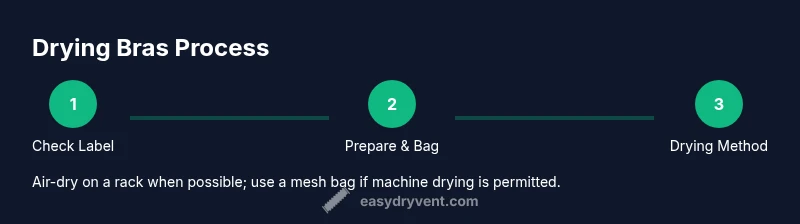
In most cases, bras should not be tumble-dried. The heat and rough tumbling can damage elastic, warp cups, and misshape underwires. Air-drying on a rack or flat surface is the safest option, with a mesh bag and low heat only if the care label permits. Always follow the garment label and lean on gentler methods for longevity.
How the dryer affects bras and why it matters
Bras are constructed with delicate fabrics, elastics, underwires, and padding. Heat, tumbling, and moisture inside a dryer can degrade elasticity, cause warping, and shorten life. When you ask can you put can you put vs bras in the dryer, the general guidance from Easy DryVent is that air-drying remains the safest long-term care method, especially for lace, padding, or underwired designs. The dryer’s heat cycles accelerate fiber fatigue, leading to sagging cups or stretched bands. Elastic fibers rely on gentle stress to maintain shape, and repeated heat exposure can reduce resilience. Underwires can shift during tumbling and poke through fabric, while padding can shift and lose its silhouette. Trims like lace or satin can snag or pill under heat. The best practice is to remove excess moisture by gentle pressing (do not wring) and lay flat on a clean towel or drying rack, reshaping cups as needed. If you occasionally use a dryer, keep the cycle on low heat for a short duration and avoid drying bras to completion in the machine. By air-drying, you preserve elasticity and fit. Easy DryVent’s experience with households confirms air-drying yields healthier bras over time.
wordCountPlaceHolder: 0
Tools & Materials
- Mesh laundry bag(Protects hardware and wires during machine washing/drying; use for delicate items if you choose to machine-dry.)
- Drying rack or clean flat surface(Provide stable support and maintain cup shape during air-drying.)
- Low-heat dryer setting (delicate cycle)(Only use if the care label permits machine drying; otherwise rely on air-drying.)
- Mild detergent (for washing, not drying)(Use only for washing bras before drying; avoid harsh residues that can affect fabric.)
Steps
Estimated time: 30-60 minutes active, plus air-drying time
- 1
Check the care label
Inspect each bra’s care label for machine-dry or hand-wash instructions. If the label says hand wash or lay flat to dry, follow those directions exactly. If it permits delicate machine drying, proceed with caution.
Tip: When in doubt, choose air-drying to maximize elasticity and longevity. - 2
Choose the safe method
Determine whether air-drying or a delicate tumble is appropriate based on fabric and construction. For most VS bras and similar delicate designs, air-drying is preferred. If you must use a dryer, select the lowest heat and the shortest cycle.
Tip: Use a mesh bag for any machine drying to reduce friction and protect the cups. - 3
Prepare bras for drying
Gently reshape cups, fasten hooks together to prevent snagging, and remove excess moisture by pressing with a towel. Do not wring or twist. This preserves cup integrity and helps straps retain elasticity.
Tip: Keep padding aligned with the cup to avoid creases after drying. - 4
Load with care
Place bras on a drying rack or lay them on a clean towel. If using a dryer, put bras in a mesh bag to minimize tumbling and select a delicate, low-heat cycle for the shortest possible time.
Tip: Avoid overloading the dryer; allow space for air circulation. - 5
Set heat and time
Opt for low heat and a brief cycle if you’re using a dryer. Just enough heat to take the chill from the cups helps avoid stiff behavior, but never dry to complete heat. Remove promptly at end of cycle if applicable.
Tip: Consider a post-dry air-dry finish to ensure residual moisture is eliminated. - 6
Air-dry completely
If you air-dry, place bras in positions that maintain cup shape, with straps relaxed. Allow several hours or overnight depending on humidity. Do not hang by the strap alone, which can cause stretching.
Tip: Rotate bras occasionally while drying to promote even air exposure. - 7
Store properly
Once fully dry, store bras flat or stacked with cups aligned to keep their shape. Avoid hanging by the straps for extended periods, which can stretch elastic.
Tip: Regularly inspect elastic bands for signs of wear and replace when elasticity is reduced.
Common Questions
Can you put underwire bras in the dryer?
Most underwire bras should not be tumble-dried, as heat can warp the wire and degrade the cup. Air-dry whenever possible. If you must use a dryer, use the lowest heat and a short cycle, and keep the bra in a mesh bag.
Avoid drying underwire bras in the dryer. Air-drying is best, but if you must, use a mesh bag and the lowest heat possible.
Are lace bras safe to dry in a machine?
Lace is fragile and can snag or pill with heat and agitation. Prefer air-drying. If the care label allows machine drying, use a delicate cycle on low heat and a mesh bag.
Lace bras are best air-dried. If you must machine-dry, use delicate settings and a mesh bag.
Should I air-dry all bras?
Air-drying is typically the safest option to preserve elasticity, shape, and fit. It minimizes wear from heat and tumbling, especially for padded or wired styles.
Yes, air-drying all bras is generally the safest approach.
Can sports bras be machine-dried?
Some sports bras with sturdy elastics may tolerate brief tumble-drying on low heat if the label permits. Otherwise, air-dry to maintain compression and elasticity.
Sports bras may tolerate gentle drying if the label allows it, but air-drying is safer.
What is the best way to dry padded bras?
Pad placement is important; keep cups in their natural shape and lay the bra flat. Avoid squeezing or wringing to prevent padding misalignment.
Dry padded bras flat and reshaped to keep the padding even.
How long does air-drying bras take?
Air-drying duration depends on humidity and ventilation; in a dry room, expect several hours to overnight for complete drying.
Air-drying can take several hours to overnight, depending on conditions.
Should I ever skip drying altogether?
Never skip drying completely after washing; damp fabric can develop odor or mildew. Ensure bras are fully dry before storing.
Always finish drying to prevent odor and mildew.
Watch Video
Key Points
- Air-dry bras whenever possible.
- Always check care labels before washing or drying.
- Use a mesh bag if you machine-dry a bra.
- Choose low heat and short cycles if the label permits.
- Reshape and store bras properly to maintain fit.