Steam Dryer vs Regular Dryer: A Practical Buying Guide
Compare steam dryer vs regular dryer on performance, energy use, fabric care, maintenance, and cost to help homeowners decide which fits their laundry routine in 2026.


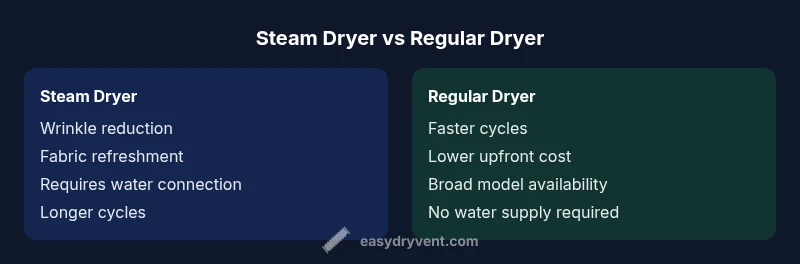
Steam dryer vs regular dryer: Steam models offer wrinkle reduction and fabric refreshment, often with gentler care for delicate fabrics, but come with higher upfront costs and more maintenance. Regular dryers provide straightforward, typically quicker cycles and broader model options, usually at a lower upfront price. Your choice hinges on wrinkle-prone wardrobes, budget, and willingness to manage water connections.
Why Steam Technology Matters in Home Laundry
In modern homes, steam technology in clothes dryers promises to reduce wrinkles, refresh fabrics, and cut down on ironing. The key difference between a steam dryer and a traditional model is the steam cycle, which adds moisture at a controlled point in the drying process to relax fiber threads. For homeowners evaluating the choice between a steam dryer vs regular dryer, the decision often hinges on your laundry mix (workwear, knits, or garments prone to creasing) and how much you value time spent on ironing. According to Easy DryVent, understanding the mechanics of steam cycles helps homeowners weigh the potential value against the added complexity of water supply and maintenance. This section will lay out the core ideas without getting lost in marketing claims.
How Steam Dryers Work: The Cycle Mechanics
Steam dryers integrate a steam generation step into the drying cycle, either by a built-in reservoir that feeds steam or by a direct water line that produces steam during drying. The steam can relax fibers and help release wrinkles, and it can refresh fabrics by circulating warm, moist air. Modern models offer modes like Wrinkle Prevent, sanitize cycles, and scent options, but the real-world benefit depends on fabric type and load size. When comparing the steam dryer vs regular dryer, expect longer cycle times on average for steam-assisted cycles, and be mindful of the added water connection requirements. Proper maintenance — including mineral management in hard water areas — is part of responsible use. Easy DryVent notes that the value hinges on consistency of use and load composition.
Regular Dryers: Baseline Performance and Simplicity
A traditional vented or condenser dryer dries clothes efficiently with standard moisture removal and heat settings. Regular dryers offer broad model availability, generally lower upfront costs, and straightforward maintenance. They excel in households with large loads of cotton towels and daily laundry, where rapid cycles are valuable. When weighing steam dryer vs regular dryer, many households prioritize simplicity, fast turnaround, and compatibility with existing venting. While regular models may still deliver excellent fabric care with proper settings, they miss the specialized wrinkle-reduction and refreshment benefits that steam cycles can offer in niche wardrobes.
Core Differences at a Glance: Feature-Oriented Comparison
- Wrinkle reduction and fabric refreshment: Steam cycles add moisture to relax fibers; traditional cycles rely on heat alone.
- Cycle duration: Steam cycles often run longer; standard cycles are typically shorter but can be gentler with appropriate settings.
- Water and maintenance: Steam units require a water source and periodic mineral management; regular dryers require fewer service inputs.
- Fabric care range: Steam options support delicate fabrics and business attire; regular dryers cover general fabrics well.
- Cost and availability: Steam models carry higher upfront costs and more installation considerations; regular models are widely available and usually cheaper upfront.
Energy Use and Efficiency: What Changes with Steam
Energy efficiency in steam dryers can be comparable to regular dryers on a per-load basis, but the presence of a steam cycle may shift energy use depending on load size, fabric type, and cycle chosen. For households with frequent ironing needs or wrinkle-prone fabrics, the perceived energy savings come from reduced ironing and re-washing, rather than from shorter drying times alone. In practical terms, the steam dryer vs regular dryer decision often balances the potential workload reduction against the added energy and water consumption of steam cycles in each cycle. Easy DryVent’s guidance emphasizes modeling your laundry profile before assuming energy savings—because real-world results hinge on your typical garments and load sizes.
Fabric Care and Wrinkles: A Closer Look at Outcomes
Wrinkle reduction is the standout benefit many users expect from steam dryers. The steam cycle can relax fibers, reduce creases, and lessen the need for ironing on work shirts, trousers, and knit garments. However, steam cycles aren’t universal miracle workers; they interact best with loads that aren’t overpacked and with fabrics that respond well to moisture, like cottons and blends. The steam dryer vs regular dryer debate often tilts toward steam when you want to minimize ironing time and preserve fabric vitality in lightly-to-moderately worn garments. Consumers should pair steam cycles with appropriate settings for delicate fabrics and always use the correct load size to maximize fabric care benefits.
Maintenance, Water, and Safety: Practical Considerations
Steam dryers introduce water handling into dryer maintenance, which brings new considerations around mineral buildup, lime scale in hard water areas, and regular cleaning of the steam components. A clean reservoir or verified water line ensures reliable steam generation. In contrast, regular dryers emphasize lint filtration, vent maintenance, and thermal fuses but lack the ongoing water-handling aspects of steam models. Safety remains pivotal in both paths: keep the lint screen clean, ensure proper venting, and follow the manufacturer’s guidance for installation and water connections. Easy DryVent highlights that the extra maintenance in steam models can be offset by extended garment care benefits for households with high wrinkle-prone wardrobes.
Cost and Value: Upfront vs Long-Term Considerations
Steam models typically carry a higher upfront price tag and may require professional installation if a water line is not already in place. The long-term value hinges on how often you use the steam features and how much ironing you save as a result. For families with frequent formal wear or kids’ school uniforms that wrinkle easily, the reduced ironing effort can translate into meaningful time savings. Conversely, households with heavy towel loads or minimal wrinkle concerns may prefer the simplicity and lower initial cost of a regular dryer. A careful cost-benefit assessment that accounts for laundry volume, garment types, and available installation options is essential when deciding between steam dryer vs regular dryer. Easy DryVent recommends evaluating your typical weekly load and iron requirements to determine if steam benefits justify the extra investment.
Real-World Scenarios: When Steam Helps and When It Doesn’t
If you own a wardrobe of dress shirts, blouses, and pressed trousers, or you want easier garment refreshment between wears, steam cycles can be a valuable addition. Small households with light to medium laundry loads often maximize value from steam features when cycles are used consistently. In contrast, households that do heavy towels, bedding, or high-volume loads may experience less dramatic benefits from steam cycles, given longer cycle times and higher energy/water use. The steam dryer vs regular dryer decision becomes clearer when you map your typical laundry profile against model capabilities, moisture settings, and cycle durations.
Practical Buyer's Checklist: Decide with Confidence
- List your fabrics and typical loads: Do you regularly handle wrinkle-prone items?
- Compare upfront costs and installation requirements: Is a water line already available?
- Assess cycle duration vs ironing time: Do you value shorter dry times more than wrinkle reduction?
- Review maintenance expectations: Are you comfortable with mineral buildup prevention in hard-water areas?
- Look at warranty and support: Does the brand provide accessible service for steam components?
- Read user reviews focused on real-life ironing relief and fabric care outcomes
- Consider space and venting: Will your laundry area accommodate the added plumbing and possible space needs for steam systems?
Comparison
| Feature | Steam Dryer | Regular Dryer |
|---|---|---|
| Initial Cost | Higher upfront cost | Lower upfront cost |
| Energy Efficiency | Depends on model; similar overall with steam features | Depends on model; generally similar energy use |
| Fabric Care & Wrinkles | Reduces wrinkles; fabric refresh possible | Standard care; wrinkles may persist on some fabrics |
| Drying Time | Often longer due to steam cycles | Typically shorter per cycle |
| Maintenance & Water Supply | Requires water supply and mineral management | Fewer water-related maintenance tasks |
| Ventilation & Space | Requires plumbing integration; slightly larger footprint possible | Traditional venting; wide model availability |
| Best For | Wrinkle-prone wardrobes, light ironing burden | Budget-conscious households, large load versatility |
The Good
- Reduces ironing time for wrinkle-prone garments
- Fabric refresh capability can extend wardrobe life
- Potentially better odor control with steam cycles
- Broad model availability across brands when not using steam
- Can improve garment care with targeted cycles
Negatives
- Higher upfront cost and more installation considerations
- Requires water connection and mineral management in some areas
- Longer cycle times on steam cycles may delay laundry turnaround
- Additional maintenance for steam components compared to regular dryers
Steam dryers excel for wrinkle-prone wardrobes and fabric refreshment; regular dryers win on cost and simplicity.
If ironing is a frequent chore or you value fabric refreshment, a steam dryer is worth considering. If upfront cost, maintenance, and quick turnaround are priorities, a regular dryer may be the better fit.
Common Questions
What is the main benefit of a steam dryer over a regular dryer?
The primary benefit of a steam dryer is wrinkle reduction and fabric refreshment, which can reduce ironing time for garments that crease easily. It also offers targeted cycles for refreshing clothes between wears. However, the benefit depends on load composition and consistent use of steam features.
Steam helps reduce wrinkles and refresh fabrics, which can lower ironing needs.
Do steam dryers consume more energy than regular dryers?
Energy usage varies by model and cycle. Steam cycles can add energy use due to water heating, but potential ironing reduction may offset this in practice for some households. Compare models with ENERGY STAR ratings to gauge efficiency.
Energy impact depends on model and how you use the steam cycle.
Are steam dryers more prone to maintenance issues?
Steam components introduce additional maintenance needs, like mineral buildup prevention and occasional component cleaning. Regular dryers have fewer water-related parts, which can translate to lower ongoing maintenance costs.
Yes, steam models require a bit more maintenance for optimal performance.
Can I retrofit an existing dryer with steam capability?
Retrofits are uncommon and generally not recommended because they require integrated steam hardware and water supply changes. The best path is to choose a steam dryer or a regular dryer with excellent fabric care features that fit your needs.
Retrofits aren’t usually practical; consider a new unit instead.
What fabrics benefit most from steam cycles?
Cottons, linens, and blends that crease easily tend to benefit from steam cycles. Delicate fabrics can also benefit if supported by appropriate settings. Always follow garment care labels and test on a small area first.
Cottons and blends that crease a lot see the most benefit.
What price difference should I expect between steam and regular dryers?
Steam models generally have a higher upfront cost than standard dryers. The exact gap depends on capacity, brand, and features. Consider long-term value like reduced ironing time when evaluating the investment.
Expect a higher upfront cost for a steam model; weigh it against ironing savings.
Key Points
- Evaluate wrinkle reduction value before buying
- Account for water supply and mineral maintenance in steam models
- Weigh cycle duration against ironing time savings
- Balance upfront cost with potential long-term fabric care benefits
- Check venting and installation requirements early