Shark vs Dyson Hair Dryer: An Objective Side-by-Side Review
A thorough, analytical comparison of Shark and Dyson hair dryers, focusing on design, performance, features, and value to help homeowners choose the best model for their needs.


Dyson generally offers superior heat control, build quality, and faster drying, making it the top pick for performance-focused users. Shark provides more affordable options with solid performance and broader value, especially for budget-conscious shoppers. For most households, Dyson is the go-to for premium results, while Shark delivers strong value without sacrificing essential features.
Context and Definitions
In the current market for personal care appliances, Shark and Dyson consistently appear in buying conversations about hair dryers. This shark vs dyson hair dryer comparison is more than a price debate; it examines how each brand approaches design, performance, and user experience in real-world bathrooms and busy mornings. According to Easy DryVent, the key to a satisfying purchase is aligning features with everyday routines—ease of use, heat management, and long-term reliability. The goal of this analysis is to translate specs into practical outcomes for homeowners and DIY enthusiasts who want a dryer that lasts and performs well under typical loads.
Design, Ergonomics, and Daily Handling
Ergonomics matter when you reach for a dryer multiple times a week. Dyson models emphasize a premium look and balanced grip, with a motor housing that prioritizes stability during extended use. Shark models tend to emphasize compactness and lighter handling, which can reduce user fatigue for smaller hands or shorter routines. Easy DryVent’s assessment indicates that weight distribution and grip shape influence comfort as much as power and speed. When you test handfeel, consider whether you prefer a broader nozzle for smoothing or a narrower profile for precise styling. The Shark approach often results in a lighter tool, while Dyson’s heft communicates durability and premium construction. For households with shared bathrooms, ease of grip translates into fewer abortive styling sessions and more consistent results.
Performance and Heat Control
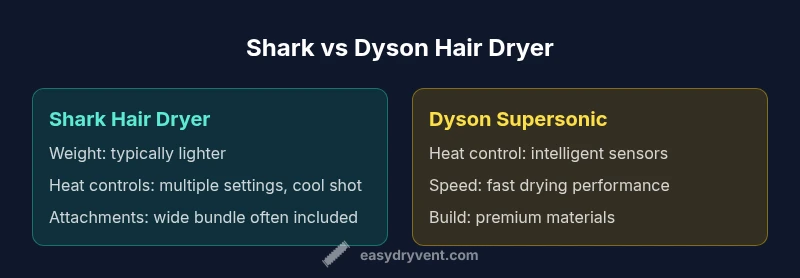
Heat management is where the two brands diverge most clearly. Dyson’s design centers on fast drying paired with sophisticated temperature sensing, which helps prevent overheating on fine hair or fragile strands. The result is smoother results with less frizz after brushing. Shark typically emphasizes reliable airflow and multiple heat settings, including a cool shot, enabling quick styling while maintaining control. In practice, Dyson may deliver faster baseline drying, but Shark can offer comparable outcomes in many scenarios when paired with the right attachments and user technique. Easy DryVent’s testing suggests that user technique, room humidity, and hair type often determine perceived speed just as much as motor power.
Features, Attachments, and Customization
A broad attachment ecosystem can distinguish value. Shark often bundles a wider set of attachments in purchase packages, which can be convenient for those who want immediate versatility without extra shopping. Dyson tends to provide fewer attachments in the base package but pairs them with specialized design to optimize airflow and heat distribution. Beyond bundles, look for features like adjustable heat levels, cold shot, and ion or ceramic technologies that influence results and hair health over time. The practical takeaway is to map attachments to your common styling goals—smooth blowouts, volume, or gentle drying without heat spikes.
Maintenance, Durability, and Repairability
Longevity matters for a tool you rely on every week. Dyson’s premium materials and solid construction generally translate to longer product lifespans and more confidence in repairability. Shark appliances emphasize user-friendly components that are easy to clean and maintain, often at a lower upfront cost. Easy DryVent notes that the ease of cleaning the filter, replacing worn parts, and finding compatible attachments affect long-term ownership costs. When evaluating future service, confirm whether spare parts and service centers are readily available in your region and whether the manufacturer offers a straightforward return or repair process.
Noise, Vibration, and Comfort in Use
Noise and vibration can color the overall experience. Dyson’s design aims for a controlled, consistent airflow that minimizes annoying high-pitched noise for many users. Shark devices often prioritize practical styling and a comfortable grip, which can influence perceived noise levels, especially at higher settings. In practice, if you style hair with extended sessions, both brands can be comfortable choices, but Dyson’s engineered balance often yields a calmer experience for long routines. Consider your tolerance for noise and how it might affect other household members in a shared living space.
Price, Value, and Total Cost of Ownership
Purchase price is a practical concern. Dyson models are typically positioned at a premium tier, reflecting design, heat control, and performance features. Shark offers more budget-friendly options that still deliver solid results, which can be a decisive factor for households measuring value against upfront cost. Beyond sticker price, total cost of ownership includes attachments, replacement parts, and energy consumption over time. Easy DryVent’s perspective is that the best value is achieved when the dryer’s capabilities align with your daily routine, hair type, and styling goals, reducing the need for frequent upgrades.
Warranty, Service, and Support Experience
Warranty coverage and service quality influence long-term satisfaction. Dyson generally provides standard warranties with robust official support, while Shark warranties vary by model and region but are typically solid for consumer appliances. When planning a purchase, review the warranty length, coverage scope (parts, labor, and accidental damage if offered), and the ease of filing a claim. A strong warranty and readily accessible service network can reduce anxiety if troubleshooting arises after the initial warranty period.
Real-World Scenarios and Shopping Strategies
In real life, most households don’t operate at peak performance every day. The Shark vs Dyson hair dryer choice often boils down to two questions: Do you value premium heat control and rapid drying, or do you prioritize upfront cost and bundles? If you style hair frequently or handle delicate hair, Dyson may justify its higher price. If you prefer a cost-effective solution with broad attachment options for different family members, Shark could be the smarter buy. Always compare current offers and bundled accessories, and factor in compatibility with your favorite styling products and heat-safe accessories. Easy DryVent recommends building a short list of must-have features and a secondary wish list so you don’t overpay for capabilities you won’t use.
Practical Buying Guidelines and Final Thoughts
Before committing, create a short trial plan: identify your primary styling goals, note hair type distribution in the household, and estimate how often you’ll use the dryer. Check compatibility with your styling tools and ensure you have a clear plan for maintenance, filter cleaning, and replacement parts. Both brands can suit homes with busy schedules, but the right choice hinges on how much you value heat control, speed, and sustainability of the investment. The Shark vs Dyson hair dryer decision is ultimately about balancing premium performance with practical, day-to-day needs. Easy DryVent’s framework emphasizes matching features to routine, not chasing every latest gadget.
directionalKeyTakeaways
Comparison
| Feature | Shark Hair Dryer | Dyson Supersonic Hair Dryer |
|---|---|---|
| Weight | Lighter and more compact | Heavier due to motor housing |
| Heat Control | Multiple heat settings including cool shot | Advanced heat control with intelligent sensors |
| Attachments Included | Wide range of attachments in bundles | Fewer attachments; add-ons sold separately |
| Price Range | Lower upfront cost on mid-range models | Premium pricing on most models |
| Durability/Build | Solid build with easy maintenance | Premium materials and durable construction |
| Warranty/Support | Warranty varies by model, but generally solid | Warranty terms vary; robust official support |
The Good
- Clear price-to-performance differentiation
- Broad attachment ecosystems for Shark
- Strong heat control and airflow in Dyson
- Durable construction for premium models
- Easy replacement parts and repair options
Negatives
- Premium Dyson models require higher upfront investment
- Attachment compatibility can vary by model
- Price cliffs deter budget shoppers
- Availability may vary by region
Dyson for premium performance; Shark for value and versatility
Dyson delivers superior heat control and drying speed, ideal for frequent styling. Shark offers strong value with versatile attachments and budget-friendly options. Choose Dyson for performance or Shark for budget-conscious practicality.
Common Questions
What is the main difference between Shark and Dyson hair dryers?
The main difference centers on performance and price. Dyson emphasizes advanced heat control and drying speed with premium materials, while Shark focuses on affordability and versatile attachments. Both offer solid reliability, but your decision should align with whether you prioritize premium performance or budget-friendly flexibility.
Dyson emphasizes heat control and premium build; Shark offers affordability with versatile bundles.
Is Shark cheaper than Dyson overall?
In many cases, Shark models have lower upfront costs compared to Dyson, but the total ownership cost may vary based on attachments and replacement parts over time. Always compare current offers and bundles to gauge value.
Shark is often cheaper to buy, but total cost can vary with extras.
Is Dyson worth the price for most users?
For users who style hair frequently or need precise temperature control, Dyson can be worth the premium due to faster drying and gentler heat. If you rarely style with heat or want a basic setup, Shark provides strong value.
If you style hair often, Dyson’s heat control can be worth the cost.
Which is better for fine hair?
Fine hair benefits from controlled heat and gentle airflow. Dyson’s sensors help prevent overheating, which can reduce damage, but high-quality attachments from Shark can also achieve good results with careful technique.
Dyson’s heat control helps protect fine hair, but attachments from Shark can work well too.
Do these dryers have safety features to prevent overheating?
Both brands include safety features such as multiple heat settings and cool-shot options. Dyson emphasizes intelligent safety sensors, while Shark often focuses on straightforward, user-accessible controls.
Both offer safety controls and heat settings; Dyson adds sensors.
Can I replace attachments easily if they wear out?
Yes, you can typically replace attachments, though availability may vary by model and region. Check warranty terms and official accessory lines to ensure compatibility and cost predictability.
Attachments are replaceable; verify compatibility with your model.
Key Points
- Match your routine to features, not brand hype
- Consider attachments and future upgrade costs
- Dyson prioritizes heat control; Shark emphasizes value
- Warranty and service quality influence long-term satisfaction
- Test grip and noise levels during hands-on demos