Hair Dryer Compared to Dyson: Practical Buyer's Guide
A balanced, evidence-based comparison of hair dryers versus Dyson models, focusing on heat control, airflow, noise, cost, maintenance, and safety for homeowners and DIY enthusiasts.


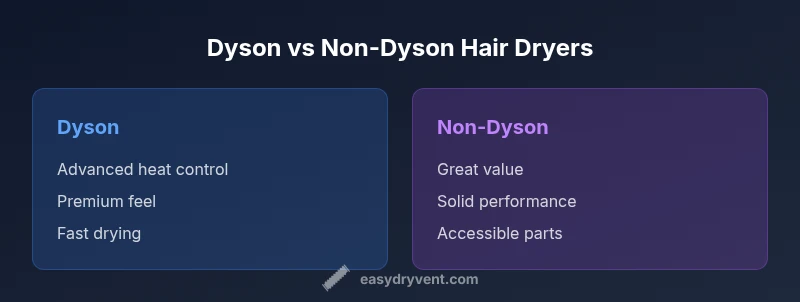
When evaluating a hair dryer compared to Dyson models, you typically trade a premium build and fastest drying for broader value, simpler maintenance, and lower upfront cost. Dyson often excels in heat control, speed, and design, but many non-Dyson dryers deliver solid performance, good durability, and meaningful savings. This guide breaks down the core differences, so DIY homeowners can pick the option that fits their routine and budget.
Understanding the hair dryer compared to dyson
In practical terms, the phrase hair dryer compared to dyson frames a spectrum that ranges from premium, titanium-finned, air-massive devices to affordable, reliable workhorse machines. According to Easy DryVent, the overall decision hinges on three pillars: performance consistency, user experience, and long-term value. Dyson models have earned a reputation for strong heat control and fast drying, but many non-Dyson options close the gap with thoughtful design and good build quality. For homeowners and DIY enthusiasts, the key is to map personal priorities—budget, tolerance for weight, noise levels, and willingness to care for the dryer—to the features that matter most. This means assessing heat settings, sensor feedback, filter maintenance, and the availability of spare parts in your area. The hair dryer compared to dyson decision is less about chasing the fastest dry and more about balancing everyday usability with value over time.
The core value proposition of premium vs value-focused dryers
Dyson’s premium positioning often centers on engineering precision, refined ergonomics, and attention to voltage stability under heavy use. In contrast, non-Dyson models typically emphasize accessibility, replaceable parts, and straightforward maintenance. If your routine includes frequent styling sessions, or you value a streamlined, almost “set-it-and-forget-it” workflow, Dyson’s approach can feel worth the premium. If you prefer a straightforward, affordable option that still delivers consistent results, a well-chosen non-Dyson dryer can serve you well for years. The Easy DryVent team notes that the decision should align with how much you prioritize speed, feel, and the perception of quality versus how much you value ongoing costs and maintenance.
Real-world usability: heat control, sensors, and feedback
Heat control and sensor feedback are central to the hair dryer compared to dyson equation. Dyson devices typically advertise intelligent heat control and precision airflow designed to minimize heat spikes, which helps protect hair and reduce styling damage over time. Non-Dyson options can match this through multiple heat and speed settings, cool-shot capabilities, and thermal protection. For DIY users, the practical takeaway is to look for at least three heat settings, a reliable cool shot, and a clean, accessible filter. The ability to monitor airflow and heat during routine sessions makes a noticeable difference in user experience, regardless of the brand.
Ergonomics, weight, and user fatigue
Ergonomics matter as much as raw performance. Dyson designs often emphasize balance and grip, which can reduce fatigue on long styling days. Many non-Dyson models prioritize lightweight shells and comfortable grips, but the build may vary by price tier. If you’re tall or have limited grip strength, test the weight and balance in-store or during a home trial. A slightly lighter option with a well-balanced handle can dramatically reduce wrist strain over time, enhancing consistency in daily use. Remember that a heavier dryer may feel more stable during extended sessions but contribute to fatigue.
Noise, heat, and hair health: what to expect in your bathroom
Noise and heat generation are practical considerations for most households. Dyson products often incorporate noise-dampening design and optimized airflow to minimize ripple effects around the room. Non-Dyson dryers can still be quiet if they feature enclosed motor housings, efficient impeller designs, and good insulation. If you share a bathroom with others or have small children, prioritize models that advertise lower decibel levels and a gentle airflow profile. Beyond comfort, quieter operation reduces stress during quick grooming sessions and helps maintain a calmer morning routine.
Cost, longevity, and takedown considerations
Price is a major lever in the hair dryer compared to dyson decision. Dyson models typically command a premium due to design, branding, and engineering claims. Non-Dyson options often provide similar core capabilities at a fraction of the upfront cost, and with replacement parts that can be easier to source locally. When evaluating long-term value, consider the dryer’s lifespan, availability of spare parts, and the ease of filter cleaning or replacement. A dryer with a straightforward cleaning routine and durable components will tend to require fewer trips to service centers, translating into real savings over several years.
Practical steps to compare models at home
Create a short checklist before you buy or test models. Include heat range (low, medium, high), number of speed settings, whether a cool shot is present, filter accessibility, weight, and how the cord length feels in your typical styling space. If you can, perform a quick dry test on a towel-dried hair strand to feel heat clarity and airflow. For families with multiple users, compare models on how quickly each one returns to a safe temperature after a styling burst. The more you can simulate real-use scenarios in your own bathroom, the better your decision will be.
A framework for choosing: Dyson vs non-Dyson by user profile
- If you value fastest results, premium feel, and a near-faultless warranty, Dyson may be the right fit, provided you’re comfortable with the upfront cost. - If you prioritize value, straightforward maintenance, and predictable long-term costs, a well-chosen non-Dyson dryer can outperform expectations for everyday use. - If you want a balanced alternative, look for mid-range models with robust heat control, effective filters, and good customer support. The decision should hinge on how much you value speed and design versus price and practicality.
How to extend life and keep performance consistent
No matter the brand, regular cleaning of the filter, keeping vents clear, and avoiding over-drying are essential. Use a low-heat setting for daily use and reserve high heat for brief styling bursts. If possible, store the dryer away from moisture and ensure the power cable remains intact. After several months of use, inspect the cord and plug for wear and consider professional servicing if the dryer shows unusual heat, smells, or reduced airflow. A well-maintained dryer will deliver dependable performance over years.
Comparison
| Feature | Dyson-branded premium dryer | Non-Dyson high-value dryer |
|---|---|---|
| Heat control and sensors | Intelligent heat control with advanced sensors | Multiple heat settings and reliable thermal protection |
| Weight and ergonomics | Ergonomic, balanced design with premium feel | Generally lighter or balanced, varies by model |
| Noise and airflow | Optimized airflow with quieter operation | Noise varies; many models optimized for daily use |
| Price range | Higher upfront cost | Mid-range to affordable pricing |
| Maintenance accessibility | Filter and internals designed for easy care | Typically straightforward maintenance, parts widely available |
The Good
- Dyson offers strong heat control and fast drying
- Premium build quality and design aesthetics
- Wide warranty and robust customer support
- Intuitive, premium user experience
- High resale value and brand confidence
Negatives
- Higher upfront cost
- Repair or replacement parts can be pricey
- May provide more features than necessary for casual users
- Limited color/finish options in some markets
Non-Dyson options deliver solid value; Dyson suits speed-focused users
Choose Dyson if you prize fastest drying, premium feel, and strong warranty. For budget-conscious users, a well-chosen non-Dyson dryer often matches performance with lower ongoing costs.
Common Questions
Is a Dyson hair dryer worth the premium compared to non-Dyson models?
Dyson can justify the premium if you value rapid drying, premium ergonomics, and a strong warranty. If you prioritize budget and practical features, well-chosen non-Dyson models offer comparable performance with lower upfront costs.
Dyson is worth it for speed and premium feel; otherwise, good non-Dyson options deliver similar results at lower cost.
What should I look for when comparing heat settings and sensors?
Look for multiple heat levels, a reliable cool shot, and built-in thermal protection. Dyson devices excel with sensors and intelligent control, but many non-Dyson models offer robust feedback and consistent performance.
Choose models with several heat settings, a cool shot, and a real-time temperature check.
Are Dyson dryers more energy efficient?
Energy efficiency depends on the specific model. Dyson often emphasizes efficiency, but modern non-Dyson models with smart heat control can be comparable in real-world use.
Efficiency varies by model; Dyson isn’t automatically the most efficient in every case.
How can I safely maintain any hair dryer?
Regularly clean the filter, avoid vent blockages, and allow cool-down periods between long styling sessions. Replace damaged parts promptly and store the unit in a dry, safe place.
Keep it clean, let it cool, and check for wear to extend life.
What about warranties and service options?
Warranty terms vary by brand. Dyson usually offers robust coverage; many non-Dyson brands provide solid warranties as well. Review terms, coverage limits, and service accessibility before buying.
Warranties vary—read the fine print before you buy.
Key Points
- Prioritize your daily routine over brand hype
- Choose models with at least three heat settings and a reliable cool-shot
- Assess long-term costs: upfront price plus maintenance
- Test weight and balance for comfort during daily use
- Look for accessible spare parts and service options