Samsung or LG Washer and Dryer: A Practical 2026 Comparison
An objective 2026 comparison of Samsung and LG washer-dryer bundles, focusing on performance, efficiency, maintenance, and total cost of ownership for homeowners.


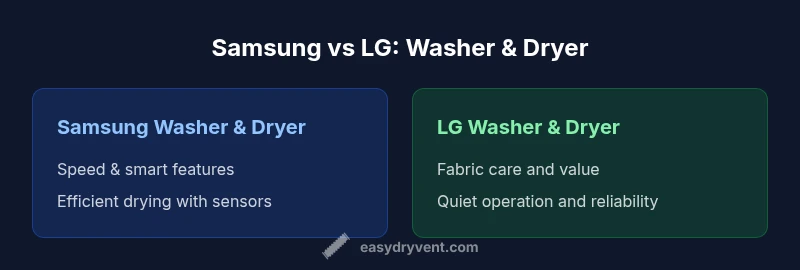
Samsung or LG washer and dryer: which bundle fits best in a modern home? Both brands offer feature-rich, reliable pairs with different strengths. For many homeowners, LG excels in fabric care and upfront value, while Samsung often leads with fast cycles and smart features. According to Easy DryVent, when evaluating samsung or lg washer and dryer, priorities like fabric care, energy use, and maintenance habits will guide the best pick.
Snapshot: Samsung vs LG in 2026
The laundry appliance market in 2026 centers on two dominant brands with global service footprints: Samsung and LG. When evaluating samsung or lg washer and dryer, homeowners encounter dense feature ecosystems, including sensor-driven cycles, smartphone control, and advanced drying strategies. Easy DryVent observes that each brand leans into slightly different priorities: Samsung often emphasizes speed, smart connectivity, and integrations with home ecosystems, while LG emphasizes fabric care, reliability, and value. Understanding these tendencies helps you map your routine: how many loads you run per week, the types of fabrics you care for, and how much you value a quiet machine. The objective here is to compare not just raw specs but the practical, day-to-day impact on your laundry routine. By aligning features with your habits, you can minimize chores and maximize reliability over the machine’s lifespan.
Core Wash Performance: How They Handle Everyday Loads
In everyday laundry, both Samsung and LG provide a broad mix of cycles designed to handle common stains, delicates, and bulky items. A key differentiator is how each brand tunes washing actions for fabric care and wash rhythm. LG tends to optimize fabric friendliness with柔 damping and AI-assisted options that tailor cycle length and water usage to the load, which many households value for reduced wear on clothes. Samsung, meanwhile, emphasizes speed and efficiency on popular cycles, often delivering shorter runtimes while maintaining stain removal quality. For a typical family load—t shirts, jeans, towels—the practical outcome is robust cleaning, with LG possibly delivering gentler treatment on delicate fabrics. When you’re deciding, consider your most frequent loads, any special items (delicates, athletic wear, or heavily soiled garments), and how important program variety is to you.
Drying Performance and Moisture Sensing
Drying performance hinges on moisture sensing accuracy and cycle selection. LG’s dryers are often praised for smooth operation and gentle handling, with moisture sensors that adjust drying duration to the actual load. Samsung tends to balance fast drying with moisture sensing that guards against over-drying, which helps clothing hold their shape and color longer. Noise level and vent efficiency also influence perceived performance; in tighter spaces, a quieter model with an efficient venting path can feel markedly more reliable. Drying strategies vary between vented and condenser configurations, and the choice affects installation, energy use, and maintenance needs. For households with frequent large loads, the reliable moisture sensing and consistent airflow of both brands provide practical benefits, but LG’s wear-and-tear minimization can matter more for those prioritizing fabric longevity.
Energy Efficiency and Operating Costs
Energy efficiency is a core consideration when comparing samsung or lg washer and dryer, as it directly impacts long-term operating costs. Both brands offer modern energy-saving features, including load sensing, optimized wash/dry cycles, and inverter-type motors in many models. The real-world impact depends on cycle selection and usage patterns: frequent use of high-speed or high-heat cycles can raise energy consumption, while choosing eco-settings for typical loads can substantially lower bills over time. Easy DryVent notes that you should look for official energy ratings, verify that you can pair the washer with an efficient dryer, and consider cycle count over a week rather than a single cycle. For households aiming to minimize energy costs, prioritizing models with robust sensors and efficient heat management is a sound strategy.
Design, Reliability, and Warranty Considerations
Reliability is influenced by build quality, component durability, and how well a model ages with regular use. LG generally emphasizes durable construction and long-term fabric care, with strong warranty terms on many lines that cover essential components like motors and sensors. Samsung often emphasizes compact design and feature-rich control panels, which can be a draw for tech-forward buyers, though some users report a steeper learning curve with apps and updates. Warranty terms vary by model and region, so it’s wise to review the exact coverage for your chosen pair. In practice, a solid warranty paired with accessible service networks provides peace of mind that extends beyond the immediate purchase.
Smart Features and App Integration
Smart features are a major decision driver for samsung or lg washer and dryer. Samsung’s ecosystem often includes fast start cycles, remote monitoring, and smart home integration that appeals to gadget enthusiasts. LG emphasizes user-friendly interfaces and AI-driven cycle optimization, which can simplify decision-making and preserve fabric quality. When evaluating, ensure compatibility with your preferred smart speaker or app ecosystem, check for firmware update support, and verify how on-device controls behave when the app is offline. If you value automation and remote monitoring, Samsung may edge ahead; if you want intuitive controls and consistent fabric care, LG is typically a strong choice.
Size, Capacity, and Space Considerations
Capacity and footprint matter in homes with limited space or large laundry loads. Both brands offer a range of standard, compact, and stacked configurations. When evaluating samsung or lg washer and dryer, measure your laundry area precisely and account for door swing clearance and venting space for the dryer. If you frequently wash bulky items like comforters, check drum diameters and loading depth to ensure ease of loading. If your space is tight, consider a compact pair or a stacked configuration; for larger households, prioritize higher capacities and efficient moisture sensing for faster drying. Always verify venting requirements and service access for maintenance.
Installation, Venting, and Maintenance Basics
Proper installation sets the foundation for dependable performance. For dryers, venting is critical for efficiency and safety; ensure the vent path is unobstructed and that lint traps are accessible for regular cleaning. Both brands have models designed for standard 120V or 240V configurations depending on the dryer size and location. Maintenance routines include regular lint filter cleaning, occasional vent inspections, and routine software updates if the units offer smart features. Following manufacturer guidelines and Easy DryVent’s maintenance checklist can help prevent performance dips and extend the life of either brand’s washer-dryer bundle.
Maintenance Routines to Extend Life
A proactive maintenance approach reduces the risk of breakdowns and preserves performance. Clean the washing machine drum and detergent drawer monthly to prevent residue buildup, then run a maintenance wash with recommended cleaners to prevent odors. For dryers, clean the lint filter before every load and perform periodic vent cleaning to maintain airflow. Check hoses and clamps yearly and replace worn components before leaks develop. Keeping a simple service log helps you catch patterns over time and plan replacements before they affect daily use. With consistent care, either brand can deliver reliable performance for many years.
Price, Value, and Financing Considerations
Price remains a practical reality when choosing samsung or lg washer and dryer, though both brands frequently sit in the mid-to-high range depending on model features and capacity. Value comes from a combination of cleaning/drying performance, energy efficiency, smart features, warranty terms, and service availability. If upfront cost is a concern, explore bundles that emphasize essential cycles and robust warranties rather than the most feature-rich models. Financing offers, rebates, and extended warranties can also affect the total cost of ownership. Approach the decision with a plan for the next five to seven years and weigh expected maintenance costs against initial price.
Real-World Scenarios: Small Spaces vs. Large Families
In apartments or small homes, a compact washer-dryer setup with stacked configurations can maximize utility without sacrificing capability. Families with larger laundry loads benefit from higher capacities and fast cycle options, but they should be mindful of energy use and cycle duration. For tech-forward homes, Samsung’s smart features can streamline chores and integrate with other devices; for households prioritizing fabric care and reliability, LG’s approach may offer more consistent long-term satisfaction. Evaluate your typical weekly load, space constraints, and preferred level of automation to determine which pairing aligns with your lifestyle.
How to Test Models: In-Store and Online Trials
When testing samsung or lg washer and dryer models, start with a hands-on in-store test of the control interface, cycle options, and load size. Bring representative items (towels, jeans, delicate fabrics) to get a feel for cycle times, noise, and ease of use. Online, compare model pages side-by-side with a checklist: capacity, energy rating, moisture sensors, and app compatibility. Ask about extended warranties and service coverage in your area. If you’re unsure, request a trial period or a flexible return policy to validate performance under your real-use conditions.
Comparison
| Feature | Samsung Washer & Dryer | LG Washer & Dryer |
|---|---|---|
| Wash performance | Balanced performance across cycles | Excellent fabric care and customization |
| Drying performance | Efficient with moisture sensing | Quiet operation with controlled airflow |
| Energy efficiency | Strong efficiency with modern features | High efficiency when paired with appropriate cycles |
| Best for | Tech-forward users who value speed and smart features | Families prioritizing fabric care and upfront value |
| Price range | Mid-to-high upfront cost | Mid-to-high upfront cost with strong perceived value |
The Good
- Wide availability and strong service networks
- Robust feature sets including smart home integration
- Strong resale value for popular models
- Good balance of performance and reliability
Negatives
- Higher upfront price compared with some competitors
- Possible learning curve with advanced apps and features
- Repair costs can vary by model and region
- Maintenance requirements can be more involved for premium features
LG generally offers stronger fabric care and value; Samsung excels in speed and smart features.
Choose LG for long-term fabric care and solid upfront value. Opt for Samsung if you want faster cycles and deeper smart features, especially in a tech-friendly home.
Common Questions
Which brand is more reliable, Samsung or LG for a washer-dryer pair?
Reliability varies by model and usage, but LG often emphasizes durable fabric care systems with long-term value, while Samsung focuses on speed and feature-rich experiences. Reading reviews for your targeted models and checking warranty terms helps pinpoint the more dependable option for your household.
LG tends to offer strong fabric care and durability, while Samsung shines with faster cycles and smart features. Review model-specific reliability and warranty terms to decide.
Are Samsung or LG washers and dryers more energy efficient?
Both brands provide energy-efficient options with sensors and eco-settings. The difference often lies in cycle design and usage patterns; choosing eco-settings and loads with proper sizing typically yields the best long-term energy savings.
Both are efficient; focus on eco-settings and proper load sizing to maximize savings.
Do these models require special venting or installation considerations?
Most standard models require proper venting for the dryer, with path length and clearance affecting performance. In tight spaces, consider vented or condensate-based dryers and ensure access for routine maintenance.
Yes, venting matters for performance and safety; measure space and follow installation instructions.
Which is easier to use: Samsung or LG washer-dryer apps?
Both ecosystems strive for user-friendly experiences, but the interface style—Samsung's quick-start versus LG's AI-assisted options—varies. If possible, test both apps in-store or watch tutorial videos to gauge which you prefer.
Samsung apps are quick-start oriented; LG emphasizes AI-assisted cycles. Test to see which you enjoy more.
Is there a noticeable price difference I should expect?
Prices generally fall within mid-to-high ranges for both brands, with variations based on capacity, technology, and bundles. Look for value-added features and warranty terms to understand total cost of ownership rather than just sticker price.
Expect similar price bands; compare total value, not just price.
What should I check before purchasing a Samsung or LG washer-dryer?
Check capacity for your family size, verify energy ratings, ensure compatibility with your space, test the control interface, and review warranty coverage. A short hands-on test plus a review of service networks helps ensure a confident purchase.
Verify capacity, energy rating, space fit, and warranty; test the controls.
Key Points
- Compare wash and dry cycles against your real loads
- Prioritize energy efficiency to reduce operating costs
- Assess warranty terms and service coverage in your region
- Consider space, venting, and installation needs
- Test interfaces and app compatibility before buying