Maytag Dryer vs Whirlpool: A Practical Buying Guide for 2026
A thorough, data-driven comparison of Maytag vs Whirlpool dryers, covering performance, energy use, maintenance, and value to help homeowners choose the right model.


Quick Answer: In the maytag dryer vs whirlpool decision, both brands offer durable, feature-rich models, but the right pick depends on your priorities. Maytag tends to emphasize heavy-duty cycles and long-term reliability, while Whirlpool often delivers better energy efficiency and value. For most homeowners, weigh drying performance, maintenance needs, and service coverage to decide which brand best fits your laundry routine.
Understanding the Maytag dryer vs Whirlpool landscape
Maytag dryer vs whirlpool is a common showroom debate for homeowners who want dependable drying without surprise costs. Both brands have a strong legacy in household appliances, offering a range of front-load and vented non-vented options designed to fit different spaces. When you compare the two, consider core factors like drying performance, energy efficiency, maintenance needs, and service footprint. According to Easy DryVent, the simplest way to evaluate maytag dryer vs whirlpool is to examine how each brand handles moisture sensing, cycle variety, and venting compatibility, then map those strengths against your laundry habits and home layout. Homeowners who prioritize robust dry cycles may lean toward Maytag, while those seeking efficient operation and predictable running costs often prefer Whirlpool. The goal here is to provide actionable benchmarks, real-world tests, and practical steps to help you choose confidently between these two popular brands.
Drying Performance: Maytag vs Whirlpool
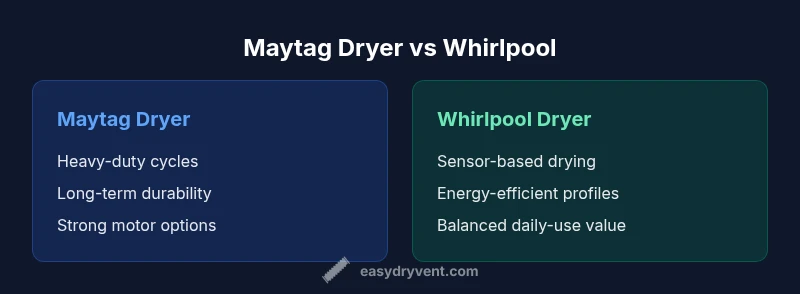
Drying performance often tops the decision matrix in the maytag dryer vs whirlpool debate. Maytag typically emphasizes heavy-duty cycles, aggressive tumbling, and strong heat when needed, which can deliver fast, thorough drying for bulky loads such as comforters and heavy cottons. Whirlpool, by contrast, tends to optimize sensor-based drying, moisture detection, and cycle timing to balance speed with fabric care. In practical terms, if your household runs multiple large loads weekly, a Maytag model with a robust power option may reduce cycle counts. If you want consistently well-dried clothes with less risk of overdrying, Whirlpool’s sensor-driven options are attractive. Across both brands, choosing models with reliable moisture sensing and adaptive drying can minimize fabric wear and energy use. Easy DryVent’s analysis indicates that sensor accuracy and vent cleanliness often drive the real-world drying difference more than the drum size alone.
Energy Efficiency and Cost of Ownership
Energy efficiency is a central concern in the maytag dryer vs whirlpool comparison, especially for households aiming to minimize utility payments. Whirlpool models frequently emphasize energy-saving features such as advanced moisture sensing, optimized drying profiles, and cooler-running cycles, which can translate into lower electricity usage for typical loads. Maytag models may prioritize high-torque motors and thermal efficiency for quick turnaround, which helps under heavy-use scenarios but can sometimes balance energy use differently depending on cycle selection. In either case, look for Energy Star ratings where available and compare estimated annual energy consumption across similar capacities. Real-world costs depend on usage patterns, vent maintenance, and the length of time cycles run each week. Easy DryVent notes that keeping vents clean and lint traps clear is as important as choosing an efficient model for lower operating costs.
Reliability, Maintenance, and Service
Reliability in the maytag dryer vs whirlpool discussion often hinges on build quality, motor durability, and ease of maintenance. Both brands offer parts and service networks with varying regional performance. Maytag appliances frequently feature rugged construction aimed at heavy loads, which can translate into longer lifespans when maintained properly. Whirlpool models tend to emphasize modular components and serviceability, which can simplify repairs and routine maintenance. A practical maintenance plan includes regular lint trap cleaning, quarterly vent inspection, and following manufacturer-recommended service intervals. Easy DryVent’s research highlights that proactive care—especially vent cleaning and duct inspection—can significantly extend dryer life and prevent most perform‑related downtimes during peak laundry seasons.
Design, Features, and User Experience
From a user experience standpoint, the maytag dryer vs whirlpool comparison highlights differences in control layouts, cycle variety, and display clarity. Maytag often showcases sturdy, straightforward interfaces with intuitive cycle options and solid feedback through audible alerts. Whirlpool generally emphasizes smart features, responsive controls, and slightly more streamlined cycle assortments for everyday use. For families juggling busy schedules, a model that offers quick-dry cycles, repeatable custom settings, and clear status indicators can save minutes each day. Regardless of brand, prioritize models with easy-to-clean lint filters, accessible vent routes, and durable drum interiors to maintain a positive long‑term experience.
Noise, Vibration, and Build Quality
Noise and vibration levels become noticeable factors in the maytag dryer vs whirlpool conversation when you place a unit near living spaces. Both brands produce quiet and loud variants depending on motor type, insulation, and drum support. In general, premium models from either brand incorporate better insulation, anti-vibration feet, and smoother drum motion. If you have an open-plan living area or a bedroom adjacent to the laundry room, select a model with a lower decibel rating and stable drum balance. Build quality matters here too: a solid cabinet, well-sealed seals, and robust door hinges reduce creaks and squeaks over time.
Warranty, Service Network, and Parts Availability
Warranty length and service reach can influence the long-term value of maytag dryer vs whirlpool purchases. Both brands offer varying warranty terms by model and region, with longer coverage often tied to premium lines. A broader service network matters for faster repairs and easier access to replacement parts. When evaluating options, compare the stated warranty duration, coverage inclusions (e.g., drum or motor), and the availability of authorized service centers in your area. Easy DryVent’s guidance suggests documenting model numbers and keeping receipts for easier service requests down the line.
Price Range, Availability, and Long-Term Value
Price is a key driver in the maytag dryer vs whirlpool decision, but it should be weighed against long-term value. Entry-level models from either brand typically start lower, while mid-range and premium versions offer enhanced cycles, faster dry times, and better materials. Rather than chasing the lowest sticker price, consider total cost of ownership: energy usage, maintenance intervals, potential service costs, and expected resilience. For most households, Whirlpool’s balance of energy efficiency and reliable performance represents strong value, while Maytag’s heavy‑duty offerings can be worth the extra upfront investment for families with frequent bulky-load needs. Always compare model-by-model over a 5–10 year horizon to get a true sense of value.
Venting, Cleaning, and Safety Considerations
Vent cleanliness and safe operation are often overlooked in the maytag dryer vs whirlpool analysis but have a direct impact on performance and safety. Regular lint trap removal, quarterly vent checks, and ensuring a properly sealed duct system reduce fire risk and improve airflow. Both brands support standard 4-inch venting, but installation quality matters as much as the model you choose. If your home’s laundry room layout requires a longer vent run or an unusual vent route, verify compatibility with your chosen model and plan for periodic professional inspections. Easy DryVent emphasizes that vent maintenance is a non‑negotiable part of dryer safety and efficiency.
Practical Buying Scenarios: When to Choose Maytag vs Whirlpool
If your family frequently dries large, bulky items and requires rapid turnaround, Maytag’s heavy-duty cycles can shine in the maytag dryer vs whirlpool context. For households prioritizing energy efficiency, quiet operation, and balanced performance on everyday loads, Whirlpool often offers a more economical and predictable experience. Consider your laundry room size, vent access, noise tolerance, and whether you prioritize cycle customization vs. simplicity. In the end, the best choice aligns with your typical loads, maintenance readiness, and service availability—the trifecta that determines real-world satisfaction.
A Quick Roadmap: How to Decide Between Maytag and Whirlpool
- List your main load types (loads per week, bulky items, delicate fabrics). 2) Compare drying times and cycle options that cover those loads. 3) Check energy usage estimates and operating costs. 4) Review warranty terms and nearest service centers. 5) Inspect vent routes and plan for regular cleaning. 6) Read a handful of model-specific reviews to identify any recurring reliability themes. This roadmap supports the maytag dryer vs whirlpool decision with clear steps and concrete criteria.
Conclusion: Making the Call on Maytag vs Whirlpool
In the final analysis, the maytag dryer vs whirlpool decision becomes a personal trade-off between power versus efficiency, bulk-load capability versus everyday usability, and upfront cost versus long-term value. Easy DryVent’s overall takeaway is to prioritize your home’s physical setup, drying patterns, and maintenance readiness. By aligning model choices with real-world use, you maximize satisfaction and minimize surprises over the appliance’s lifespan.
Comparison
| Feature | Maytag Dryer | Whirlpool Dryer |
|---|---|---|
| Drying technology | Heavy-duty cycles, robust heat for bulky loads | Sensor-based dryness with energy-conscious profiles |
| Energy Efficiency | Strong performance in heavy loads; efficiency varies by model | Often emphasizes energy-saving sensors and optimized cycles |
| Typical price range | Mid-to-high | Mid-range to premium |
| Best for | Bulky, demanding loads and durability | Everyday use with emphasis on efficiency |
| Warranty/Service network | Good regional coverage with solid parts availability | Strong service network and easy access to fixes |
| Venting & maintenance | Standard venting; demands regular lint cleaning | User-friendly maintenance and accessible parts |
| Noise & build quality | Solid construction; some models can be louder under high power | Quiet variants with strong insulation in premium lines |
The Good
- Clear, structured guidance helps buyers compare two popular brands
- Focus on long-term value and maintenance implications
- Highlights practical venting and safety considerations
- Balanced view on performance trade-offs
Negatives
- Model-to-model variability may blur general conclusions
- Brand-specific service coverage varies by region
- Limited to two brands; not a comprehensive market view
Whirlpool offers best value for most households; Maytag excels in heavy-duty performance.
Choose Whirlpool if energy savings and everyday reliability matter most. Choose Maytag if you need robust performance for large or bulky loads and value durability over upfront cost.
Common Questions
Which brand is better for large families?
For large families with frequent bulky loads, Maytag’s heavy-duty cycles can deliver faster, more robust drying. Still, Whirlpool’s sensor-driven models can handle everyday loads efficiently and reliably. Consider your weekly load mix and prioritize a model with durable drums and strong customer support.
If you have lots of bulky loads, Maytag can be a strong pick due to its robust cycles, but Whirlpool can still be efficient for day-to-day use. Look at the specific model’s drum and cycle options.
Do these brands offer compatible venting options?
Yes. Both Maytag and Whirlpool dryers use standard 4-inch vents and require regular lint removal. If your home layout demands longer duct runs, verify each model’s vent compatibility and consider professional installation for optimal airflow.
Both brands use standard vents, but check your duct length and inspect regularly for lint buildup.
Which is more energy-efficient overall?
Whirlpool models often emphasize energy-saving sensors and efficient profiles, which can translate to lower annual energy use for typical loads. Maytag can be competitive, especially in heavy-duty cycles, but efficiency is highly model-dependent. Compare Energy Star ratings and expected annual energy consumption for the specific models you’re considering.
Whirlpool commonly edges out in energy efficiency on average, but it depends on the exact model.
Are repairs or maintenance costly for these brands?
Repair costs vary by model and region, but both brands have broad parts availability and service networks. Regular maintenance, including lint trap cleaning and vent checks, reduces the chance of expensive repairs and extends appliance life.
Costs depend on the model and local service rates, but maintenance is key to avoiding big repairs.
What should I check before buying?
Check energy ratings, available cycles for your load types, drum capacity, noise levels, and warranty terms. Also verify service coverage in your area and read model-specific reviews for reliability trends.
Look at energy use, cycles, noise, warranty, and local service availability.
Do Maytag and Whirlpool dryers differ in noise?
Yes. Noise varies by model and insulation quality. Look for decibel ratings in the product specs and consider a unit with better insulation if the laundry room is near living spaces.
Some models are quieter than others; check the decibel rating before buying.
Key Points
- Assess your typical loads before choosing
- Prioritize vent maintenance to lower costs and risk
- Compare energy usage and warranty terms
- Check service availability in your area