Is Dryer Available in India? A Practical Guide for Homeowners
Explore whether a dryer is available in India, the types you’ll find, voltage and installation considerations, energy efficiency, and practical tips for urban Indian homes. A practical Easy DryVent guide to buying, using, and maintaining dryers in Indian conditions.


Is dryer available in india? Yes. Dryers are available in India, but selection is limited compared with many markets. You’ll typically find compact electric vented or condenser models in major cities and via online retailers; regional voltage, plug types, and space constraints influence which models will work in your home.
is dryer available in india
According to Easy DryVent, is dryer available in india? The short answer is yes, but availability varies by city and living situation. In India, many households still rely on traditional line-drying due to space, cost, and climate, yet demand for electric dryers is rising in urban apartments and new-build homes. The Easy DryVent team notes that import brands and local distributors now offer compact, 230V models that fit Indian outlets and voltage standards. If you’re shopping for a dryer in India, start by assessing your space, electrical setup, and how often you dry large loads. This context helps you choose between vented, condenser, or heat-pump options that work best in your home.
Types of dryers you’ll find in Indian markets
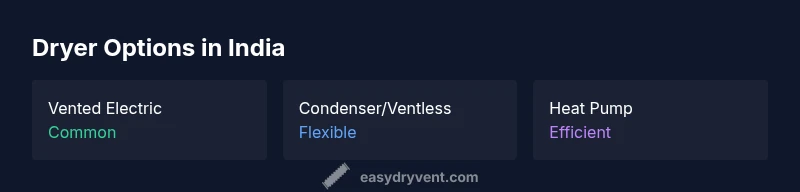
India’s dryer landscape includes three main families: vented electric models, condenser/ventless models, and heat-pump dryers. Vented models expel warm air outside through a vent hose and generally cycle faster but require exterior venting and adequate space. Condenser and heat-pump dryers recycle warm air, so they don’t need external vents, though they may cost more upfront and run longer per load. In metropolitan areas, compact or washer-dryer combos are becoming more common, especially among renters. Gas-powered dryers are rare in residential markets and typically less practical due to gas supply layouts. When buying, consider your apartment size, power availability, venting options, and noise tolerance.
Voltage, plug types, and power supply considerations in India
Most electric dryers sold in India operate on standard 230V, 50Hz supply, but plug shapes and circuit requirements can vary by brand and region. Before purchasing, confirm the plug type, circuit rating, and whether you need a dedicated outlet. If your home’s circuitry is older or shared with other high-wattage devices, you may require a dedicated 15- or 20-amp circuit and an appropriate breaker. If a vented unit is chosen, plan for a compliant vent path to the outside. For many urban homes, a compact vented dryer installed close to an exterior wall is the most practical arrangement.
Vented vs ventless: which is better for Indian homes?
Vented dryers are typically cheaper upfront and dryer cycles are faster, but they require venting and space for the exhaust path. Ventless models, including condenser and heat-pump types, are easier to install in apartments and homes without external venting, but they tend to cost more and may run longer per cycle. In Indian climates with high humidity, ventless options can reduce moisture in indoor spaces, though you should still consider energy use. Easy DryVent suggests weighing your priorities: upfront cost, running cost, space, and whether you can accommodate a vent path.
Sizing, space, and installation considerations
Apartment layouts often limit where a dryer can go. Measure the height, width, depth, and clearance around the unit. If wall space is scarce, look for compact or stacked washer-dryer configurations. Ceiling or wall clearance matters for vent hoses and for maintenance access. Plan for a nearby outlet and, if possible, a dedicated circuit. Sound and vibration pads can improve comfort in small rooms. Finally, ensure you follow local regulations and installer guidelines to keep your warranty valid.
Energy use, efficiency, and operating costs in India
Energy efficiency is a major factor in choosing a dryer in India. Look for models with efficient heat exchangers and insulation, and compare energy labels where available. Condenser and heat-pump dryers generally use less energy per cycle than vented dryers, but they may take longer to dry. Real-world running costs depend on load size, frequency of use, and electricity tariffs in your area. The Easy DryVent team notes that investing in a high-efficiency unit can reduce electricity bills over time, especially for households that dry almost every day.
Practical buying guide and maintenance tips
When selecting a dryer in India, start with a realistic budget and the space you have. Compare models within the same category to get a sense of typical performance and running costs. Look for reliable service networks and readily available spare parts in your region. Regular maintenance—cleaning lint filters, checking seals, and ensuring the vent/duct (if used) remains clear—keeps machines efficient and safe. If space is extremely tight, consider a drying cabinet or a compact washer-dryer combo as a practical alternative to a full-size tumble dryer.
Dryer types commonly available in Indian markets
| Type | Typical Space | Power/Voltage | Notes |
|---|---|---|---|
| Vent-vented electric | Large, needs external vent | 230V / 50Hz | Common in homes with ducting; higher energy use |
| Condenser/ventless | Medium, no external vent required | 230V / 50Hz | Easier installation; longer cycle times possible |
| Heat pump dryer | Medium/stackable | 230V / 50Hz | Most energy-efficient; higher upfront cost |
Common Questions
Is a clothes dryer commonly used in Indian homes?
Usage is growing, especially in urban apartments, but many households still rely on line-drying due to space, cost, and climate. Availability of compact, 230V models has improved access in cities.
Usage is growing in urban areas, but many homes still dry clothes outside or on racks.
What types of dryers are available in India?
India offers vented electric dryers, condenser/ventless models, and increasingly, energy-efficient heat-pump dryers. Gas-powered options are uncommon for residential use. Consider space, venting, and energy costs when choosing.
You’ll find vented, condenser/ventless, and heat-pump dryers; gas options are rare.
Do I need a special electrical setup to run a dryer in India?
Most units require 230V/50Hz with a suitable outlet and a circuit adequate for high-wattage appliances. A dedicated circuit may be necessary in older homes or where other heavy loads are present.
Most dryers need a dedicated 230V outlet and circuit.
Are vented dryers suitable for apartments in India?
Vented models can work in apartments if you have a compliant exterior vent path. They are typically cheaper but require proper venting and space for exhaust.
Venteds are fine in apartments if you can vent the exhaust outside.
What size dryer is best for small Indian homes?
For compact spaces, look for a compact or stackable washer-dryer setup. Measure available width, height, and depth, and consider models with reversible doors for tight corners.
Choose compact or stackable models when space is tight.
What are typical operating costs of running a dryer in India?
Costs vary by model, load size, and tariff. Higher-efficiency ventless or heat-pump models tend to reduce running costs over time, especially with frequent use.
Costs depend on model and usage; energy-efficient options save more over time.
“Choosing the right dryer in India hinges on space, power availability, and ventilation. Energy-efficient, ventless options offer practical benefits for apartment living.”
Key Points
- Define your space before buying to pick the right model
- Weigh vented vs ventless based on venting access and apartment layout
- Verify voltage, plug type, and circuit requirements before purchase
- Prioritize energy efficiency to reduce long-term running costs
- Consider alternative drying options (racks, cabinets) for smaller homes