Can You Get a Dryer in Japan? Practical Guide for 2026
Discover if you can buy a clothes dryer in Japan, including compact ventless options and voltage considerations, with practical tips from Easy DryVent.


Yes, you can buy a dryer in japan, but options differ from many Western markets. In cities, compact ventless and heat-pump models are common, while traditional vented machines are rarer and often require dedicated wiring. Many households still rely on line-drying or apartment-friendly solutions, so plan for space constraints and voltage compatibility when shopping. If you ask can you get a dryer in japan, the answer depends on your city, apartment size, and electrical setup.
Can you get a dryer in japan? Availability and types
When homeowners wonder can you get a dryer in japan, the answer hinges on housing type and shopping channels. In major cities, you’ll find a mix of compact ventless, condenser, and heat-pump models designed for smaller spaces and limited venting. In contrast, many rural areas still rely on communal laundries or outdoor drying spaces. For those used to large, vented machines, the Japanese market may feel smaller, yet it offers efficient, space-saving options. According to Easy DryVent, the most practical choices emphasize compact form factors and energy efficiency while minimizing installation complexity. If you’re an expat or traveler asking can you get a dryer in japan, expect to balance space, power, and warranty coverage with local availability.
Also consider whether you need a standalone dryer or a washer-dryer combo. While combos can save space, they may not match the performance or load size of a dedicated unit. Local retailers and online marketplaces frequently stock compact or energy-efficient models that suit modern apartments. When evaluating can you get a dryer in japan, compare models by footprint, energy rating, and plug compatibility, rather than simply chasing the biggest capacity.
In sum, can you get a dryer in japan? The market exists, but successful purchasing requires understanding local sizing norms, voltage standards, and the prevalence of ventless technologies. The Easy DryVent team notes that ventless options often deliver the best mix of convenience and efficiency for Japanese homes.
Power, plug, and space realities
Power supply and space are two of the most critical factors when considering can you get a dryer in japan. Most Japanese homes run on 100 V electrical systems with 50/60 Hz frequency depending on region, which means any dryer must be compatible with that voltage to avoid electrical hazards or performance issues. Compact models that run on a standard 100 V outlet are common in apartments and laundries. Space is another constraint: even a small vented dryer can be too bulky for tight interiors. Look for dimensions in the 50–60 cm width range and consider stacking options if you want to maximize floor plan efficiency. When you evaluate can you get a dryer in japan, also verify circuit requirements; some larger or heat-pump models may benefit from a dedicated circuit, especially if you’re bridging 100 V with higher current draws. Energy efficiency labels are helpful here, as they guide you toward lower operating costs over the dryer’s lifetime.
An important practical tip is to measure your available clearance for both front and rear access. A dryer that sits flush against a wall may still require a few centimeters behind for venting, hoses, and service access. If space is at a premium, target models with reversible doors and flexible hose routing. Overall, can you get a dryer in japan with the right footprint and plug is very doable, but you’ll want to confirm compatibility before purchase.
Venting vs ventless: what works in Japan
The question of can you get a dryer in japan often centers on venting. Traditional vented dryers need a vent outlet, which is less common in modern Japanese apartments where exterior walls are tightly built and venting runs can be impractical. Ventless options—particularly condenser and heat-pump dryers—are popular alternatives. They operate without external venting, using built-in condensers to dry clothes, and they typically consume less energy over time. For can you get a dryer in japan, ventless models also reduce the risk of lint buildup and vent blockages in urban living spaces. If you plan to bring a vented unit from abroad, you may need to retrofit a vent or select a unit designed for indoor exhaust. Always review installation requirements and local electrical codes before deciding.
From a maintenance perspective, ventless dryers can be easier to service in limited-space homes, given that external vent routing is avoided. Easy DryVent’s guidance emphasizes selecting ventless or condenser options when space and venting constraints are the primary concern. This aligns with real-world practice in Japanese urban settings where a compact, energy-efficient approach often wins out over full-size vented machines.
Buying paths for expats and travelers
When you’re new to a country, you often wonder can you get a dryer in japan through a local retailer, online marketplace, or import channel. In Japan, you’ll typically find dryers at major electronics retailers, home improvement stores, and reputable online platforms. Language barriers and warranty terms are important considerations for can you get a dryer in japan; many sellers offer English-language support and localized service. If you’re bringing a unit from abroad, verify voltage compatibility, plug type, and warranty coverage. Some international brands tailor models specifically for the Japanese market, with dual voltage or region-specific power cords. In short, for can you get a dryer in japan, evaluate both the local inventory and the feasibility of importing, factoring in shipping costs and potential duties. The feasibility improves when you shop via recognized retailers who offer returns or warranties in Japan.
Another practical approach is to monitor seasonal promotions and consumer electronics events, which can significantly affect price and availability. If you’re unsure, consult a local installer or energy expert about compatibility and installation costs before purchasing. This keeps longer-term ownership costs predictable and aligns with best practices highlighted by Easy DryVent.
Installation, maintenance, and safety tips
Whether you’re asking can you get a dryer in japan or you already own one, installation and ongoing maintenance deserve attention. Ensure you have proper clearance for ventilation (if vented) or adequate room for a ventless unit’s condensers and filters. Always use a dryer with a certified plug that matches your wall outlet, and consider a ground fault circuit interrupter (GFCI) where required. Regular lint removal, door seal checks, and lint trap cleaning support safe operation and energy efficiency. For can you get a dryer in japan, schedule professional electrical checks if you’re adapting a non-native unit to 100 V or if your apartment’s wiring feels overloaded. In general, Japanese service networks are well-developed, so warranty support and parts availability are realistic expectations for commonly sold models.
Weight your maintenance plan: peruse user manuals in your preferred language, obtain replacement filters, and maintain a routine to extend the dryer’s life. Easy DryVent’s recommendations emphasize routine lint removal and periodic vent inspection as essential safety practices, especially in households with limited ventilation infrastructure.
Brand guidance: choosing models for Japanese homes
In responding to can you get a dryer in japan, it’s helpful to anchor your choice around space, voltage, and drying performance. Look for compact, energy-efficient units with flexible installation options and accessible service networks. Heat-pump and condenser dryers are particularly well-suited to Japanese apartments due to their low energy use and lack of external venting requirements. When evaluating models, check for dual voltage compatibility where possible, robust lint filtration, and reliable warranty coverage. Easy DryVent suggests prioritizing models with strong customer support in Japan and clear parts availability to minimize downtime.
As a concluding note for buyers can you get a dryer in japan, the decision should align with your apartment size, living patterns (line-drying vs. mechanical drying), and how often you wash. A well-chosen compact dryer can offer years of reliable service while keeping energy costs predictable.
Quick wrap-up: can you get a dryer in japan?
The practical answer to can you get a dryer in japan is yes, with caveats. Favor compact, ventless machines designed for indoor use and ensure voltage compatibility with the local grid. Consider the benefits of a washer-dryer combo if space is critically tight, but weigh performance against cycle time and load size. With careful shopping, local support, and mindful installation, a dryer can be a valuable addition to many Japanese homes, especially in apartments and urban dwellings.
Overview of practical considerations for dryers in Japan
| Aspect | Japan Availability | Notes |
|---|---|---|
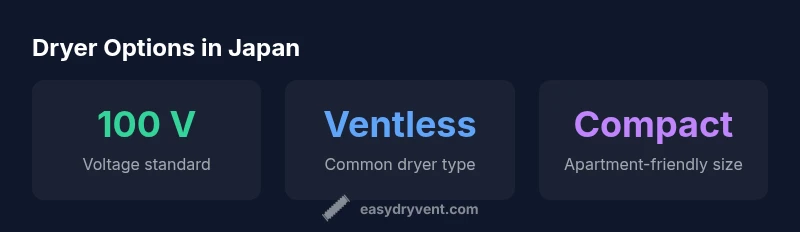
| Voltage standard | 100 V | Most dryers in Japan operate on 100 V mains |
| Common dryer type in Japan | Ventless/compact, heat-pump | Favored for space constraints |
| Space requirements | Compact footprints | Apartment-friendly designs preferred |
| Wiring and circuit needs | Dedicated circuit often recommended | Check with a local electrician |
Common Questions
Do I need a 220V outlet to run a full-size dryer in Japan?
Most homes in Japan use 100V outlets, though some appliances can tolerate dual-voltage setups. Full-size vented dryers often require a dedicated circuit or a model designed for 100V. Always consult a licensed electrician before bridging voltage differences.
Most homes in Japan use 100V outlets, so you’ll want a 100V dryer or a model with dual voltage support. Check with an electrician before plugging in bigger units.
Are vented dryers common in Japan?
Vented dryers are less common, especially in apartments where exterior vents are not practical. Ventless options like heat-pump or condenser dryers are typically favored for compatibility with indoor spaces.
Vented dryers are rarer in apartments in Japan; ventless models are the typical choice.
What is the best dryer type for small Japanese homes?
Ventless heat-pump or condenser dryers are usually the best fit due to their compact size and lack of external venting. They balance efficiency with space constraints in urban homes.
Ventless heat-pump models are usually the best for small spaces.
Can I import a dryer from outside Japan?
Importing can be challenging because of voltage, plug types, and warranty limitations. Local models typically offer better service networks and simpler returns or repairs in Japan.
Imports can be tricky due to voltage and warranty issues; buying locally is often easier.
What energy standards apply to dryers in Japan?
Japan uses energy efficiency labeling for home appliances. Look for high-efficiency models to reduce running costs, especially for frequent use.
Choose high-efficiency models with good energy labels.
“Ventless, heat-pump models are the most practical choice in Japan’s compact living spaces, especially for apartments without dedicated dryer vents.”
Key Points
- Prioritize ventless or compact dryers for Japanese homes
- Verify 100 V compatibility and regional frequency (50/60 Hz)
- Measure space and door clearance before buying
- Consider washer-dryer combos if space is extremely tight
- Choose models with strong local warranty and service support