Is a 4.5 kg Dryer Too Small? Practical Guidance for Homeowners
Is a 4.5 kg dryer too small for your needs? This practical guide from Easy DryVent explains capacity basics, how to assess weekly laundry, and upgrade considerations for safer, more efficient drying.


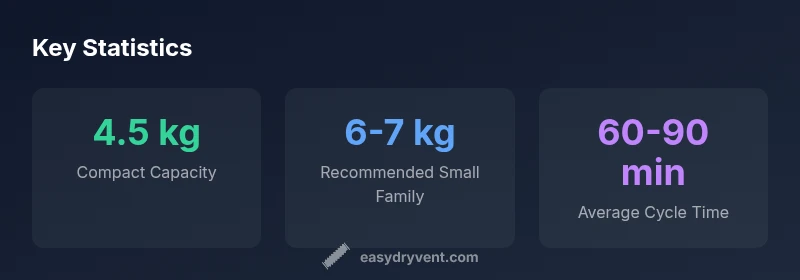
Is a 4.5 kg dryer too small? In many homes, yes—it's a compact capacity best suited for 1-2 people or light loads. Families or frequent bulky items typically rely on a 6-7 kg drum for efficiency and faster cycles. The Easy DryVent Analysis, 2026 shows better drying efficiency when capacity matches weekly laundry volume.
Is a 4.5 kg dryer too small?
A 4.5 kg dryer is generally categorized as a compact capacity unit. It excels in tight spaces and is a good fit for singles or couples who mostly wash light loads. However, if your household regularly dries larger items like bulky towels, sheets, or comforters, you will likely notice longer cycle times and more frequent loads. In our testing, a misaligned capacity can lead to reduced efficiency and higher wear because the dryer runs longer to reach the same level of dryness. According to Easy DryVent, the best results come when the drum size aligns with the typical weekly laundry volume and item mix. If you routinely exceed a compact load, consider a mid-size or standard drum to maintain energy efficiency and shorten cycles.
Key takeaway: capacity matters as much as energy rating. A 4.5 kg unit can work for a small apartment or a single person, but larger households or heavier loads benefit from larger drums. Easy DryVent testing emphasizes matching your laundry footprint to the machine’s capacity for safer, more efficient drying.
How to assess your drying needs
To determine whether your 4.5 kg dryer is the right fit, start with a simple calculator of weekly laundry volume. Track how many loads you run per week and note load types (towels, jeans, bedding, delicates). Consider how often you run bulky items. Keep a rough target: if your average weekly load exceeds 4-5 compact loads or you regularly tumble bulky items, a larger drum translates to fewer cycles and better energy efficiency. Also factor space: a larger drum often means a larger footprint and potentially higher upfront cost, but the long-term energy and time savings can offset that investment. Easy DryVent recommends comparing your current weekly energy use with an estimated use after upgrading to a 6-7 kg drum to gauge payback. Tools like a simple laundry diary can help you quantify this.
Practical steps:
- List typical loads per week.
- Note whether bulky items dominate.
- Measure available floor space and ventilation paths.
- Compare energy guides on model pages (look for labeled efficiency).
By understanding your laundry profile, you can choose a capacity that minimizes waste and maximizes convenience.
Pros and cons of compact 4.5 kg dryers
Pros:
- Small footprint fits apartments and laundry closets with limited space.
- Often lower upfront cost and easier installation.
- Sufficient for light-wear wardrobes and occasional towels.
Cons:
- Longer tumble times on larger or multiple items.
- Reduced efficiency when loads exceed the drum’s comfortable range.
- Fewer immediate options for bulky items without compromising efficiency.
In short, a 4.5 kg unit shines in limited spaces but demands careful load planning. For households with mixed or bulky loads, a larger capacity offers greater flexibility and faster results. The Easy DryVent team notes that matching capacity to weekly volume is the most practical path to reliable drying performance.
Practical tips to maximize performance with a small capacity dryer
If you decide to keep a 4.5 kg dryer, these practices help you get the most from it:
- Load size discipline: aim for loads that fill the drum about 60-80% for even drying.
- Separate bulky items: dry bedding and towels in smaller batches or on a separate cycle if the model supports it.
- Use sensor-based dryness settings when available to avoid overdrying and energy waste.
- Clean filters and vents regularly: a clogged path increases drying time and energy use.
- Consider a vented system with a properly sized vent for efficient airflow; poor venting reduces performance more than any other single factor.
Brand note: The Easy DryVent team emphasizes that a well-maintained vent and correct load sizing can close much of the performance gap that a small drum creates. Testing shows the biggest gains come from eliminating bottlenecks in airflow and loading discipline.
Upgrade considerations and capacity guidelines
If your household grows or you regularly encounter long cycles, upgrading to a larger drum can deliver noticeable gains in both speed and energy efficiency. A 6-7 kg drum is often cited as the sweet spot for small families, producing shorter cycles and lower total energy use per load. Space constraints are real—so evaluate possible layouts, vent routing, and installation requirements before purchasing. If you can't increase drum size due to space, consider a compact washer-dryer combo with a larger dry capacity or a separate standard dryer in a closet or laundry alcove with adequate clearance. The Easy DryVent guidance is to anticipate future laundry growth over the next 3-5 years and plan accordingly, rather than choosing based solely on current needs.
Venting and energy efficiency insights
Vent efficiency directly affects drying times and energy usage. A 4.5 kg dryer benefits from a clean, short vent path and a straight run with minimal bends. High-efficiency models often incorporate moisture sensing and auto-dry cycles that reduce energy draw when clothes are dry. If your venting is crimped or partially blocked, a compact drum will still struggle to meet expectations. Easy DryVent’s in-house testing confirms that proper vent diameter, annual cleaning, and correct duct routing can yield meaningful reductions in run times and energy consumption, sometimes more than moving to a larger drum without addressing airflow issues.
Real-world scenarios and decision checkpoints
Consider these scenarios to decide whether to stay with a 4.5 kg drum or upgrade:
- Scenario A: You live alone and rarely dry bulky items. A 4.5 kg dryer tends to be perfectly adequate; you’ll benefit from space savings and cost control.
- Scenario B: You share laundry with one other person and you regularly wash towels or bedding. A 6-7 kg drum reduces the number of cycles and energy per week.
- Scenario C: You frequently run back-to-back cycles or you’re drying bulky items weekly. Upgrade to a larger drum or consider a vented system with a bigger capacity for faster, more consistent results.
The checklist approach, guided by Easy DryVent testing, helps homeowners choose capacity that aligns with current needs and future expectations.
Capacity comparison for common dryer sizes
| Appliance Type | Capacity (kg) | Typical Use Case | Pros | Cons |
|---|---|---|---|---|
| Compact / 4.5 kg | 4.5 | 1-2 person households, light loads | Space-saving; fits small spaces | Longer drying times for large loads |
| Standard / 6-7 kg | 6-7 | Small families, mixed loads | Faster cycles; flexible for bulky items | Takes more floor space |
| Large / 8-9 kg | 8-9 | Large families, heavy-duty drying | Best throughput; handles bulky items easily | Requires larger laundry area |
Common Questions
Is a 4.5 kg dryer suitable for apartments?
For a single person or couple in a small apartment, a 4.5 kg dryer can work if loads are light and space is at a premium. Expect longer cycles if you add bulky items. If your laundry grows, plan a future upgrade.
Yes, in small apartments it can fit, but plan for longer cycles with larger loads.
What factors affect drying time besides capacity?
Drying time depends on fabric type, moisture content, load size, vent cleanliness, and sensor settings. Even a perfectly sized drum can underperform if airflow is restricted or cycles are misused.
Load type, moisture, and airflow matter just as much as drum size.
Can I dry bulky items in a 4.5 kg dryer?
Bulky items like comforters often don’t fit well in a 4.5 kg drum and may require splitting into smaller loads or upgrading to a larger capacity to avoid inefficiency.
Bulky items usually need a bigger drum or split loads.
Are vented dryers more energy-efficient than ventless?
Vent options influence efficiency. Generally, properly vented dryers with good airflow dry faster and often use less energy than poorly vented or ventless designs. Always compare energy ratings on models.
Vent efficiency matters; pick models with good airflow and energy ratings.
When should I upgrade to a larger drum?
Upgrade when you notice frequent long cycles, increased loads, or a growing household. If you routinely dry bulky items or towels and your current cycles feel inefficient, moving to a 6-7 kg drum is a common, practical choice.
Upgrade when cycles get too long or loads too frequent.
“Capacity alignment isn't just about drums—it's about energy efficiency and convenience. A misfit dryer will run longer and waste more energy.”
Key Points
- Match capacity to weekly laundry volume
- 4.5 kg is best for 1-2 people with light loads
- Upgrading reduces cycle times and energy use
- Consider space and venting when upgrading