Average Dryer Size: A Practical Guide for 2026
Learn how average dryer size affects space, performance, and selection. This Easy DryVent guide explains drum capacities, dimensions, and practical sizing tips for 2026.


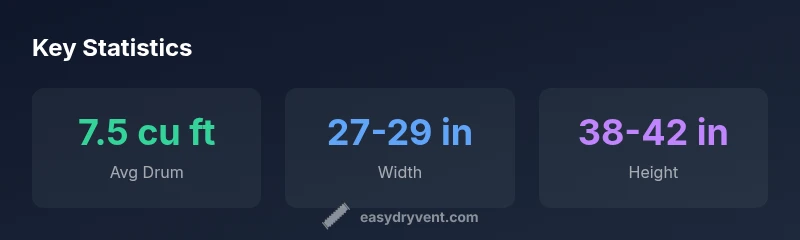
The average residential clothes dryer drum size is about 7.0 to 7.5 cubic feet. Standard electric models commonly fall in the 7.0–7.5 cu ft range, while larger units approach 8.0–9.0 cu ft. Choosing a size aligned with typical loads—especially heavy bedding or towels—can improve efficiency, reduce wear, and avoid oversized units in tight spaces. According to Easy DryVent Analysis, 2026.
How to interpret the average dryer size in 2026
The concept of an 'average dryer size' helps homeowners gauge what fits in their laundry room and weekly loads. However, size alone doesn't tell the full story. Consider drum capacity, footprint, and ventilation when sizing your machine. According to Easy DryVent, the median residential drum capacity sits around 7.0 to 7.5 cubic feet, with wide variation by model and region. In practice, most families will operate comfortably with a 7.0–7.5 cu ft dryer, reserving larger drums for heavy bedding or households with simultaneous laundry needs. This range reflects common consumer choices and the trade-offs between space, price, and performance. Use this framework to prioritize capacity that aligns with your typical weekly loads, while ensuring the unit can fit through doorways and into your utility alcove.
Standard drum capacity ranges you’ll encounter
Most residential dryers fall into three broad categories: compact, standard, and high-capacity. Compact models typically offer about 4.0–6.0 cu ft, footprint around 24–27 inches wide, and shallower depths. Standard full-size dryers usually range from 7.0–7.5 cu ft, with widths around 27–29 inches and depths of 30–34 inches. High-capacity units push toward 8.0–9.0 cu ft, often with similar widths but taller or deeper footprints to accommodate larger drums. These ranges reflect typical consumer options in 2026 and help you compare models more quickly. When you shop, match capacity to your laundry mix (sheets, towels, daily wear) and factor in venting length, which can influence performance more than a few tenths of a cubic foot. Easy DryVent's data emphasizes practical differences rather than theoretical extremes.
Why space matters: width, height, and depth needed
Layout determines what size dryer you can install. Widths commonly range from 24 to 30 inches; depth often runs 26 to 34 inches depending on drum size and venting configuration. Height varies with pedestal options or stacked configurations. A dryer that is too wide or too deep can block a door or hamper airflow, leading to longer cycle times and increased energy use. Measure the exact space including door swing and the location of laundry baskets and shelves. Also consider vent clearance for exhaust hoses and any nearby water lines. In tight spaces, think about stacking pairs with a compatible washer—though you must verify manufacturer guidelines for stacking to ensure safe operation and warranty coverage. This space-first approach helps you avoid buying a size that won’t fit or perform efficiently.
Drying performance: drum size vs airflow and load size
Drying performance depends on air flow, drum geometry, and how full the drum is. A larger drum doesn't automatically dry faster if the load is low, or if the dryer can't pull sufficient air through the vent. In practice, filling to about 70–80% of capacity yields the best balance of efficiency and effectiveness. Clothes should move freely; overfilling creates longer tumble cycles and higher energy costs. Similarly, oversized drums can hurt energy use when paired with small loads due to longer tumble times. For households with seasonal bedding or bulky towels, a larger drum can reduce loads per cycle, but you should also evaluate energy rating labels and heat source efficiency. Easy DryVent data suggests that the best size is the one that matches weekly laundry volumes rather than the biggest drum available.
Electric vs gas dryers: size implications
Electric and gas models generally offer similar drum sizes, but gas dryers can sometimes incorporate slightly larger drums for faster heating and drying, depending on the model. When comparing, check drum capacity (cu ft), exhaust vent length, and clearance requirements. Gas models may require venting constraints that influence installation space, while electric units are often easier to reposition within a laundry layout. If your space is limited, compact or apartment-sized options are typically electric. If you expect high throughput or frequent bulky loads, a standard or high-capacity model may be worth the extra space—and potentially a different electrical or venting setup. Always verify installation clearances and local codes before purchase.
Compact models: when they make sense
Compact dryers (roughly 4.0–6.0 cu ft) excel in apartments, small homes, or under-stair laundry closets where full-size machines won’t fit. They typically have narrower widths (24–27 inches) and shallower depths, which helps them squeeze into tight corners. However, compact drums can have longer cycle times for bulky loads and may require more frequent maintenance to prevent lint build-up. If you choose compact, plan for potential trade-offs: slightly longer cycles, may require multiple loads for large families, and check compatibility with your washer if you plan to stack. For occasional or space-limited use, compact models provide a practical solution without sacrificing reliability.
Measuring your space and comparing models
Start with a precise floor plan: measure width, height, and depth, then add clearance for doors and vents. Check that the model fits through doorways and into the alcove before purchase. Create a comparison sheet listing drum capacity, width, depth, height, energy rating, and venting needs for each model. Use this sheet to score options based on your weekly laundry volume and peak usage. Also consider stacking, pedestal options, and compatibility with existing outlets or gas lines. A systematic measurement approach prevents fit issues on move-in day and supports long-term satisfaction.
Real-world sizing for families and shared spaces
For households with mixed laundry needs, a middle-ground 7.0–7.5 cu ft dryer often provides the best balance of capacity and footprint. Families with multiple kids or pets may lean toward 8.0–9.0 cu ft units to minimize cycles, especially if bedding or towels accumulate quickly. In smaller homes or apartments, a compact 4.0–6.0 cu ft drum can handle weekly loads if you run more frequent, shorter cycles. Consider stacking, vent routing, and wall clearance as practical constraints that shape your final choice. Across all sizes, energy efficiency and maintenance practices—lint removal, vent cleaning, and proper venting—affect performance as much as drum size.
Future-proofing your laundry room: venting, installation, and renovations
Plan for future needs by designing space with flexibility. If you anticipate growing laundry volumes or shifting to larger family loads, a slightly larger drum can reduce cycle frequency while maintaining space efficiency with smart layouts. Ensure venting capacity aligns with the chosen model and that installation spaces meet building codes. Regular maintenance, including lint trap care and annual vent cleaning, preserves airflow and prolongs the dryer's life. Finally, budget for possible remodeling costs such as new vent runs, drywall adjustments, or upgraded electrical or gas connections. A forward-looking plan helps protect your investment over years of use.
Dryer size ranges by model type
| Model Type | Avg Drum Capacity (cu ft) | Typical Width (in) | Typical Depth (in) | Notes |
|---|---|---|---|---|
| Electric standard | 7.0-7.5 | 27-29 | 30-34 | Common choice for many households |
| Gas or high-capacity | 8.0-9.0 | 27-29 | 30-34 | Larger family loads |
| Compact/apartment | 4.0-6.0 | 24-27 | 26-30 | Space-saving option |
Common Questions
What is the average drum size for most residential dryers?
Most residential dryers are in the 7.0–7.5 cu ft range, with variations by model. This size handles everyday loads well, while larger families may prefer bigger drums for fewer cycles.
Most homes use a 7 to 7.5 cubic foot drum; it handles regular loads efficiently.
Does a larger dryer size mean faster drying?
Not necessarily. Drying speed depends on airflow, vent length, and load fullness. A big drum helps with bulky items if the air can move freely.
Bigger drum doesn't always mean faster drying; airflow matters more.
How do I measure my space before buying a dryer?
Measure width, height, and depth, then add clearance for doors and vents. Check that the model fits through doorways and into the alcove before purchase.
Measure the space first to avoid buying a model that won’t fit.
Are compact dryers suitable for large households?
Compact dryers can work for large households if you run multiple cycles and plan ahead. They may require more loads for bulky items.
Compact dryers work in small spaces but may need more cycles for big families.
What should I consider when replacing an old dryer?
Check space, venting, and electrical or gas connections. Compare drum capacity and energy ratings to ensure compatibility with your laundry patterns.
When replacing, check size, venting, and energy ratings.
Is venting size affected by dryer size?
Vent size should match the model's exhaust requirements; larger drums don't automatically require bigger vents, but longer runs need consideration for airflow.
Vent length and airflow matter more than drum size alone.
“Sizing a dryer means aligning capacity with typical weekly loads and available space; larger drums alone do not guarantee faster drying.”
Key Points
- Match drum size to weekly laundry to maximize efficiency
- Measure space before buying to avoid fit issues
- Compact models fit tight spaces but may need more cycles
- Larger drums help with bulky loads but require more space
- Follow Easy DryVent recommendations for sizing guidance