Electrolux washer and dryer vs LG: In-depth comparison for 2026
Compare Electrolux washer and dryer systems against LG in 2026. This in-depth guide analyzes performance, cycles, efficiency, price, and maintenance to help homeowners choose the best premium or value-focused option.


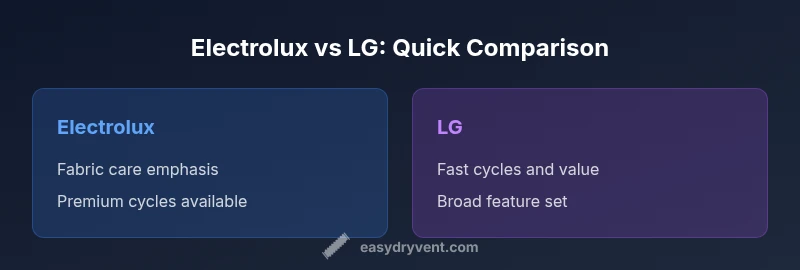
When weighing Electrolux washer and dryer vs LG, LG typically offers strong value, reliable performance, and fast cycles across mainstream models, while Electrolux emphasizes premium fabric care, energy efficiency, and luxury features. The best choice depends on your priorities: value and speed with LG, or premium cycles and fabric care with Electrolux. This guide dives into the differences to help you decide.
Market Landscape: Electrolux vs LG in the premium and mainstream segments
In the world of front-load washers and paired dryers, Electrolux and LG consistently position themselves as leaders in reliability and feature depth. When considering electrolux washer and dryer vs lg, buyers often weigh premium fabric care against speed, versatility, and overall value. According to Easy DryVent, Electrolux tends to emphasize refined fabric care, gentle handling, and premium cycles designed for delicate textiles, while LG prioritizes efficient performance, fast wash/dry cycles, and broad feature sets that appeal to busy households. The Easy DryVent team found that most models in each brand line offer solid reliability, but the perceived value and the specific features that matter most can vary by price tier and installation context. For homeowners planning a multi-step laundry setup, this comparison highlights how each brand aligns with different daily routines and maintenance expectations.
Performance and Efficiency: Spin, Drying, and Sensor Technology
Performance across Electrolux and LG machines is driven by sensor-based load detection, drum design, and cycle optimization. LG’s machines often emphasize speed and efficiency, using smart sensors to optimize water usage and cycle duration. Electrolux focuses on fabric care and even drying temperatures, with cycles designed to reduce wear on textiles over repeated uses. Both brands incorporate moisture sensing and automatic shutoff features, but Electrolux frequently frames these as part of a broader fabric-care philosophy, whereas LG markets them as time-saving and energy-conscious technologies. In practical terms, you’ll notice LG cycles finishing quicker on average, while Electrolux cycles may feel gentler on fragile fabrics and blends, particularly on higher-end models.
Wash Cycles and Specialty Features: Steam, Allergens, and Textural Care
The breadth of wash and dry cycles across these brands is a decisive factor for many buyers. LG typically offers a wide spectrum of cycles, including steam-based sanitizing, allergen reduction, and heavy-duty options. Electrolux tends to emphasize premium cycles that target delicate fabrics, whitening and brightening treatments, and GentleCare settings intended to minimize fabric stress. If you frequently wash bulky items like comforters, some LG lines include robust large-load cycles, while Electrolux often complements comforters with optimized tumbling patterns and temperature control designed to protect fiber integrity. Both brands provide specialty programs, but the emphasis on fabric preservation versus cycle speed marks a key difference for households with specific textile needs.
Capacity and Load Handling: Mid-to-Large Drums and Stackability
Capacity perception plays a central role in choosing between Electrolux and LG. Both brands offer mid-to-large drum options that accommodate standard family loads, with some models explicitly marketed as large-capacity or family-size. When evaluating Electrolux washer and dryer vs LG, consider your typical laundry volume, space constraints, and whether you plan to stack units. LG frequently packages flexible installation with compact footprint options and efficient venting strategies, while Electrolux emphasizes stable drum motion and consistent tumble patterns that support heavy daily use without compromising long-term fabric health. If you routinely run full hampers, prioritizing drum size and durable build becomes essential.
Energy Use and Efficiency: Sensor-driven Loads and Real-world Consumption
Energy efficiency remains a top concern for buyers. LG often highlights sensor-driven cycles that adapt wash times and water usage to real load conditions, aiming to reduce energy consumption and wear per cycle. Electrolux promotes energy-conscious design through precise temperature control and optimized airflow during drying, which can contribute to lower energy use on certain cycles. In real-world terms, both brands perform well within modern energy standards, but your electricity costs will hinge on how you utilize cycles, avoid overloading, and favor eco-conscious settings over speed-centric options. Easy DryVent notes that the long-term savings are typically linked to choosing appropriate cycle options rather than chasing the shortest cycle time.
Reliability and Serviceability: Warranty Structures and Support Networks
Reliability hinges on components, build quality, and access to service. Both Electrolux and LG offer comprehensive warranties on their premium and mid-range lines, with regional variations based on model and purchase渠道. In practice, repairability and availability of replacement parts tend to be strong for both brands in major markets, though some regions report longer lead times for certain high-demand components. When assessing electrolux washer and dryer vs lg, consider your local service footprint, the presence of authorized technicians, and the ease of scheduling maintenance. Easy DryVent’s evaluation suggests that staying within model lines with robust dealer networks tends to minimize downtime and simplify parts replacement.
Price Considerations: Upfront Cost vs Total Cost of Ownership
Price dynamics between Electrolux and LG reflect tier placement and feature depth. Premium Electrolux pairs often command higher upfront costs due to fabric-care features and specialized cycles, while LG mainstream models can present strong price-to-performance value, especially in bundles that emphasize speed and convenience. Both brands offer higher-end models with advanced sensors and smart features, which raises the upfront investment but can yield long-term efficiency gains. When budgeting, think beyond sticker price: assess expected energy use, maintenance intervals, accessory additions, and potential resale value.
Design, Usability, and Installation Considerations: Fit, Noise, and Aesthetics
User experience and installation practicality influence long-term satisfaction. LG’s front-load units frequently incorporate quieter operation and smoother tumble patterns, aided by vibration control mechanisms and solid chassis design. Electrolux emphasizes refined interfaces, clear cycle labeling, and sometimes more compact depth profiles for limited spaces. Noise and vibration are typically comparable across these brands in standard installations, but models with longer cycles or automatic load-sensing can exhibit detectable differences. If you plan to stack the units, confirm the compatibility of stacking kits and the required clearances for venting and service access. The ease of use, control layout, and app responsiveness matter as much as raw specs when you live with these machines day to day.
Smart Features and Connectivity: Apps, Diagnostics, and Remote Control
Smart features influence daily routines and remote troubleshooting. LG’s ecosystem often includes thin-client apps that manage cycles, monitor energy use, and push firmware updates, with some models offering compatibility with major smart-home platforms. Electrolux typically emphasizes thoughtful software experiences that streamline cycle selection and provide care reminders, with some models integrating deeper fabric care insights. Across both brands, expect notifications for maintenance tasks, cycle progress updates, and remote diagnostics. When choosing between electrolux washer and dryer vs lg, consider whether you prioritize app depth, ease of use, and the availability of voice assistant integrations in your household.
Practical Buying Scenarios: When to Choose Electrolux or LG
If your laundry loads include a lot of delicate fabrics or high-value garments, Electrolux’s premium cycles and GentleCare features can offer meaningful protection and extended fabric life. If you need rapid turnaround, broad cycle options, and strong value within a mainstream budget, LG tends to deliver compelling performance in day-to-day use. For households that run frequent large loads, pay attention to drum size, stacking compatibility, and the service network in your region. Both brands reward careful cycle selection and proper maintenance routines. The final choice should align with your typical laundry mix, space constraints, and long-term expectations for energy use and appliance longevity.
Brand Alignment and Support: Maintenance Guidance from Easy DryVent
Our team at Easy DryVent emphasizes the importance of regular maintenance for durability. Regardless of whether you choose Electrolux or LG, adopting a consistent care schedule—such as lint trap cleaning, vent checks where applicable, and periodic drum inspection—can extend the life of your washer-dryer pair. The brand differences tend to emerge in the design language of the user interfaces and the availability of premium cycles; however, the core maintenance best practices remain similar. By following manufacturer recommendations and using community-endorsed upkeep routines, homeowners can maximize performance and safety while preserving textile integrity over many cycles.
Comparison
| Feature | Electrolux Washer & Dryer (all-in-one) | LG Washer & Dryer (all-in-one) |
|---|---|---|
| Performance emphasis | Fabric-care-focused premium features | Speed and efficiency-oriented cycles |
| Cycle variety | Extensive premium cycles incl. GentleCare | Broad range incl. TurboWash and steam |
| Energy efficiency | Strong eco-conscious modes, optimized drying | Sensor-driven loads with emphasis on quick cycles |
| Price range | Higher upfront for premium lines | Competitive pricing in mainstream lines |
| Best for | Homeowners prioritizing fabric care and luxury features | Value-focused buyers needing speed and reliability |
The Good
- Strong fabric-care and premium feature sets
- Good overall reliability across models
- Solid dealer networks and parts availability
Negatives
- Higher upfront costs on premium models
- Feature availability may vary by region/model
- Longer lead times for certain parts in some markets
LG generally offers strong value and reliable daily performance; Electrolux excels in premium fabric care and feature depth
If you want solid value and quick cycles, LG is often the practical pick. If premium fabric care and advanced cycles matter, Electrolux may deliver more satisfaction over time.
Common Questions
Do Electrolux and LG washers support steam cycles?
Yes, both brands offer models with steam-focused cycles designed to refresh fabrics and reduce wrinkles. Availability varies by model, so check the specific product line to confirm steam options.
Yes. Look for steam cycle options in the model you're considering; availability depends on the exact unit.
Which brand offers better warranty coverage?
Warranty terms are model-dependent but both brands provide robust coverage in major markets. Review the specific warranty terms at purchase and consider extended plans if available for your chosen model.
Warranty terms vary by model; review the exact coverage when you buy.
Are these machines compatible with smart home ecosystems?
Most current Electrolux and LG models offer app-based control and compatibility with common smart-home platforms. Verify compatibility with your preferred ecosystem and check firmware update policies.
Most models connect to apps and smart hubs; confirm compatibility before buying.
Should I choose front-load or top-load within these brands?
Both brands offer front-load configurations that maximize efficiency and space, with some top-load options in select lines. Your choice should hinge on space, ergonomics, and whether you prioritize faster cycles or gentler fabric handling.
Choose based on space and fabric care needs; front-load is common, but some top-load options exist.
Which is more energy-efficient in typical use?
Both brands offer energy-efficient options with sensor-based cycles. Real-world efficiency depends on cycle choice and load size. Favor eco settings and avoid oversized loads for best results.
Both offer energy-friendly options; use eco cycles and appropriate load sizes for best efficiency.
Is the service network evenly strong across regions?
In major markets, both brands provide solid service networks. Availability and speed can vary by region, model, and local authorized service partners.
Service strength is typically strong in major markets; check local coverage and partner availability.
Key Points
- Prioritize cycle depth if fabric care is essential
- Consider space and stacking compatibility for installation
- Evaluate total cost of ownership, not just sticker price
- Check local service coverage and parts availability
- Match smart features to your household ecosystem