Dyson Hair Dryer vs Airwrap: Which Is Best for Your Hair Routine?
Compare Dyson's hair dryer and Airwrap to decide which styling tool fits your routine. We analyze drying performance, versatility, safety, and long-term value in this practical guide by Easy DryVent.


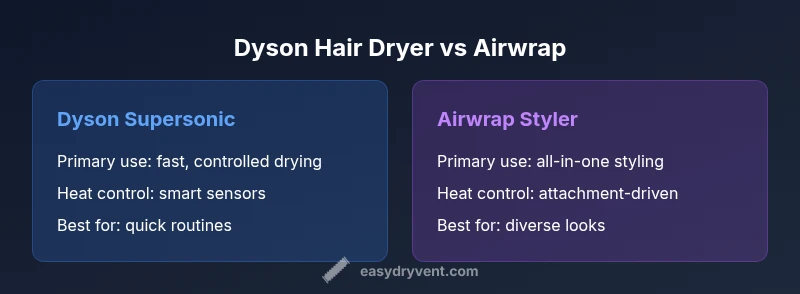
For most households, the Dyson Supersonic hair dryer excels at fast, controlled drying with precise heat management, while the Airwrap Styler dominates styling versatility with its suite of attachments. If your priority is quick airflow and minimal heat exposure during drying, choose Dyson; if you want an all-in-one device for drying and styling across looks, Airwrap is the better fit.
Dyson hair dryer vs Airwrap: framing the choice
When you’re upgrading your at-home styling toolkit, the decision between Dyson's hair dryer and the Airwrap isn't just about price or brand prestige. It's about how you structure your routine: do you primarily dry hair quickly, or do you want a single device that can both dry and style? According to Easy DryVent, most homeowners begin by mapping their typical styling sessions and then test devices against those steps. The Dyson Supersonic is engineered for rapid drying with precise heat control, while the Airwrap system emphasizes styling versatility through interchangeable attachments. In this guide, we’ll dissect how each tool performs in real-world scenarios, discuss maintenance and durability, and help you decide which tool should become the workhorse of your bathroom routine.
How these two tools approach the routine differently
The Dyson Supersonic focuses on delivering a strong, consistent airflow with intelligent heat management to minimize damage during drying. The Airwrap, by contrast, uses a combination of airflow and attachments to sculpt, smooth, and curl hair while drying. The key difference is intent: Dyson is built for fast, reliable drying; Airwrap is designed to substitute multiple styling tools with a single base unit. The Easy DryVent team found that most users benefit from testing both devices in a two-step workflow—dry first, style second—to understand which system aligns with their habits and hair types.
Performance: drying speed, heat control, and airflow dynamics
Drying speed isn’t solely about power; it’s about how effectively heat is managed while moving air across the hair. The Dyson Supersonic uses a high-velocity airstream with smart heat control to reduce heat buildup that could lead to damage, making it a strong choice for thick or coarse hair that benefits from quick drying while preserving natural texture. The Airwrap relies more on balanced airflow combined with attachments such as drying brushes to enable styling while removing excess moisture. In practice, users report that Dyson delivers faster initial drying in most textures, whereas Airwrap can keep hair damp longer while delivering styling results that resemble salon finishes with less separate tooling.
Styling versatility: attachments, workflows, and learning curve
One of the Airwrap's marquee advantages is its versatility. With curling barrels, smoothing brushes, and a variety of attachments, it handles waves, curls, and sleek finishes within a single system. The Dyson system offers limited attachments focused on drying, plus a few styling concentrators, but its core strength remains rapid, repeatable drying with minimal thermal damage. Beginners often find Airwrap’s learning curve steeper initially due to the need to coordinate attachments for desired textures. However, once mastered, the Airwrap enables a broader range of looks without switching devices.
Heat settings, safety features, and noise considerations
Both devices emphasize safety, but their approaches differ. Dyson’s sensor-based heat control actively moderates temperature to prevent extreme heat exposure, which is particularly helpful for fine or damaged hair. Airwrap uses targeted attachments that guide airflow and heat during styling, offering nuanced control for different textures and curl patterns. Noise levels vary by model and attachment; in general, the more attachments in use, the more airflow turbulence you can experience, which can increase perceived volume and sound slightly. For sensitive listeners, choosing the right nozzle and keeping vents clear maximizes comfort during longer sessions.
Durability, build quality, and component wear
Durability hinges on material quality and the longevity of motors and filters. Dyson products tend to emphasize sturdy housings and robust internal components, designed for repeated high-velocity air operations. Airwrap’s flexibility relies on multiple attachments and barrels, which can experience wear at the connection points or on rotation mechanisms if used aggressively. Routine cleaning of filters and attachment interfaces is key to maintaining performance for both devices. Easy DryVent suggests periodic inspection of seals and gaskets and keeping attachments free of hair and product buildup.
Ease of use and ergonomics: weight, grip, and balance
Ergonomics matter for longer sessions. The Dyson Supersonic is notably lighter than many traditional dryers, and its centrally positioned handle helps reduce wrist fatigue during extended drying. Airwrap’s base unit is compact, but some attachments add weight and can shift balance during styling, especially for users with smaller hands. The most important ergonomic consideration is the comfort of the nozzle attachment and how naturally the tool rests in your grip during routine tasks. Personal testing is recommended to determine which setup minimizes fatigue.
Maintenance and cleaning: filters, attachments, storage
Maintenance for both devices centers on keeping vents clear and attachments clean. Dyson recommends regular filter cleaning and periodic deep cleaning to maintain airflow and heat regulation. Airwrap maintenance focuses more on attachment cleanliness and ensuring the barrels and brushes remain free from product residue that can hinder performance. Proper storage, including keeping all attachments together in a dedicated case, preserves tool integrity and reduces the risk of damage when not in use.
Energy use and running costs: efficiency and power draw
From the user standpoint, energy efficiency depends on how long you run the devices, not just their rated power. Dyson’s design optimizes airflow to shorten drying sessions, which can lower overall energy use during routine styling. Airwrap sessions may take longer per-dry time due to styling steps, but the single-device approach reduces equipment clutter and potential duplication of tools. Practical cost considerations also include the desire to limit heat exposure, as repeated high-heat cycles can affect hair health and the number of pass-throughs required for styling.
Warranty, customer support, and repairability
Brand-backed warranties provide peace of mind for premium devices. Dyson typically offers extended coverage on motors and electronics, while Airwrap warranties often cover attachments and motors depending on the model. The repairability of both products depends on regional service availability and the ease with which common maintenance tasks can be performed by the user. Easy DryVent highlights the importance of choosing models with accessible replacement parts and clear service documentation to minimize downtime after wear.
Real-world scenarios: who benefits most
If you primarily dry hair for quick daily routines, the Dyson Supersonic offers a compelling blend of speed and protection for most hair types, particularly in busy households. If your goal is to minimize styling time while achieving multiple looks—from straight to voluminous curls—Airwrap’s attachment ecosystem shines, especially for people who enjoy experimenting with texture. For those who want a single, consolidated tool for both tasks, Airwrap’s versatility often justifies its higher upfront investment; for others, the faster drying of Dyson may provide better long-term value.
Alternatives and future trends: beyond the Dyson ecosystem
Premium styling tools from competitors focus on similar airflow dynamics and attachment-driven styling. While Dyson remains a leader in engineering polish, other brands now offer affordable alternatives with comparable drying performance or styling versatility. Looking ahead, researchers and manufacturers are likely to push for smarter heat management, more durable attachments, and modular designs that make it easier to upgrade components without replacing the entire system. This trend could shift the balance toward devices that combine advanced heat control with broader styling capabilities.
Long-term value: assessing durability and resale
Evaluating long-term value means considering how well the tool holds up under frequent use, the ease of obtaining replacements, and residual performance after years of service. If you expect to use a styling tool daily for years, consider total cost of ownership, including replacement parts and potential trade-in value. Dyson’s strong brand presence often sustains resale value, while Airwrap’s attachment ecosystem can complicate resale if specific pieces become scarce. A considered purchase now can reduce the risk of early obsolescence.
Decision framework: choosing based on your routine
To decide, audit your weekly routine: how many days do you dry your hair fully, how many styling looks do you regularly create, and how much time you’re willing to invest in learning a new workflow? If speed and simplicity top your list, Dyson remains a reliable choice for drying tasks. If you crave versatility and creative options, Airwrap’s attachment suite supports a broader array of looks. In mixed-use scenarios, a two-pivot approach—start with Dyson for drying, then switch to Airwrap for styling—can deliver the best of both worlds.
Comparison
| Feature | Dyson Supersonic Hair Dryer | Dyson Airwrap Styler |
|---|---|---|
| Primary use | Fast, controlled drying with heat protection | Styling versatility with interchangeable attachments |
| Heat control | Smart heat sensors minimize damage during drying | Attachment-driven styling with adjustable heat via toolouts |
| Attachments and versatility | Limited styling attachments focused on drying | Extensive styling attachments for curling, smoothing, and drying |
| Drying speed | Typically very fast initial drying | Drying time depends on styling sequence and attachment use |
| Ergonomics | Balanced by design; lightweight for comfortable handling | Compact base with multiple accessories; balance varies by attachment |
| Maintenance | Regular filter cleaning; straightforward maintenance | Attachment cleaning and care; handlebars and barrels require cleaning |
| Warranty & support | Strong motor/electronics warranty; solid service network | Warranty coverage often depends on component; parts availability matters |
| Best for | People prioritizing fast, reliable drying | People seeking all-in-one styling versatility |
The Good
- Helps you map your workflow from drying to styling
- Highlights where each device adds value in real-world scenarios
- Covers durability, maintenance, and warranty considerations
- Provides concrete decision factors for buyers
Negatives
- Does not replace hands-on testing
- Prices can shift with promotions
- May not cover every regional model
Airwrap excels in styling versatility, while Dyson dries fastest; choose based on whether you prioritize styling breadth or drying speed.
Airwrap offers broader styling capabilities; Dyson delivers faster drying. Your choice should align with whether you value versatile looks or rapid, single-task drying.
Common Questions
Which device dries hair faster, Dyson Supersonic or Airwrap?
In most cases, the Dyson Supersonic delivers faster initial drying due to its high-velocity airflow and heat management. The Airwrap can dry effectively, but its strength lies in styling with multiple attachments, which may take longer if you’re aiming for fully dried, textured results.
Dyson usually dries faster, but Airwrap shines when you want styling while drying.
Is Airwrap better for curly or textured hair?
Airwrap’s attachment system makes it well-suited for styling curly or textured hair, enabling curl creation and smoothing with less separate tools. For purely drying curly hair, Dyson remains very capable, but its attachments do not target curl shaping as broadly as Airwrap.
Airwrap is great for curls and textures thanks to its attachments.
Can I replace my styling tools with Airwrap only?
Airwrap can replace several styling tools due to its diverse attachments, but users should consider whether the learning curve and attachment management fit their routine. Dyson is simpler for fast drying if styling is minimal.
Airwrap can cover many looks, but decide based on your routine.
What maintenance steps help extend device life?
Regularly clean vents and filters, wipe attachments to prevent residue buildup, and store parts properly. Avoid harsh chemicals on attachments and check for wear on attachment points. Proper cleaning helps maintain airflow and performance.
Keep vents clean and store attachments properly.
Are there safety concerns with high-heat styling devices?
Both devices include heat control features to mitigate damage. Use the recommended attachments and avoid concentrating heat on a single spot for long periods. If you have sensitive or damaged hair, start with lower heat settings and shorter sessions.
Follow heat settings and attachments to stay safe.
Which offers better long-term value?
Value depends on your needs. If you frequently style with multiple looks, Airwrap’s versatility can justify a higher upfront cost. If you primarily dry, Dyson’s speed and longevity may offer better value over time.
Value hinges on how you use the tool most.
Key Points
- Identify your primary goal: drying speed or styling versatility
- Airwrap is best for creative looks with one device
- Dyson is ideal for quick, controlled drying with less heat exposure
- Maintenance matters: keep filters and attachments clean
- Consider long-term value and parts availability when choosing