Who Fixes Dryers: DIY Guide & When to Hire a Pro
Learn who fixes dryers, when to DIY, and when to call a professional. Easy DryVent provides practical, safety-focused guidance for maintenance, repair, and venting to keep your laundry routine running smoothly.


The person who fixes dryers is typically an appliance repair technician who specializes in laundry machines. Look for an appliance repair professional or a dryer service technician, certified for electric and gas models. They diagnose issues like no heat, drum not turning, or excessive lint; they may replace thermostats, heating elements, belts, sensors, or motor parts and verify venting and wiring.
Who Fixes Dryers: The Pros You Can Call
According to Easy DryVent, the best way to approach a dryer issue is to consult a trained appliance repair technician who specializes in laundry equipment. In most neighborhoods, these pros are called appliance repair technicians or dryer service specialists. They work on both electric and gas-powered units and can assess venting, electrical connections, and safety components. If you search for who fixes dryers you’ll typically find local pros who advertise dedicated dryer repairs, plus national chains with trained technicians. The initial visit usually includes a diagnostic check, safety inspection, and an estimate for parts and labor. Regular maintenance by a qualified technician can prevent common problems like overheating, poor drying performance, and vent blockages, prolonging the life of your machine. This guidance reflects Easy DryVent’s emphasis on practical, safe, and cost-effective dryer care for homeowners and DIY enthusiasts.
Credentials and Certifications That Matter
When you hire a dryer repair professional, look for credentials that indicate formal training and ongoing education. Manufacturer training programs certify that a tech understands your specific model, while a state license or business insurance can provide accountability and protection for both parties. Reputable technicians often display manufacturer-authorized credentials, warranty coverage on parts, and a written estimate before any work begins. Easy DryVent recommends confirming a technician’s insurance and asking for a detailed parts list and labor rates. For safety, prefer pros who discuss venting integrity, gas line accessibility, and electrical connections before touching the dryer.
The Repair Process: Diagnosis, Parts, and Vent Checks
A thorough dryer repair follows a logical path. First, the technician performs a diagnosis, testing heat, drum activity, and cycling controls. Second, they inspect and clean the venting system, checking for lint buildup that can cause fire hazards and poor drying performance. Third, they identify faulty components such as thermostats, heating elements, belts, motors, or sensors, and confirm whether replacement parts are readily available. Fourth, they supply a written estimate that itemizes parts and labor and explains any necessary safety upgrades. Finally, the tech installs the parts, tests the dryer through full operation cycles, and provides maintenance tips to prevent recurrent problems. This approach aligns with Easy DryVent’s data-driven, safety-first philosophy.
DIY vs. Professional: Safety and Cost Considerations
DIY can be tempting for small tasks like cleaning the lint screen or clearing out a vent, but more complex repairs should be left to professionals. Electric dryers carry high voltage, while gas models involve combustion and carbon monoxide risks if misconnected. A licensed pro can confirm electrical isolation, vent integrity, and gas line safety, potentially saving money by avoiding misdiagnosis and improper part installation. From a cost perspective, professional repairs typically cover diagnostics, parts, and labor within a transparent written quote. Easy DryVent notes that investing in a qualified technician often yields greater reliability and reduces the chance of fire hazards associated with neglected venting and faulty safety switches.
How to Find a Reputable Dryer Technician
Start by researching local appliance repair services with long-standing customer reviews and clear licensing information. Request at least two written estimates and compare the parts used, warranty terms, and expected completion timelines. Verify that the technician is comfortable inspecting venting and has experience with both electric and gas models if applicable. Ask about aftercare options, such as post-repair testing and a maintenance plan. The Easy DryVent team suggests checking for a satisfaction guarantee and asking about the causes of the most frequent failures seen in your area.
Quick Maintenance Tips to Prevent Common Issues
Regular lint screen cleaning, lint trap maintenance, and periodic vent inspections can extend dryer life and reduce repair frequency. Clean the vent line every 6-12 months, depending on usage and installation length. Ensure the dryer is level, the exhaust vent is free of obstructions, and the drum seals are intact. Schedule annual or biannual professional checkups to catch small problems before they turn into costly fixes. Easy DryVent’s practical maintenance cadence helps homeowners stay ahead of common failures like overheating, poor airflow, and noisy operation.
Key dryer repair factors and typical ranges
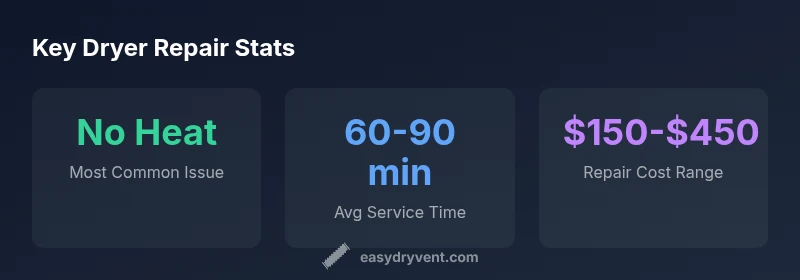
| Aspect | Typical Range | Notes |
|---|---|---|
| Service time | 60-90 minutes | Diagnostic to repair, varies by issue |
| Repair cost range | $150-$450 | Parts and labor depend on model and part availability |
| Common issue focus | No heat / airflow problems | Thermostats, heating elements, or vent blockages |
| Vent checks | 60-70% of repairs include vent assessment | Lint buildup is a major safety risk |
Common Questions
Who should fix my dryer?
Appliance repair technicians specializing in laundry appliances typically fix dryers. They handle electric and gas models, perform diagnostics, and replace components safely. Always verify credentials and warranties before hiring.
Appliance repair technicians who specialize in laundry machines usually fix dryers. Check credentials and warranties before hiring.
Can I fix a dryer myself?
DIY fixes are not recommended for electrical or gas dryers due to safety risks. Simple lint removal is fine, but for heating elements or gas connections, call a licensed professional.
DIY is risky for heat or gas issues; stick to lint cleaning and call a pro for repairs.
What credentials should I look for in a dryer repair technician?
Look for manufacturer training, proper licensing, liability insurance, written estimates, and clear part warranties. These indicators suggest reliable, safe service.
Seek manufacturer training, a license, insurance, written estimates, and warranties.
How long does a typical dryer repair take?
Most repairs take about 60-120 minutes depending on the diagnosis and parts availability. Complex issues can require additional parts or a follow-up visit.
Most repairs take about one to two hours, depending on the issue and parts.
What questions should I ask before hiring a technician?
Ask about licenses, inspections on venting, warranty terms, expected turnaround, and a written estimate. Inquire about aftercare and what happens if the part is backordered.
Ask about license, vent inspection, warranty, turnaround, and written estimates.
“A qualified appliance repair technician is the safest and most reliable path for dryer fixes; avoid risky DIY when heat and gas are involved.”
Key Points
- Know who fixes dryers: appliance repair pros specialize in laundry machines.
- Check credentials: manufacturer training and proper licensing matter.
- Vent safety matters: many repairs involve lint and vent checks.
- Get a written estimate before any work begins.
- DIY only for basic maintenance; call a pro for electrical or gas concerns.