Dryer Not Rotating: Troubleshooting Guide
Step-by-step troubleshooting to diagnose why your dryer wont rotate, with safe DIY checks, common fixes, and guidance on when to hire a professional.


Most likely the drum won’t rotate due to a worn or broken drive belt. According to Easy DryVent, belt wear is one of the most common causes for a dryer not rotating. Quick checks: unplug the dryer, inspect the belt for fraying or damage, and manually rotate the drum to feel for binding. If the belt is intact but rotation still fails, the motor, idler pulley, or drum rollers may be at fault—seek professional help if unsure.
What dryer not rotating really means for your home
A dryer that won’t rotate is a symptom that can have several root causes, but it is usually mechanical or electrical, not cosmetic. In most cases, the drum fails to spin because the drive belt is worn or broken, the drum is seized, or the motor or start switch is failing. Start with safety: unplug the dryer, and for gas models shut off the gas supply if accessible. If your model has a top lid switch, test that switch for continuity by pressing it with a screwdriver while manually turning the drum to see if it responds. According to Easy DryVent, belt wear is a frequent failure mode, especially in older units with heavy loads.
Common causes at a glance
- Drive belt: A worn or broken belt is the single most common cause of a dryer not rotating. When the belt breaks or loosens, the drum cannot spin even if the motor runs. Visual inspection is often enough to confirm belt damage.
- Seized drum rollers or bearings: Worn rollers can create friction that stops rotation or causes the drum to seize when turned by hand.
- Motor or starter issues: A weak or failed motor, or a faulty starting capacitor, may run but not provide enough torque to rotate the drum.
- Door or lid switch failure: Some models have safety switches that prevent rotation if the door or lid is not correctly sensed closed.
- Obstructions and lint buildup: A heavy lint pile can bind the drum area or blower housing, effectively hindering rotation.
Safety first: precautions before you start
Safety should guide every DIY dryer repair. Always unplug the unit before touching any internal components. If you smell gas in a gas-powered dryer, stop and shut off the gas supply before proceeding. Wear eye protection and work in a well lit area. If you must test electrical continuity or resistance, use a properly rated multimeter and follow the manufacturers safety guidance. Do not bypass safety switches or operate the dryer with panels removed unless you are actively working on it and have fully understood the risks.
Step by step visual inspection of the drive belt and drum
- Access the belt area by removing the front panel or cabinet according to your model manual.2) Visually inspect the drive belt for cracks, fraying, or breakage.3) Manually rotate the drum by hand to check for binding or rough spots.4) If the belt is damaged, replace it with a belt that matches the model and ensure it seats correctly on pulleys.5) Reassemble the panel and spin the drum by hand to confirm smooth movement before plugging back in.6) Plug in the unit and run a no load test to observe the drum rotation.
Electrical checks you can perform safely
Check the door or lid switch for proper operation by pressing the switch as the drum turns. If the switch is faulty, the dryer may not start or may fail to rotate even with a functioning belt. Test the motor terminals for continuity when the unit is unplugged, and inspect the run capacitor if your model uses one. If you find electrical components that test out of range, replacement or professional service is recommended.
Common fixes and what to expect
If the belt is broken or loose, replacing the belt is often the easiest fix and can restore rotation. If the belt is in good condition, inspect the drum rollers and idler pulley for wear or binding. A motor replacement or a faulty switch should be considered if structural parts are sound but the drum still does not rotate. Always reassemble carefully and perform a test run after each fix to confirm success. If you are unsure about testing electrical components, stop and call a professional.
Prevention and long term care
Regular lint screen cleaning and vent cleaning reduce moisture buildup and wear on the drum area. Avoid overloading the dryer and distribute loads evenly to minimize belt stress. Periodic checks of the drive belt, rollers, and motor bearings can prevent a sudden failure. Keep the area around the dryer clean to help heat escape and reduce motor strain. Easy DryVent recommends routine inspections as part of a safe maintenance routine.
Steps
Estimated time: 35-60 minutes
- 1
Power down and access belt area
Unplug the dryer and if applicable disconnect the gas supply before you begin. Remove the front panel or lower access to reach the belt area. Take photos of any wiring before you disconnect anything so you can reassemble correctly.
Tip: Label connectors or take a small photo log to avoid miswiring later. - 2
Inspect the drive belt for damage
Look for cracks, fraying, or a belt that has jumped off its pulley. If you find damage, you will likely need to replace the belt. Gently spin the drum by hand to feel for roughness or binding.
Tip: If the belt is intact, proceed to check pulleys and rollers for wear. - 3
Replace the belt if damaged
Install the belt with the correct side facing out and ensure the belt sits properly on all pulleys. Reassemble the front panel and test the drum by turning it by hand before plugging the unit back in.
Tip: Test tension by giving the belt a light push with your finger; it should have slight give but not slip. - 4
Check drum rollers and idler pulley
If the belt is fine, inspect the drum rollers for wear or flat spots. Worn rollers can bind the drum and prevent rotation. Replace any worn components using model specific parts.
Tip: Keep track of rollers and screws for easy reassembly. - 5
Reassemble and test
Reinstall any panels, reconnect wiring according to your photos, and plug the dryer back in. Run a no-load cycling check to confirm rotation is smooth and consistent.
Tip: Listen for unusual noises during the test, which can indicate misalignment. - 6
If still not rotating, evaluate the motor or switch
If the drum still refuses to rotate, the motor or door switch may be faulty. This generally requires professional testing and replacement.
Tip: Do not continue to use the dryer if the motor or switch seems faulty; safety first.
Diagnosis: Dryer drum won't rotate
Possible Causes
- highBroken or loose drive belt causing no rotation
- mediumSeized drum due to lint buildup on rollers or bearings
- mediumMotor failure or faulty start switch
- lowDoor/Lid switch preventing start
- lowObstruction in blower housing or drum jam
Fixes
- easyReplace the drive belt or re-tension the belt; test by turning the drum by hand after reassembly
- mediumInspect and replace drum rollers or bearings if they are seized or worn
- hardTest the motor and replace if dead; check capacitor if present
- easyReplace door or lid switch if it prevents the dryer from starting
- easyClear lint buildup from the blower wheel and vent path to reduce motor strain
Common Questions
What is the most common reason a dryer wont rotate?
The most common cause is a worn or broken drive belt which prevents the drum from turning. Other frequent culprits are seized rollers or a faulty motor or switch.
The most common reason is a worn drive belt that stops the drum from turning. Other frequent causes are worn rollers or a bad motor or switch.
Can I fix a dryer not rotating myself?
Yes for belt replacement and basic checks on belt tension, rollers, and switches. More complex faults such as motor or switch failures may require a professional.
Yes you can do belt replacement and basic checks yourself. If the motor or switch seems faulty, it is best to call a professional.
Is it safe to operate a dryer when the drum wont rotate?
No. Stop using it and unplug the unit. Running it can cause overheating, fire risk, or further damage.
No, stop using it and unplug it. Running it could overheat or cause a fire.
How long does belt replacement take?
Typically 30 to 60 minutes depending on model and accessibility.
Usually about 30 to 60 minutes, depending on your model.
When should I call a professional?
If the belt is intact but the drum still won t rotate, or if you suspect motor, capacitor, or safety switch faults.
Call a pro if the belt seems fine but the drum still won t spin, or if you suspect the motor or safety switch is faulty.
Will a clogged vent cause drum rotation problems?
Clogged vents can cause overheating and motor strain but typically do not stop the drum from rotating. It is still important to clear the vent.
A clogged vent can cause overheating and strain, but it usually does not directly stop the drum from turning. Still, clear it as part of maintenance.
Watch Video
Key Points
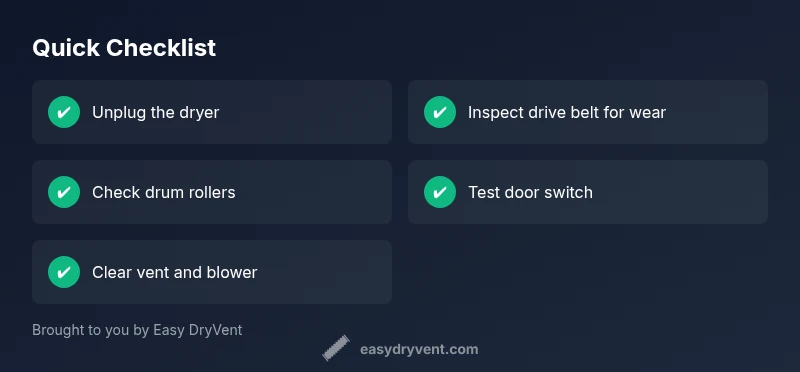
- Inspect the drive belt first when the drum won’t rotate
- Unplug and disconnect power before any repair
- Check rollers and pulleys for wear if the belt is fine
- Keep the vent clear to prevent motor strain
- Call a professional for motor or safety switch faults