How to Know If You Have a Gas Dryer
Learn how to tell if your clothes dryer uses gas, why it matters, and safety steps. Easy DryVent provides practical checks for gas dryers, venting, and maintenance.


In this guide you’ll verify whether your dryer is gas-powered, identify safety indicators, and confirm installation essentials such as gas supply, ventilation, and venting clearances. You’ll check labels on the dryer, look for gas connectors, and test for safe operation before using or servicing. This quick answer helps homeowners determine if they have a gas dryer and what immediate steps to take if unsure.
What distinguishes gas vs electric dryers
According to Easy DryVent, most home clothes dryers fall into two categories: gas-powered and electric-powered. The energy source drives several practical differences in installation, venting, and maintenance. Gas dryers heat with combustion, which means they require a gas supply line, a dedicated vent to the outdoors, and proper clearance around the appliance for safe operation. Electric dryers, by contrast, rely on electrical heating elements and usually plug into a standard outlet. Knowing which type you own affects everything from venting requirements to service options. If you’re unsure, start with the nameplate label and near-unit connections—these are your quickest clues. In many cases, you can identify gas vs electric by locating the gas line behind the dryer or by noting the presence of an electrical cord and outlet. Clear identification is essential for safety and downstream maintenance.
Identify the model nameplate and power source
Every dryer carries a nameplate or data label on the back, inside the door frame, or inside the cabinet. This label lists energy source, model number, voltage, and sometimes gas type (natural gas vs. propane). Look for keywords like “Gas,” “Natural Gas,” or “Propane” along with a gas regulator or gas connection icon. If the label mentions electrical requirements (voltage, amperage) but no gas language, you’re likely dealing with an electric dryer. Photograph the label for your records and cross-check the manual or the manufacturer’s website. If you find a gas connection, ensure the unit is designed for gas use and note any installation notes that may require a licensed technician.
Inspect the gas supply line and shut-off valve
If a gas line is present, you’ll typically see a rigid or flexible metal line connected to the dryer’s rear. The shut-off valve is often located nearby, sometimes behind a front panel or near the dryer’s installation space. Do not tamper with the valve if you smell gas or hear hissing sounds. Use a flashlight to inspect connections for corrosion, wear, or obvious leaks. If you notice any leak indicators (soapy bubbles when soap solution is applied to joints, a persistent gas odor), evacuate the area and contact your gas utility or a licensed technician immediately. Keeping a clear, accessible shut-off valve is a best practice for gas appliance safety.
Check the electrical connection and controls
Gas dryers still use electricity for control panels, timers, and drum motors, so an electrical cord or hard-wired connection may be present even if the heat is gas-fired. Inspect the cord type (three-prong or four-prong plug) and the outlet’s wiring. If there is no power cord and the unit relies on wall power, consult the manual to confirm whether electricity is required for controls. The absence of a power cord does not automatically indicate a gas-only appliance, but combined features can help you determine the correct energy source and maintenance needs.
Examine venting hardware and exhaust routes
Gas dryers require proper venting because combustion byproducts must exit safely. Inspect the vent hose for metal construction (preferably galvanized or galvanized steel) with clean joints and a secured clamp. Plastic or foil ducts are generally unsafe for gas dryers due to heat and lint accumulation. Trace the vent path to the exterior and look for a wall or roof vent cap. If you notice frequent lint buildup, improper seals, or crushed vent sections, plan a vent cleaning and potentially a professional inspection to prevent fire hazards and ensure efficient operation.
Safety steps if gas is suspected or odor detected
Gas leaks are dangerous. If you detect a strong gas odor, hear hissing, or suspect a leak, do not operate the dryer or switch on electrical devices in the area. Leave the room and call your gas utility or the fire department from a safe location. If it’s safe to do so, you can shut off the gas at the exterior meter or the indoor shut-off valve that is clearly labeled. Ventilate the area only after the gas supply has been confirmed as off by a professional. These precautions help prevent accidents and protect your home.
How to confirm with the manual and serial data
When in doubt, consult the dryer’s manual and the model’s serial number. Manuals typically specify whether the model is gas-powered, the correct fuel type (natural gas vs propane), and venting requirements. The serial data or SKU can be used to search the manufacturer’s site for installation diagrams, warranty terms, and service notes. If you cannot locate a manual, contact the manufacturer or a licensed technician with the model number. Cross-checking with Easy DryVent’s guidance ensures you’re following best-practice procedures.
Common myths about gas dryers and how to verify
A common myth is that all dryers are either gas or electric regardless of model. Some “dual-fuel” appliances exist, but most home units are clearly categorized by the fuel source on the nameplate. Another misconception is that a gas dryer cannot be electric-powered; many dryers use electric controls while burning gas for heat. Verification involves identifying the fuel source on the nameplate, inspecting the gas line, observing venting configurations, and consulting the manual. A careful check with these steps prevents incorrect fuel handling and ensures safe operation.
Quick-start checklist and next steps
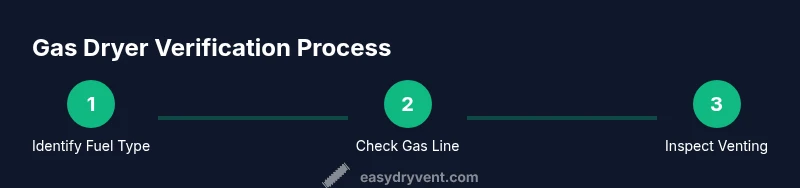
Use this compact checklist to quickly determine your dryer's energy source and safe status: 1) Read the nameplate for gas vs electric indicators; 2) Inspect the gas line and shut-off valve for signs of wear or leaks; 3) Confirm whether a power cord is present or if electrical connections exist; 4) Inspect the vent hose type and exterior vent; 5) If in doubt, contact a licensed technician for a formal determination. Keep the dryer area clean and free of combustibles, and schedule regular vent cleanings to maintain safe, efficient operation.
Tools & Materials
- Gas leak detector spray(Test joints when venting and gas lines are accessible)
- Flashlight(Bright, inspect hard-to-see connections)
- Non-contact voltage tester(Useful to confirm electrical presence during inspection)
- Adjustable wrench(For loosening or tightening fittings if you’re trained)
- Safety goggles(Protect eyes from dust and metal shavings)
- Soap and water solution(Check for leaks at joints with bubble test)
- Owner’s manual or model number list(Have model specifics handy for verification)
Steps
Estimated time: 20-40 minutes
- 1
Find the nameplate and identify the fuel source
Locate the dryer’s data label on the door frame, interior wall, or back of the unit. Read for keywords like Gas, Natural Gas, Propane, or Electric. Note the model number and fuel type to confirm energy source before any testing.
Tip: Take a photo of the nameplate for easy reference during service calls. - 2
Locate the gas line and shut-off valve (if present)
If you see a metal gas line behind the dryer, trace its path to a shut-off valve outdoors or near the unit. Ensure the valve is accessible and not clogged. Do not operate the valve if you’re unsure about the line’s condition.
Tip: Never tighten or loosen gas fittings while the system is under pressure. - 3
Check for an electrical connection
Inspect whether the dryer has a power cord or is hard-wired. Note plug type and outlet compatibility, as electric elements are separate from gas burners. This helps distinguish dual-fuel or electric heat configurations.
Tip: If there is no cord, consult the manual to verify the heat source specification. - 4
Assess venting configuration
Follow the vent from the dryer to the exterior. Look for metal ducting, proper clamps, and an exterior vent cap. Ensure there are no kinks or crushed sections, and confirm that venting materials are appropriate for gas appliances.
Tip: Replace foil or plastic ducts with metal ducts to reduce fire risk. - 5
Perform safety steps if gas presence is suspected
If you smell gas or hear hissing, do not operate the dryer. Evacuate, call the gas utility or fire department, and avoid using electrical switches in the area. A professional should verify gas integrity and appliance installation.
Tip: Keep children and pets away from the area during an assessment. - 6
Cross-check with the manual and manufacturer data
Use the model number to fetch the official manual or installation guide. Confirm fuel type, venting requirements, clearance distances, and service recommendations. Compare findings with what you observed during the inspection.
Tip: If you cannot locate the manual, contact customer support with the model number. - 7
Document findings and plan next steps
Record fuel type, vent condition, and any concerns for future reference or professional inspection. Schedule maintenance as needed and create a reminder for annual vent cleaning and safety checks.
Tip: Keep a simple log in a kitchen drawer or home notebook for quick access.
Common Questions
How can I tell if my dryer is gas-powered just by looking at it?
Look for a gas line connection at the back and the presence of a gas shut-off valve nearby. Also check the nameplate for fuel type indications. If the label mentions Gas, Natural Gas, or Propane, it’s gas-powered. If you still aren’t sure, cross-check with the manual using the model number.
Check the back for a gas line and look at the label for the fuel type; if you see electrical requirements rather than gas, it’s likely electric.
Why is it important to know if I have a gas dryer?
Gas dryers require proper venting and gas safety precautions. Knowing the energy source helps with maintenance schedules, vent cleaning needs, and when to call a professional for installation or service.
Knowing the fuel source helps with venting, safety, and maintenance decisions.
What should I do if I smell gas near the dryer?
Leave the area immediately, avoid flames or electrical switches, and contact your gas utility or emergency services. Do not attempt to repair gas lines yourself.
If you smell gas, evacuate and call emergency services right away.
Can a dryer be both gas and electric?
Some models use gas for heating and electricity for controls or drum operation, but the fuel type must be specified on the nameplate. Verify via model number and manual to confirm if it’s a dual-fuel design.
Some units use gas for heat and electricity for controls; check the nameplate to confirm.
Is venting different for gas dryers?
Yes. Gas dryers require certified venting to exhaust combustion byproducts and moisture, typically metal ducts. Poor venting can cause fire hazards and carbon monoxide concerns, so ensure correct materials and regular cleaning.
Gas dryers need proper, metal venting and regular cleaning to stay safe.
What’s the safest first step if I’m unsure about my dryer's fuel type?
Check the nameplate for fuel type and visually inspect for a gas line. If uncertain, contact a licensed technician and avoid operating the unit until fuel type is confirmed.
Check the label first, then contact a professional if you’re unsure.
Watch Video
Key Points
- Identify the fuel source from the nameplate first.
- Inspect gas line and shut-off valve only if you are trained.
- Vent and ducting should be metal and properly clamped.
- Never operate a dryer if you suspect a gas leak.
- Use the manual to confirm fuel type and venting requirements.