Can Gas Dryer and Washer Share a Circuit? A Practical Guide
Learn whether a gas-powered dryer and a washer can share a circuit, what code says, safety considerations, and best practices for a safe laundry setup.


Yes, you can share a circuit under certain conditions, but it’s not universally allowed. Gas dryers typically use 120V for controls, while washers also run on 120V. The safest approach is to separate 120V laundry loads or dedicate circuits where required by local code; verify the circuit rating, nameplate currents, and consult NEC guidelines with a licensed electrician.
Understanding Circuit Load and Safety
Circuit load is the total current drawn by all devices on a single breaker. In practical terms, you add up the amperage ratings from the washer and dryer nameplates and compare that total to the circuit rating. The 80% guideline is a helpful rule of thumb for continuous loads, but many laundry cycles aren’t strictly continuous; they can still approach the circuit’s limit during peak operation. According to Easy DryVent, calculating circuit load accurately helps prevent nuisance tripping and overheating, which are common safety concerns in busy laundry rooms. For homeowners, the takeaway is to treat the laundry pair as a potential heavy-load load and plan accordingly. Always verify that you’re not exceeding the breaker’s rating and that wiring, receptacles, and the panel are in good condition before turning appliances on together.
Can a Gas Dryer and Washer Share a Circuit?
Gas-dryer units typically use 120V for control systems and a washer uses 120V as well, so sharing a circuit hinges on the total current draw and local code allowances. If the combined load stays within the circuit’s capacity (and you’re not using any 240V tools on the same circuit), sharing can be permissible in some homes. However, many jurisdictions still prefer separate circuits for laundry loads, especially when the dryer has electric components or when the washer runs a long cycle. The key is to consult the appliance’s nameplates, measure actual loads, and follow local electrical rules. The Easy DryVent team emphasizes that adherence to code and proper load calculations are essential for safety and reliability.
Electrical Codes and Guidelines
The National Electrical Code (NEC) and local codes provide the framework for laundry appliance circuits. In many homes, laundry areas are required to have sufficient circuit capacity and dedicated protections to reduce overload risk. Because gases and electrical components interact with household power differently across models, the exact rules can vary by location. Always verify with your local electrical inspector and reference the NEC guidelines when planning any shared-circuit arrangement. For homeowners, this section underlines why a professional assessment is often worth the cost and peace of mind.
Plan and Verify Before Switching Circuits
Before deciding to share circuits, perform a careful plan that includes: identifying the exact circuit and its rating, reading each appliance’s current draw from the nameplates, and calculating the anticipated peak load. Use a clamp meter to measure actual current while both appliances are in use, and check for any signs of overload such as nuisance trips or warm outlets. If the combined load approaches or exceeds the circuit rating, do not proceed with sharing; instead, pursue a dedicated circuit for the electric dryer or configure separate circuits for the washer and dryer. Easy DryVent’s guidance is to document load calculations and obtain a professional opinion when in doubt.
Alternatives and Best Practices
If sharing is not advisable or not permitted by code, the best practice is to install separate circuits: a dedicated 120V circuit for the washer, and a separate circuit for any electric-dryer components, or an entirely separate 240V dryer circuit if the unit is electric. For gas dryers, consider a dedicated 120V circuit for controls and an independent circuit for the washer to minimize risk. When upgrading, ensure the panel has capacity and that breakers and wires are appropriately sized. In many cases, upgrading to two dedicated circuits yields safer operation and reduces the risk of nuisance trips during busy laundry days.
Quick Reference Checklist for Shared Laundry Circuits
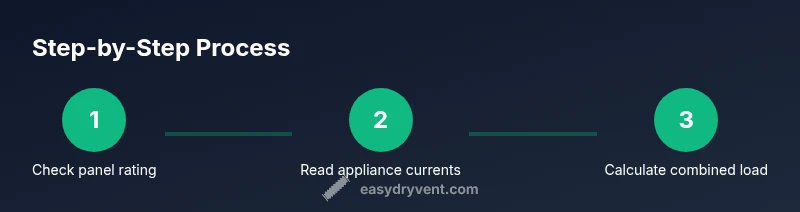
- Check the nameplates on both appliances for amperage. 2) Determine the circuit rating and panel capacity. 3) Calculate the expected combined load and compare to the circuit rating (aim to stay within the 80% guideline for continuous loads). 4) Review local code requirements or consult a licensed electrician. 5) If in doubt, do not share—opt for separate circuits to maximize safety and reliability. As Always, follow Easy DryVent’s recommended best-practices for laundry safety.
Tools & Materials
- Non-contact voltage tester(Check for live circuits from a safe distance)
- Clamp-on ammeter(Measure current on the circuit feeding the washer and dryer)
- Multimeter(Verify voltage and continuity)
- Label maker or tape for labeling breakers(Keep labels up-to-date for future work)
- Electrical tape and wire nuts(For safe splices if needed (do not modify wiring beyond code))
- Safety gear (insulated gloves, safety glasses)(Protection when working near panels)
- Contact information for a licensed electrician(Have a pro on call if you’re unsure)
Steps
Estimated time: 1-2 hours
- 1
Identify the circuits
Power down the laundry area and locate the breakers feeding the washer and dryer. Note the circuit numbers and the breaker's amperage rating. Label each breaker so future work is straightforward.
Tip: Label the breakers with a short description (e.g., Washer + Dryer, 20A). - 2
Check appliance nameplates
Read the amperage listed on each appliance’s nameplate. If the numbers are not clearly stated, consult the user manual or manufacturer’s site. This establishes the minimum circuit capacity needed.
Tip: Record the amperage on a section of your panel cover or a notes app. - 3
Measure actual loads
With the appliances controlled, use a clamp meter to measure the real current drawn on each circuit while running a typical cycle. Compare this to the circuit rating to evaluate safety margins.
Tip: Take multiple readings during different parts of a cycle for accuracy. - 4
Do a load calculation
Add the washer’s load to the dryer’s load and compare to the circuit’s rating. If you’re on an 20A circuit, ensure the total stays well below 16A for continuous operation as a safety margin.
Tip: If totals approach the limit, do not share—seek alternatives. - 5
Decide on sharing vs. separation
If the combined load exceeds safe limits or local codes prohibit it, plan separate circuits. If you must share, ensure wiring and receptacles are appropriate and do not bypass safety devices.
Tip: Never improvise with extension cords or non-code wiring. - 6
Consult and document
If you’re unsure, consult a licensed electrician and document your measurements, nameplates, and panel configuration. Obtain any required permits for electrical work and verify the final setup with a local inspector.
Tip: Keep a copy of all measurements and code references for future maintenance.
Common Questions
Can a gas dryer share a circuit with a washer?
In some cases, yes, if the circuit can safely handle the combined load and local codes permit. Many jurisdictions prefer separate circuits for laundry loads, especially when the dryer has electric components. Always confirm with a licensed electrician.
Gas dryers can share a circuit with a washer under certain conditions, but check circuit capacity and local codes first.
What amperage are typical laundry circuits?
Most laundry areas use 20-amp circuits for 120V appliances. Gas dryers with 120V controls and washers often run on 15-20A circuits. Always verify the exact rating on the nameplates and panel labeling.
Typical laundry circuits are 20 amps for the shared 120V appliances; always verify with the nameplates.
Are dedicated circuits required for electric dryers?
Electric clothes dryers typically require their own dedicated circuit due to higher current demand. Gas dryers may not require a dedicated circuit for the gas portion, but the electrical portion still needs safe and code-compliant wiring.
Electric dryers usually need a dedicated circuit; check local codes and appliance specs.
What should I do if my dryer trips the breaker?
If the breaker trips, power down, inspect the loads, and look for signs of overload. Do not continue to use the appliances on the same circuit without addressing the cause; consider separate circuits or professional assessment.
If it trips, stop and inspect; don’t ignore repeated trips.
Can I run a washer and gas dryer on the same 20A circuit?
It can be possible if the total load remains within the circuit’s rating and local codes allow, but separation is often safer and more reliable.
Yes, if the combined load is within limits and permitted by code.
What are signs of overloaded laundry circuits?
Frequent breaker trips, warm outlets or panels, or a burning smell indicate overload or wiring issues. If you notice any of these, stop using the circuit and have it assessed by a professional.
Look for trips, heat, and smells as overload warning signs.
Watch Video
Key Points
- Check circuit capacity before sharing laundry loads
- Read appliance nameplates to determine current draw
- Prefer dedicated circuits for electric dryers when possible
- Consult local codes and a licensed electrician for code compliance