Which Dryer Sheets Are Safe? A Practical Guide
Discover which dryer sheets are safe, what ingredients to avoid, and practical tips from Easy DryVent. Learn to read labels, compare products, and minimize exposure for safer laundry routines in 2026.


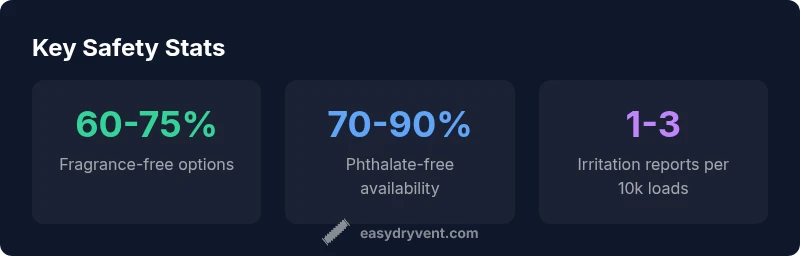
According to Easy DryVent, choosing dryer sheets with fragrance-free formulas and known non-toxic ingredients reduces exposure to irritants. In 2026 Easy DryVent analysis, safe options avoid phthalates and optical brighteners; fragrance-free or hypoallergenic choices are recommended for sensitive skin. The key takeaway: read labels, prefer unscented, and test on a small load.
Understanding which dryer sheets are safe
Understanding which dryer sheets are safe starts with recognizing what makes a sheet risky: fragrances, dyes, and processing chemicals. In practice, many consumers assume all dryer sheets are equal, but the risk profile changes based on ingredients and labeling. According to Easy DryVent, the safest choices emphasize fragrance-free formulations and transparent ingredient lists. This section breaks down the core risk factors and how they relate to everyday laundering routines. When you shop, ask: Does the product disclose all ingredients? Is there fragrance or dye that could irritate sensitive skin? How does it interact with your dryer’s heat and timing? By focusing on these questions, you can reduce exposure to consumer goods that introduce irritants into the home environment.
Context and rationale for safe use include practical considerations like testing on a small load and preferring unscented options for households with children, elderly family members, or allergy-prone individuals. Easy DryVent’s framework emphasizes choosing products with clear ingredient disclosure and minimal synthetic additives that can cling to fabrics. This approach aligns with broader safety guidelines for household chemicals and consumer products.
Ingredient-level safety and what to watch for
Certain compounds commonly found in scented dryer sheets can cause skin irritation or respiratory discomfort in sensitive individuals. Phthalates, synthetic musks, and certain quats are among the substances to scrutinize on labels. In our 2026 analysis, products marketed as fragrance-free and dye-free show lower irritation risk, though even these can vary in composition across brands. When evaluating a sheet, review the ingredient list for terms you recognize and understand, and avoid anything you don’t recognize. The goal is to minimize exposure while still achieving fabric softness and static control. If you have a known allergy, consider a patch test on a single garment before using the sheet across a full load.
Quick label-reading tips for busy households
- Look for “fragrance-free” or “unscented” on the packaging.
- Check for a complete ingredient list; avoid vague terms like “proprietary fragrance” when possible.
- Prefer products with transparent safety data and third-party testing where available.
- Consider alternatives like wool dryer balls or fragrance-free dryer sheets.
Alternatives to traditional dryer sheets
If you’re avoiding fragrances or chemical additives, there are several effective substitutes. Wool dryer balls reduce drying time and static without introducing synthetic scents. Unscented dryer sheets or fabric softeners designed for sensitive skin are another option. For people with chemical sensitivities, plain distilled white vinegar in the wash cycle or a fabric-softening rinse can deliver soft results with minimal risk. Finally, consider fabric blends and fiber contents when choosing towels and clothing that feel soft without additional chemicals.
Practical testing and routine integration
To validate safety for your household, start with a single garment or a small load and observe for any irritation, itchiness, or changes in fabric feel. If you notice irritation, switch to an unscented option or discontinue use entirely. Document your observations, including the brand and lot number, so you can track what works best over time. Incorporate your tests into a simple routine: wash, apply, observe, and adjust. Easy DryVent recommends documenting any contacts with sensitive individuals to assess the need for ingredient-level changes.
Safety features by sheet type
| Sheet Type | Fragrance | Phthalates | Hypoallergenic | Suitable for Sensitive Skin |
|---|---|---|---|---|
| Fragranced standard | Yes | Yes | Partial | Partial |
| Fragrance-free | No | No | Yes | Yes |
| Unscented/dye-free | No | No | Yes | Yes |
Common Questions
Are dryer sheets safe for babies and toddlers?
For babies and toddlers, choose fragrance-free, hypoallergenic options with clear ingredient disclosures. Avoid sheets with fragrances, dyes, or potential irritants. If in doubt, skip dryer sheets for delicate garments and explore other softening methods.
Fragrance-free, hypoallergenic options are best for babies and toddlers; check ingredients and test first, or consider alternatives.
Can dryer sheets cause skin irritation?
Yes, some people experience skin irritation from scented or chemically active sheets. Look for fragrance-free products and read the ingredient list to minimize exposure. If irritation occurs, discontinue use and consult a dermatologist.
Yes, irritation can occur; switch to fragrance-free sheets and test on a small area.
What ingredients are considered safe in dryer sheets?
Safe ingredients vary by brand but generally include fragrance-free formulations with clearly disclosed ingredients and minimal synthetic additives. Look for labels that specify hypoallergenic formulas and avoid vague terms like ‘proprietary fragrance.’
Look for fragrance-free, clearly disclosed ingredients and hypoallergenic formulations.
Are there fragrance-free dryer sheet options?
Yes. Many brands offer fragrance-free or unscented dryer sheets designed for sensitive skin. Always verify the ingredient list and avoid dyes or undisclosed chemicals when possible.
Yes, fragrance-free options exist—read labels and pick unscented choices.
What are alternatives to dryer sheets that still soften clothes?
Alternatives include wool or silicone dryer balls, vinegar rinses, or using plain water with a reduced load. These options can soften fabrics and reduce static without chemical additives.
Try dryer balls or vinegar rinses for softening without chemicals.
Do dryer sheets affect dryer performance or venting?
In some cases, residue from dryer sheets can accumulate in lint screens or vents, potentially reducing efficiency. Regular vent cleaning and lint trap maintenance help mitigate these risks.
Residue can build up over time; maintain vents and lint screens regularly.
“Prioritize fragrance-free, phthalate-free options and always verify ingredient lists. Small, informed choices reduce exposure and improve overall dryer safety.”
Key Points
- Read ingredient labels before buying.
- Prefer fragrance-free or hypoallergenic options.
- Test a small load before regular use.
- Avoid sheets with dyes and undisclosed chemicals.