Is It Okay to Leave a Dryer Running Overnight? A Safety Guide
Learn whether it's safe to leave a dryer running overnight. This guide explains risks, maintenance steps, and safer alternatives from Easy DryVent.


Is it ok to leave dryer running overnight? Generally, no. Leaving a dryer on while you sleep increases fire risk from lint buildup, overheating, and vent restriction. Always turn off and unplug after each load, check the lint trap, and ensure the vent outside is clear. If you smell burning or feel excessive heat, shut off immediately and call for service.
Is it safe to leave a dryer running overnight? A reality check
Is it ok to leave dryer running overnight? The short answer is typically no, and here’s why. A standard clothes dryer exhausts hot air through a lint-laden path; when left on for hours, lint can overheat, create hot spots, and gradually restrict airflow. This combination dramatically increases the fire risk. Lint buildup is a leading cause of dryer fires, and vent clogs can prevent moisture and heat from escaping efficiently. The risk is higher for older models, poorly vented spaces, or heavy loads of lint-prone fabrics (towels and blankets). In addition to fire, prolonged operation wastes energy and wears components, speeding up motor and belt failure. Before you retire for the night, consider the potential consequences and opt for safety-first drying practices. For most households, a completed load with a proper cool-down cycle is safer than leaving the appliance running.
Lint, heat, and airflow: the deadly trio
Lint accumulation inside the lint screen, duct, and vent reduces airflow; blocked airflow traps heat inside the drum. This can cause the drum to heat unevenly, potentially igniting lint at any point along the path. Over time, heat can damage sensors and thermostat controls. The dryer is designed to reach high temperatures to dry fabrics but sustained exposure beyond a normal cycle elevates risk. You should regularly clean the lint screen after every load and schedule vent cleaning every 6-12 months depending on usage. For households with shedding fabrics (pets), lint will accumulate more quickly. Also note that gas and electric dryers both generate heat; gas dryers introduce a potential carbon monoxide risk if venting is compromised, making concurrent CO detectors a wise safety addition.
What manufacturers and safety guidelines say
According to Easy DryVent Team, major dryer manufacturers and safety organizations advise against leaving a dryer unattended while running. They emphasize cleaning the lint screen after every load, inspecting exterior venting for kinks, and ensuring the vent path to the outdoors is clear. They also note that running a dryer overnight can obscure signs of trouble, such as overheating, unusual smells, or a noisy motor. In practice, always turn off the dryer when you go to bed and verify that the exhaust vent is not obstructed.
Practical guidelines if you must run a cycle overnight
If you absolutely must run a cycle overnight due to unusual timing, follow strict safety practices. Use a moisture-sensing or timed-dry setting that auto-stops when clothes are dry, limit the cycle to a single load, and never run heavy, lint-prone items like towels for extended periods. Always ensure the lint filter is clean, the vent is clear, and the area around the dryer is free of flammable objects. Check the exterior vent to confirm that warm air is exiting freely, and avoid running the dryer if the space feels unusually hot.
Maintenance steps to reduce overnight risk
Regular maintenance dramatically reduces fire risk. Clean the lint screen after every load and wash it with soap and water every few months to remove fabric softener residue that traps lint. Inspect the vent hose for kinks or crushing and schedule professional vent cleaning annually or more often with heavy usage. Ensure the exhaust vent outdoors opens freely and isn’t blocked by snow, debris, or a covered vent cover. If you notice reduced drying performance or longer cycles, address it promptly to prevent overheating.
Safer alternatives to overnight drying
Consider alternative drying strategies that lower risk. Dry smaller loads more frequently rather than one large overnight batch. Use lower heat settings and shorter cycles, and consider indoor air-drying or a drying rack for items that don’t require machine drying. Investing in a smart outlet with energy monitoring can help you track usage and timer your cycles more precisely. A regular maintenance schedule, combined with mindful drying habits, offers a safer, more efficient approach.
Quick bedtime safety checklist
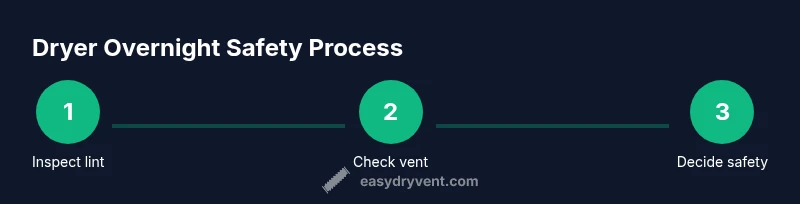
Before bedtime, run through a brief checklist: 1) Is the lint trap clean? 2) Is the exterior vent clear and unobstructed? 3) Are there any unusual sounds or smells from the dryer? 4) Is the dryer in a non-flammable, well-ventilated space? 5) If any sign of trouble appears, turn off the dryer, unplug it, and perform a closer inspection or call a professional.
Signs of trouble and what to do
If you notice heat on the cabinet, a burning smell, smoke, or flickering indicator lights, turn off and unplug the dryer immediately. Do not open the dryer door while it's hot, and evacuate children and pets from the area if necessary. After the appliance has cooled, inspect the vent and lint screen, and schedule a professional inspection if problems persist.
Tools & Materials
- Smoke detectors(Install in or near the laundry area; test monthly)
- Fire extinguisher (class ABC)(Keep within easy reach of the laundry space)
- Lint screen brush or vent brush(Used to clean lint trap and vent passages)
- Flashlight(For inspecting dark vent paths)
- Gloves (heat resistant)(Protect hands during inspection)
- Safety glasses(Optional eye protection during vent maintenance)
Steps
Estimated time: 20-30 minutes
- 1
Power down and inspect the lint trap
Turn off the dryer and unplug it if safe. Remove the lint screen and clean it thoroughly with warm water and a gentle brush to remove residue. A clean lint screen improves airflow and reduces overheating risk.
Tip: Clean lint screen after every load; a tiny amount of fuzz can dramatically slow drying. - 2
Check the exterior vent for obstructions
Go outside and inspect the vent opening. Remove any leaves, snow, or debris. Ensure the vent hood opens fully when air is expelled so heat and moisture can escape.
Tip: Do this seasonally; blocked vents are a common source of overheating. - 3
Inspect the vent hose for kinks
Look behind the dryer for the vent hose. Straighten any crushed sections and ensure it isn’t crushed or taut against the wall. Damaged hoses increase resistance and heat.
Tip: Replace metal ducts if you notice dents or damage; avoid flexible plastic hoses where possible. - 4
Assess your space for flammables
Keep laundry products, cardboard boxes, and fabrics at least three feet away from the dryer. A clear, well-ventilated space reduces fire risk.
Tip: Store lint and cleaning supplies away from the appliance to minimize ignition sources. - 5
Decide whether overnight operation is truly necessary
If you need long drying, prefer multiple shorter cycles with supervision, or move lightweight items to a rack to air-dry. Overnight operation should be avoided when possible.
Tip: Consider using moisture-sensing cycles that stop automatically when clothes are dry. - 6
Document and schedule maintenance
Record your vent cleaning dates and any issues found. Schedule professional vent cleaning if you notice slow drying or heat buildup.
Tip: Set reminders for annual professional inspections to maintain safe operation.
Common Questions
Is it dangerous to leave a dryer on overnight?
Yes. Leaving a dryer operating overnight can increase fire risk due to lint buildup and restricted airflow. Always turn off the dryer when not actively monitoring it.
Leaving a dryer on overnight is risky because lint and heat can cause a fire; turn it off if you’re not awake to monitor it.
Can I set a timer to run a dryer overnight safely?
Most dryers offer timed or moisture-sensing cycles, but unattended overnight operation is not recommended. Use a shorter cycle and supervise when possible.
You can use a timer or moisture-sensing setting, but avoid leaving it on all night unattended.
What maintenance reduces overnight risk?
Regular lint trapping, vent cleaning, and ensuring a clear outdoor vent are key. Schedule professional duct cleaning as needed.
Regular lint checks and vent cleaning greatly reduce the overnight fire risk.
Are gas dryers riskier than electric dryers for overnight use?
Gas dryers carry additional concerns due to combustion byproducts; ensure proper venting and a working CO detector in the laundry area.
Gas dryers add combustion byproducts, so venting and CO detectors are especially important.
What signs mean I should unplug immediately?
Burning smell, smoke, or unusually hot exterior surfaces are red flags. Shut off and unplug, then inspect or call a professional.
If you smell burning or see smoke, unplug the dryer right away.
If I need to dry overnight, what’s the safest approach?
Avoid overnight operation if possible. If unavoidable, run smaller loads on low heat with supervision, and monitor until completely cooled.
The safest option is not to run it overnight; if you must, go for small loads and supervise.
Watch Video
Key Points
- Avoid overnight dryer operation when possible.
- Regular lint trap cleaning and vent maintenance reduce fire risk.
- If trouble signs appear, unplug and inspect before continuing.