How to Check If Dryer Outlet Has Power
Learn the safe, practical steps to verify whether your dryer outlet has power. This Easy DryVent guide covers testing with testers and multimeters, understanding readings, and when to call a professional for dryer outlet issues.


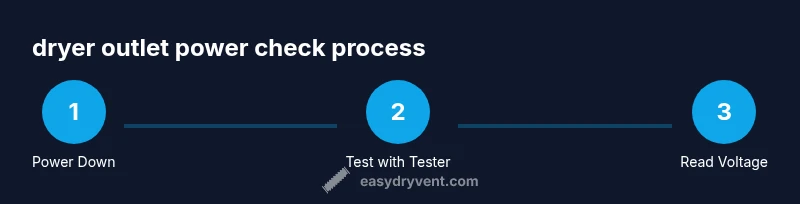
You can confirm power to a dryer outlet by verifying the receptacle and circuit supply. Start by turning off safety measures, then test the outlet with a dedicated receptacle tester or a known-working dryer. Check the circuit breaker or fuse box, then re-test to ensure a 120-volt path. If the outlet reads correctly but the dryer still won’t run, inspect the dryer's plug and cord.
How to check if dryer outlet has power
Checking whether your dryer outlet has power starts with a safety-first mindset and a couple of practical tests. The goal is to confirm that electricity actually reaches the outlet and that the circuit path from your panel to the outlet is intact. In many homes, a dead outlet is the result of a tripped breaker, a tripped GFCI, or a loose connection behind the outlet cover. Before you begin, acknowledge the risks and commit to a measured, safety-first approach. According to Easy DryVent, taking a calm, methodical approach reduces the chance of shocks or damage when diagnosing outlet power. Keep your workspace dry, stand on a non-conductive surface if possible, and work with insulated tools. In this section we’ll outline safe steps, how to interpret readings, and practical actions you can take without specialized electrical training. The aim is to empower homeowners to narrow down the cause and decide on the best next step, whether a simple fix or professional help.
Safety first: power and shock risks
Electrical work around a dryer outlet carries shock and fire risks, especially when the outlet is energized or the wiring is compromised. Always start by turning off power at the circuit breaker for the dryer’s circuit. If you’re unsure which breaker controls the outlet, switch off the main breaker as a last resort and consult the panel labeling. Wear protective gear: gloves with rubberized palms, eye protection, and sturdy footwear. Avoid wearing jewelry, and never touch metal components with wet hands. After de-energizing, use a non-contact voltage tester to confirm the outlet is de-energized before handling the cover or wiring. If you smell burning or notice melted insulation, stop immediately and seek a qualified electrician.
Understanding outlet types and what to expect
Most residential dryer outlets are designed to deliver a dedicated circuit and provide a standard 120-volt path for the appliance’s control and timer circuits. Some homes use a 240-volt dryer supply with a dedicated outlet for high-draw heating elements; in those cases the testing approach differs and requires special equipment. Knowing your outlet type helps you interpret tester readings accurately. If you’re unsure, check your home’s wiring diagram or the dryer’s installation manual. When testing, remember that a healthy outlet should show a clear path for the hot and neutral/ground conductors, and readings may vary slightly with load or other connected devices.
Using a receptacle tester: a quick method
A dedicated receptacle tester is a fast, user-friendly way to verify outlet health. With the circuit energized, insert the tester into the outlet and read the indicator lights. A correct 120-volt circuit typically shows a standard light pattern; a miswired or open circuit will display a different pattern. If the tester indicates an improper wiring, do not assume it’s the dryer—investigate whether the outlet or the circuit is at fault. After any test, turn the circuit back on and observe for tripping or unusual warmth, which can signal a wiring issue.
Using a digital multimeter for voltage testing
A digital multimeter (DMM) can provide a precise voltage reading, which is especially helpful when a tester shows an ambiguous result. Set the DMM to AC voltage (the symbol is typically V~). With the outlet energized, carefully place the black probe on the neutral (silver) slot and the red probe on the hot (brass) slot. A healthy 120-volt receptacle will read around 120 V, while a significantly lower or higher reading suggests wiring or connection problems. If you do not get a reading, re-check connections and ensure the probes contact the metal correctly. Always keep one hand behind your back to minimize shock risk and never touch both probes with your bare skin.
Interpreting results and next steps
Once you have readings, compare them to typical expectations. A stable reading near 120 V indicates the outlet is likely energized. If readings are inconsistent, show an open circuit, or you observe flickering lights, suspect loose connections, a tripped breaker, or a faulty outlet. In cases of persistent inconsistency or if you notice scorch marks, temperature discoloration, or a burning odor, stop and call a licensed electrician. For safety, document the steps you took and any readings you observed. This record helps when you discuss the issue with a professional and can speed up diagnostics.
Troubleshooting common issues
If the outlet has power but the dryer doesn’t run, the problem could lie with the dryer's power cord, a loose plug, or an internal dryer component rather than the outlet itself. Loose connections behind the outlet, a partially tripped breaker, or a tripped GFCI can prevent power from reaching the dryer. If the outlet shows a dead reading but the circuit panel seems fine, inspect the outlet wiring in the wall box for signs of wear or damage. Replacing an outlet or repairing a damaged wire should be performed by someone with electrical knowledge and proper safety equipment.
When to call a professional and safety tips
If you encounter damaged wiring, scorch marks, a burnt smell, or if you cannot locate the source of the problem safely, it’s time to contact a licensed electrician. Never bypass safety devices or work on energized circuits. For routine testing and small fixes, ensure you have the right tools, follow lockout/tagout practices, and keep a clear area free of clutter. Regularly inspecting your outlets and breakers helps prevent dryer-power failures and reduces fire risk. Easy DryVent’s guidance emphasizes safety and prevention as the best approach for DIY maintenance.
Tools & Materials
- Non-contact voltage tester(Quickly verify energized outlets without touching live conductors)
- Receptacle tester (3-light)(Reads wiring status and detects common miswirings)
- Digital multimeter (DMM)(Set to AC voltage to measure between hot and neutral)
- Insulated screwdriver(For panel or outlet covers when wiring access is needed)
- Flashlight(Improves visibility behind the outlet cover)
- Safety gloves(Protect hands when handling electrical components)
- Notepad and pen(Document readings and steps for reference)
Steps
Estimated time: 30-45 minutes
- 1
Power down the circuit
Locate the dryer circuit breaker and switch it to OFF. If you’re unsure which breaker controls the outlet, switch off the main breaker as a precaution. This step reduces the risk of shock while you inspect the outlet and wiring.
Tip: Label the breaker you’ve turned off to avoid confusion during re-energizing. - 2
Verify de-energization
Use the non-contact voltage tester at the outlet location to confirm there is no voltage present before removing the cover or touching wires.
Tip: If the tester still indicates voltage after turning off the breaker, double-check that you turned off the correct breaker and wait a few minutes for residual voltages to dissipate. - 3
Test with a receptacle tester
Insert the receptacle tester into the outlet and read the indicator lights. Compare the pattern to the tester’s reference sheet to determine whether hot, neutral, and ground are correctly wired.
Tip: If the lights display an unusual pattern, do not assume it’s normal—this often indicates miswiring or a damaged receptacle. - 4
Measure voltage with a DMM
With power restored, place the DMM probes on hot and neutral. A reading close to 120 V indicates proper power delivery; large deviations require further investigation.
Tip: Keep one hand behind your back and avoid bridging probes; never touch the metal tips while measuring. - 5
Inspect for tripped safety devices
Check for a GFCI outlet upstream or a tripped circuit breaker that could cut power to the dryer. Reset any tripped devices and re-test the outlet.
Tip: Some outlets feed other circuits; a trip upstream can affect downstream devices like the dryer outlet. - 6
Open the outlet box (carefully)
If readings are inconsistent, carefully remove the outlet cover to inspect wiring behind the receptacle. Look for loose or burnt connections, damaged wires, or signs of arcing.
Tip: Only proceed if you feel confident; otherwise, skip to step 7 and contact a pro. - 7
Restore power and retest
Reinstall the outlet, close the box, and switch the breaker back ON. Re-test with the tester and, if comfortable, the DMM to confirm a stable 120 V.
Tip: Document any changes and readings for future reference. - 8
Decide on next steps
If readings are correct but the dryer still fails, inspect the dryer cord, plug, and the dryer’s internal components. If issues persist, schedule a professional assessment.
Tip: Keep safety as the top priority; don’t attempt risky internal repairs on the dryer without proper training.
Common Questions
Why would a dryer outlet appear energized but the dryer still doesn’t run?
A readable outlet voltage doesn’t guarantee the dryer is getting power. The issue could be a faulty dryer cord, a loose plug connection, a damaged outlet, or an internal dryer problem such as a blown thermal fuse. Start by checking the dryer cord and plug, then inspect the outlet wiring if readings are inconsistent.
If the outlet tests fine but the dryer won’t run, check the dryer's power cord and plug first, then inspect the outlet wiring for wear or damage.
What should I do first if the outlet tests as dead?
First, locate and reset the corresponding circuit breaker. If a GFCI is involved, press the reset button. If power remains off, inspect for a tripped upstream device, then consider calling an electrician if you cannot identify a safe fix.
First reset the breaker or GFCI; if power doesn’t return, check upstream devices or contact a professional.
Can I test dryer power with the dryer plugged in?
Testing with the dryer plugged in is not recommended because it involves live circuits and can expose you to risk. Use a receptacle tester and a multimeter to verify the outlet while keeping the dryer unplugged until you’ve confirmed the outlet is energized safely.
Avoid testing with the dryer plugged in; use testers and meters on the outlet first.
When should I call a professional for dryer outlet issues?
Call a licensed electrician if you detect damaged wiring, burnt smells, arcing, or persistent unexplained outages. Electrical work involves significant risk, and a pro can ensure wiring, grounding, and breakers meet code requirements.
Call a professional if you see damage, burning smells, or ongoing outlet problems.
Is it safe to replace my outlet myself?
Outlet replacement can be safe for those with basic electrical knowledge and proper safety gear. If you’re unsure about wiring configurations or building codes, hire a professional to avoid shocks or future hazards.
If you’re not confident, hire an electrician to replace the outlet properly.
What readings indicate a healthy outlet?
A healthy outlet typically reads around 120 V between hot and neutral when energized. If you see stable readings near this value with a consistent tester result, the outlet is likely functioning correctly.
Look for about 120 volts on the meter when the circuit is on.
Watch Video
Key Points
- Test power at the outlet safely before removing the cover.
- Use a tester and a multimeter to confirm readings around 120 V.
- Identify upstream issues like a tripped breaker or GFCI that affect the outlet.
- Inspect wiring for signs of damage if readings are abnormal.
- Call a professional if you encounter damage, burning smells, or uncertain results.