Burning Smell from Dryer: Troubleshooting and Safe Fixes
This urgent guide helps homeowners diagnose a burning smell from the dryer, identify safety hazards, clear lint and vent obstructions, and restore safe, efficient drying with practical steps.


A burning smell from the dryer is most often caused by lint buildup, a blocked vent, or an overheating motor. Immediately stop using the dryer, unplug if safe, and perform quick checks: remove the lint screen, inspect the vent hose for obstructions, and run a brief dry test after clearing lint. If the smell persists, shut off power and call a professional.
Understanding the Warning: Burning Smell from Dryer
When you notice a burning smell from the dryer, treat it as a potential fire hazard. This is not normal dryer behavior. In most cases, the odor signals excessive heat build-up caused by lint, obstructions, or worn components. Ignoring it can escalate into a dangerous situation. According to Easy DryVent, a burning odor is a red flag that lint buildup or vent obstruction may be present. Act quickly, stay safe, and begin a measured inspection before attempting any drying cycles again. The goal is to identify the source—whether lint in the trap, a kinked vent hose, or a failing motor—and address it before using the appliance further. This section helps you recognize the warning signs and respond with calm, practical steps that reduce risk while you plan next actions.
Burning smells can also stem from foreign objects in the drum, overheated belts, or electrical issues near heating elements. Do not ignore smoke or a strong plastic-like odor. If you ever see flames, evacuate and call emergency services. Easy DryVent urges homeowners to treat every unusual odor as a safety concern, not a minor annoyance. With the right checks, you can restore safety and protect your home from fire risk.
Common Causes of a Burning Smell
A burning scent from a dryer can originate from several sources. The most frequent culprits are lint buildup and vent obstruction, which trap heat and raise internal temperatures. Clogged exhaust paths reduce airflow, causing the motor to overheat. Worn belts, bearings, or damaged pulleys can generate friction heat that comes through the drum area. In some cases, electrical components near the heating element or control board can emit a burning odor when wiring deteriorates. Based on Easy DryVent analysis, 2026, lint buildup and vent obstruction are the leading causes, followed by motor overheat and worn mechanical parts. Inspecting these areas first offers the fastest route to safety and function without unnecessary disassembly. Always verify there are no signs of smoke or fire before continuing.
Visual checks complement odor clues. If the lint trap looks overloaded, if the vent hose shows kinks or crushed sections, or if the exterior vent is blocked by debris, each of these can spark heat buildup. Remember that a burning smell is not a normal sign of operation and should prompt a cautious, methodical approach to troubleshooting rather than a rushed repair.
Safety First: Immediate Actions
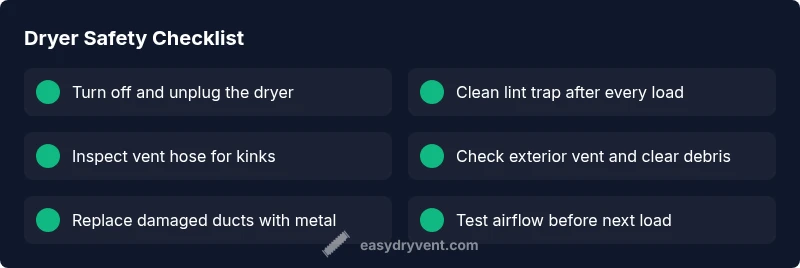
Safety comes first when you detect a burning smell from the dryer. Immediate actions include: 1) Stop the dryer and unplug it if it’s safe to do so. 2) Do not open a hot drum or touch wiring; allow the unit to cool. 3) If you see flames or heavy smoke, evacuate and call emergency services. 4) Move flammable objects away from the appliance area. 5) After cooling, visually inspect the lint trap and vent for obvious obstructions. If you’re unsure or the smell persists after basic checks, do not risk a fire—consult a professional technician or an appliance repair service. Easy DryVent emphasizes rapid shutdown and careful assessment to prevent escalation.
Diagnostic Steps: What to Check First
Start with the simplest, safest checks that can reveal the cause without disassembling critical components:
- Lint screen and cavity: Remove the lint screen and clean thoroughly. Use a handheld vacuum to remove lint from the cavity around the screen. A heavy build-up here is the most common trigger for heat buildup.
- Vent hose: Inspect the duct from the dryer to the wall outlet. Look for kinks, crushes, or detachment that blocks airflow. Replace any crushed sections with a smooth metal duct when possible.
- Exterior vent: Check the exterior vent cap for debris or nests. Clear obstruction with gloves and a long brush. Confirm there’s steady airflow when the dryer is running.
- Drum and belt area: Listen for squealing or grinding noises; these can signal worn belts or bearings that overheat and emit odor. If the smell persists after lint and vent checks, the issue may be deeper inside the machine.
- Electrical concerns: Avoid touching the heating element or wiring. If you notice melted plastic or scorched components, power down and call a professional immediately.
Immediate Checks You Can Do Safely Now
These checks are designed to be performed without specialized tools. If anything feels uncertain, step back and schedule a repair:
- Unplug the dryer power cord and ensure the circuit is safe to handle.
- Remove and clean the lint screen, then vacuum the lint trap housing.
- Inspect the vent hose for obvious obstructions or damage; straighten kinks and detach at both ends to clean interior sections.
- Check the exterior vent opening for leaves, nests, or debris and clear as needed.
- Wipe down the drum edges to remove any fibers or plastic fragments that could heat up when heated.
Prevention and Maintenance: How to Reduce Future Risks
Prevention is about regular maintenance and mindful usage. Cleaning the lint trap after every load reduces heat accumulation dramatically. Schedule vent cleaning and inspection by a professional every 1–2 years, or more often if you run the dryer heavily or in a dusty environment. Use the dryer only with appropriate loads that allow airflow. Replace foil or plastic ducts with smooth metal ducting, and ensure all connections are tight with clamps that won’t loosen over time. A small investment in preventive care pays off in safer operation and fewer unexpected repairs.
When to Call a Professional
If the odor recurs after you’ve completed these checks, or you notice smoke, overheating, or signs of melted insulation, stop using the appliance and contact a licensed technician. Electrical faults or heat element issues require professional service to avoid further danger. Easy DryVent recommends seeking certified help rather than attempting advanced repairs yourself, especially around heating components and wiring.
Quick Reference: Before You Run Your Dryer Again
Before the next cycle, ensure the lint screen is clean, vent ducts are clear, exterior vent is open, and the dryer is level and properly vented. If you notice any persistent odor, smoke, or heat, turn off power and call a professional. A well-maintained dryer dries safely, efficiently, and with less risk of fire.
Steps
Estimated time: 25-40 minutes
- 1
Power Down and Unplug
Shut off the dryer and unplug from the wall outlet. Allow the unit to cool completely before touching any internal components. This prevents shock and reduces burn risk during inspection.
Tip: Never handle wiring or heating elements unless you are trained. - 2
Clean the Lint Trap and Cavity
Remove the lint screen and clean it thoroughly. Vacuum the lint trap housing and wipe with a damp cloth to remove fine lint. A clean trap reduces heat buildup dramatically.
Tip: Use a small handheld vacuum with a narrow nozzle for hard-to-reach lint. - 3
Inspect the Vent Hose
Detach the vent hose from the dryer and from the wall. Check for kinks, crushes, or lint buildup inside the duct. Clear any blockages and reattach securely.
Tip: If the duct is foil or plastic, consider replacing it with a smooth metal duct for better airflow. - 4
Check the Exterior Vent
Go outside and inspect the exterior vent cap. Remove any debris, nests, or leaves that could obstruct airflow. Ensure the vent opening is clear and that air blows freely when the dryer is on.
Tip: Wear gloves to remove debris safely; never slam the exterior vent shut. - 5
Run a Test Cycle
Reconnect power and run a short cycle with no clothes to monitor heat and airflow. Listen for unusual sounds and watch for any odor. If odor returns, disconnect power and seek professional help.
Tip: Keep a close eye on the transition to heat and airflow during the test.
Diagnosis: Dryer emits a burning smell while running
Possible Causes
- highLint buildup blocking airflow in lint screen or vent hose
- highVent duct or exterior vent blocked or crushed
- mediumOverheating motor or worn belt/pulley
- lowElectrical fault near heating element or wiring
Fixes
- easyClean lint screen and thoroughly inspect vent path; remove lint from cavity with vacuum; ensure unobstructed airflow
- easyStraighten or replace crimped/kinked vent hose; ensure metal duct sections are used and properly sealed
- mediumLet the dryer cool if overheating; test after cleaning and verify no residual odor; contact a pro if odor persists
- hardIf electrical fault suspected, stop using the unit and contact a licensed technician or appliance repair service
Common Questions
Is a burning smell from the dryer always dangerous?
A burning odor can indicate a fire risk. Stop using the dryer, unplug if safe, inspect lint and vent, and contact a professional if the odor persists or you see smoke.
A burning smell can signal a dryer fire risk. Stop, unplug if safe, inspect lint and vent, and call a pro if the odor continues.
What should I do first if I smell burning lint?
Shut off and unplug the dryer, then quickly inspect the lint trap and vent for obvious blockages. Clean what you can safely reach and monitor before using again.
First, unplug the dryer and check the lint trap and vent for blockages.
Can a clogged vent cause a burning smell?
Yes. A clogged vent reduces airflow and causes overheating, which can produce a burning odor. Clear obstructions and ensure proper venting.
Definitely. A clogged vent can cause overheating and a burning smell.
How often should I clean the lint trap and vent?
Clean the lint trap after every load and have the vent system inspected and cleaned periodically based on how often you use the dryer and the environment.
Clean lint trap after every load; schedule vent cleaning as needed.
Is it safe to run the dryer after replacing the lint screen?
If you still smell burning after replacing the lint screen, stop using the dryer and check venting and belts. If the odor continues, contact a professional.
If the smell persists after replacing the screen, stop and seek professional help.
When should I call a technician?
Call a technician if the odor continues after cleaning, if you notice smoke, unusual noises, or the dryer trips breakers. A licensed pro can diagnose electrical or mechanical faults safely.
Call a technician if the odor persists or you notice smoke or unusual noises.
Watch Video
Key Points
- Stop and unplug if you smell burning.
- Prioritize lint trap and vent cleaning for safety.
- Test after cleaning and call a pro if odor returns.
- Regular maintenance reduces fire risk and extends dryer life.