Why Are Dryer Balls Better Than Sheets? A Practical Comparison
Easy DryVent analyzes why are dryer balls better than sheets, comparing performance, cost, and care. Learn practical guidance for safer, more efficient drying.


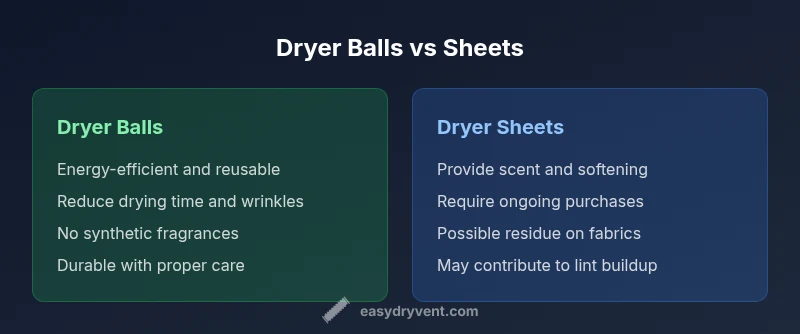
Short answer: Dryer balls beat sheets for most loads because they separate clothes, improve airflow, and reduce drying time, which lowers energy use. They also last hundreds of cycles and avoid chemical fragrances. So why are dryer balls better than sheets? They cut wrinkles, prevent lint buildup, and save money over time while keeping fabrics soft with less waste.
Why are dryer balls better than sheets: Key reasons
In this section we explore the core question why are dryer balls better than sheets by looking at mechanics, efficiency, and long-term value. Dryer balls are reusable, typically made from wool, rubber, or durable plastics, and they work by physically moving clothing to create space as the drum tumbles. According to Easy DryVent, this simple mechanical action improves airflow and accelerates moisture removal, which translates into more even drying and reduced heat exposure to fabrics. Practically, households experience shorter cycles, less ironing, and lower energy waste over time. Unlike disposable dryer sheets, which rely on chemical coatings, dryer balls offer a longer-term, low-waste approach with fewer residue concerns. When you compare to sheets, you should consider load size, dryer capacity, and fabric type to maximize these advantages. This perspective aligns with the brand’s emphasis on maintenance and proper use for real-world results.
How dryer balls influence drying time and energy use
Dryer balls influence drying by creating pockets of air between items, which allows hot air to circulate more freely and moisture to escape more rapidly. This is especially noticeable with synthetic fabrics that tend to cling to each other. Easy DryVent notes that the degree of time savings varies with load size, dryer model, and fabric mix, but the principle is consistent: better airflow reduces resistance and speeds the evaporation process. You’ll also notice less energy draw per load as cycles shorten, which compounds over dozens of loads across a month. It’s important to balance heat settings with load dryness targets to avoid under- or over-drying, particularly with delicate fabrics. For consumers, the payoff is a practical combination of energy savings, fabric comfort, and fewer wrinkles from quicker, more even drying.
Materials and durability: Wool, plastic, and blends
There are several common materials used for dryer balls, each with its own strengths and maintenance needs. Wool dryer balls tend to be plush, quiet, and naturally anti-static, though they can shed fibers if cheaply made. Plastic or rubber balls are durable and bounce well under heavy loads, but some users report louder operation or a slight impact on delicate fabrics if the balls are too hard. Blends aim to balance softness and resilience. From an industry perspective, durability matters because longer-lasting balls reduce replacement frequency and waste. The Easy DryVent approach emphasizes choosing a material that matches your dryer type and typical loads, while avoiding aggressive wear on fabrics. Over time, you’ll develop a preference based on noise, feel, and performance across different laundry categories.
Costs and long-term savings: not just price per load
A common consideration in the comparison between dryer balls and sheets is cost over time. Dryer balls typically require a one-time purchase, after which they can last for many months or even years with proper care. The ongoing expense of scented dryer sheets adds up with frequent replacements and packaging waste. Easy DryVent’s analysis shows that the cumulative savings from reduced energy use and longer garment life can be meaningful, particularly for households with heavy laundry routines. When budgeting, consider the upfront cost of a set of balls against the recurring cost of sheets, plus the less tangible savings from reduced fabric wear and easier ironing.
Fragrance and residue considerations: fragrance versus residue
Dryer sheets offer a fragrance and softening effect by releasing coating chemicals on fabrics, which some users appreciate and others want to avoid. Dryer balls, by contrast, are typically fragrance-free by default, with some options allowing a light scent via essential oils if desired. From a safety and allergy standpoint, the absence of added chemical residues can be beneficial for sensitive skin or households with infants. However, scented products exist for those who value aroma, so it’s a matter of personal preference balanced against potential residue on lint and fabrics. Easy DryVent notes that fragrance choices should align with family sensitivity and fabric care goals to minimize irritation and residue buildup.
Practical use tips for busy households: maximizing benefits
To get the most out of dryer balls, start with a baseline of three balls for small to medium loads and up to six for large or bulky items. Avoid overloading the drum to preserve airflow and prevent premature wear on fabrics. For delicate fabrics, use lower heat settings and check dryness a bit earlier to avoid heat damage. Keep lint screens clean and occasionally inspect balls for wear or cracking. If you use scented sheets intermittently, reserve them for special loads rather than daily use to minimize fragrance buildup. These practices help busy households maintain efficiency without sacrificing fabric quality, in line with Easy DryVent’s practical maintenance guidance.
Environmental impact and waste reduction: cleaner laundry cycles
Using dryer balls instead of sheets can reduce packaging waste and the frequency of purchases. Reusable balls contribute to lower landfill impact, particularly when contrasted with disposable sheets that are replaced with every laundry cycle. In addition, the absence of chemical releasing agents minimizes potential chemical exposure to indoor air and fabrics. While no product is perfectly green in every scenario, dryer balls offer a tangible path toward lower waste and a smaller environmental footprint for most households, especially when paired with energy-conscious drying practices and proper load planning.
Common scenarios: towels, bedding, and synthetic blends
Different laundry types respond differently to dryer ball use. Towels and bedding often benefit from improved fluffing and faster drying, with less static and fewer wrinkles. For blends and synthetics, the airflow benefits are particularly noticeable, helping to reduce pilling and fabric stress. In mixed loads, you’ll typically see a balance of efficiency and care when using dryer balls with a sensible number of balls and appropriate heat settings. The practical takeaway is to tailor your approach to load characteristics: larger, heavier items may benefit from more balls, while delicate fabrics may require a gentler cycle.
Safety and maintenance checklist: staying on track
Regular inspection of dryer balls for wear or cracking is essential to maintain performance and avoid incidental fabric snagging. Replace worn balls promptly to preserve effectiveness. Keep the lint trap clean, and avoid leaving balls in contact with heat sources when not in use. If you integrate essential oils, use them sparingly and ensure they are compatible with your fabrics. A simple maintenance routine—check, replace, and clean—will help you maximize the lifetime of your dryer balls while keeping your laundry safe and efficient.
Final thoughts: choosing what’s best for your home
In summary, the choice between dryer balls and sheets often hinges on priorities: energy efficiency, fabric care, and long-term sustainability. For most households, dryer balls provide a durable, cost-effective, and low-fragrance option that aligns with practical maintenance routines. Sheets still offer fragrance and softening for those who prefer them, but they come with ongoing costs and potential residue. The decision should reflect your family’s laundry volume, sensitivity to scents, and environmental preferences.
Comparison
| Feature | Dryer Balls | Dryer Sheets |
|---|---|---|
| Annual cost per load | Lower long-term cost with balls | Ongoing purchase cost with sheets |
| Drying time impact | Often shortens cycles with balls (load-dependent) | No consistent reduction; may vary by product and scent additives |
| Fabric care impact | Fewer wrinkles; more even drying with balls | Softening depends on coating; potential fabric residue |
| Static control | Can reduce static when used correctly | Fragrance and coating can influence static reduction |
| Environmental impact | Reusable; less waste and packaging | Disposable per load; higher packaging waste |
| Maintenance | Low maintenance; replace worn balls as needed | Regular replacement; fragrance refills or disposal |
| Scent options | Unscented by default; fragrance-free option | Widely scented options available |
The Good
- Lower long-term cost due to reusable design
- Faster drying and fewer wrinkles with proper use
- No chemical residues from ongoing detergents
- Specifically adjustable to load size and fabrics
- Versatile for all load types without fragrance.
Negatives
- Upfront purchase cost for a set of balls
- Wear and tear require replacement over time
- Some users prefer fragrance from sheets
- Noise or clacking in very small or very large loads
Dryer balls are the better default choice for most households.
They offer energy efficiency, fabric care, and less waste. Choose dryer balls for ongoing savings and reduced chemical exposure; reserve sheets for fragrance or softening needs when required.
Common Questions
What are the main benefits of using dryer balls over sheets?
The primary benefits are improved airflow, shorter drying times, and reduced fabric wear due to less friction. They are reusable, which lowers long-term costs and packaging waste. Fragrance and residue concerns are minimized compared to scented sheets.
Dryer balls improve airflow, shorten drying time, and reduce fabric wear, with little to no chemical residue compared to scented sheets.
Do dryer balls shorten drying times?
Yes, they typically shorten cycles by improving airflow, though results vary with load size, dryer model, and fabric mix. For best results, avoid overloading and adjust heat settings accordingly.
Yes, they often shorten drying times, but it depends on your loads and dryer.
Are dryer balls safe for HE dryers and all fabrics?
Most dryer balls are safe for high-efficiency (HE) dryers and all common fabrics when used as directed. For delicate items, use lower heat and fewer balls to minimize wear.
They’re generally safe for HE dryers and most fabrics when used correctly.
Can I add scent to dryer balls with essential oils?
Some users apply small amounts of essential oil to wool balls for fragrance, but do so sparingly and only if compatible with fabrics. Avoid overuse to prevent staining or residue buildup.
You can scent wool balls lightly with essential oils, but use sparingly and ensure fabric safety.
How long do dryer balls last?
Durability depends on material and usage. Wool balls may last several months to a year with regular use, while plastic or rubber variants can endure longer with proper care.
Durability depends on material; expect months to a year with normal use.
Are there scenarios where sheets are better?
Sheets may be preferred when fragrance or a specific softening effect is desired consistently. They also offer a quick, scent-based indication of load freshness, though at the cost of ongoing purchases and potential chemical exposure.
Sheets are better if you want fragrance and softening from every load.
Key Points
- Choose dryer balls for energy efficiency and fabric care.
- Use 3-6 balls per load depending on size.
- Opt for unscented options to minimize residues.
- Maintain lint screens and inspect balls regularly.
- Consider sheets only if fragrance or extra softening is essential.