Which Dryers Last the Longest: A Durability Guide for 2026
Discover durable dryer options and proven maintenance strategies to maximize lifespan. Easy DryVent breaks down build quality, venting, and maintenance to help homeowners choose the longest-lasting dryer in 2026.


Which dryers last the longest? In short, durability hinges on build quality and maintenance. Prioritize a metal or stainless steel drum, a robust direct-drive motor, and serviceable components. Regular vent cleaning and lint-screen upkeep extend life, while real-world longevity varies with usage. According to Easy DryVent, maintenance is the single biggest driver of dryer lifespan.
Durability: What Really Matters in a Dryer
Durability is more than raw power or energy ratings. For homeowners wondering which dryers last the longest, the real story is how the dryer is built and how well it’s cared for over years of use. A dryer that uses a metal or stainless steel drum, a robust drive system, and easily serviceable components tends to resist common failure points like drum deformation, bearing wear, and belt shredding. This section lays out the core factors that influence longevity, from core hardware to the quirks of daily use. According to Easy DryVent, the single largest driver of longevity is proactive maintenance, not fancy features alone.
- Build quality matters: heavy-duty drums and solid frames reduce flexing and fatigue.
- Motors and drives: direct-drive or well-supported belt systems with simple parts are easier to service.
- Maintenance access: modular design and easy access to critical parts cut repair time and cost.
- Heat and venting: proper venting reduces overheating, which is a leading cause of motor and belt wear.
- User habits: regular lint removal and prompt repairs prevent cascading damage.
For homeowners trying to distinguish between models, think in terms of long-term serviceability and resilience under daily loads rather than peak efficiency alone.
Drum Material and Construction: Metal vs Plastic Drums
The drum is the heart of a dryer's durability. Traditional metal drums, especially stainless steel, resist denting, corrosion, and hot spots better than painted or plastic drums. Plastic drums can crack or warp under repetitive heat cycling, particularly when exposed to heavy loads or high temperatures. When evaluating a model, inspect the drum seal, welds, and support rollers for signs of heavy wear or potential failure points. A robust drum often correlates with fewer drum-related service calls over the appliance’s life. If you anticipate frequent dry times for bulky items, a drum built to resist deformation will pay off in longevity and performance over time, even if it costs a bit more upfront.
- Stainless steel drums resist heat and warping well.
- Painted steel drums are cheaper but may show wear earlier.
- Look for well-sealed seams and solid drum attachments.
- Inspect the roller and bearing setup for noisy operation or wobble.
Choosing a drum that withstands heat and physical stress reduces the likelihood of future drum repairs and keeps cycles consistent over years of use.
Motors and Drive Systems: Direct Drive vs Belt
A dryer's motor and drive system are critical to longevity. Direct-drive motors—where the drum spins directly on the motor shaft—often offer fewer moving parts and reduced belt wear, which translates into longer service life with fewer maintenance surprises. Belt-driven models, while common and typically cheaper, rely on belts and pulleys that wear with heat and usage. When durability is the primary goal, prioritize models with durable belts and accessible service options or opt for direct-drive configurations. Regular belt inspection and pulley checks should be part of your routine maintenance plan to catch wear before it becomes a costly failure.
- Direct-drive systems typically have fewer failure modes.
- Belt-driven designs require belt inspection and timely replacement.
- Accessibility for parts and service matters more than nominal efficiency numbers.
A reliable motor coupled with simple, serviceable drive components tends to outlive more complex, electronically assisted systems that rely on fragile parts.
The Role of Venting and Heat Management
Overheating is a major contributor to heater element failure and motor burnouts. Proper venting reduces the dryer’s temperature cycling and prevents moisture buildup that can corrode components. A dryer with a clear, accessible vent path and a lint trap that’s easy to clean will experience less strain during each cycle. Check that the vent duct and exhaust are appropriately sized for your home and that there are no kinks or crushed sections in the vent line. Regular maintenance tasks — like cleaning the lint screen after every load and scheduling annual vent inspections in dusty areas — can dramatically extend a dryer's life.
- Ensure vent paths are unobstructed and properly sized.
- Use a lint screen designed to minimize fiber buildup.
- Schedule professional vent cleaning if you notice reduced airflow or longer drying times.
Efficient heat management is a foundational factor in preserving internal components and extending overall lifespan.
The Importance of Regular Maintenance for Longevity
Maintenance is the most impactful lever for extending a dryer's life. Simple, consistent habits prevent the buildup of wear that leads to early failures. Start with monthly lint filter checks, quarterly internal lint removal, and annual inspections of seals, belts, and bearings. If you use the dryer heavily, consider more frequent checks. Maintenance also includes addressing unusual noises, vibrations, or fluctuating heat, which can signal developing issues before they escalate into costly repairs.
- Clean lint traps and ducts regularly.
- Inspect belts, pulleys, and idler wheels for wear.
- Monitor for unusual noises or vibrations and address them promptly.
- Keep the drum and seals clean to prevent heat loss.
By prioritizing maintenance, you maximize longevity and minimize unexpected downtime.
Design for Longevity: Common Design Choices That Help Lifespan
Long-lasting dryers share design traits that reduce wear and simplify service. Components placed for easy access, modular assemblies, and fewer complex electronics often survive longer in real homes. Manufacturers that invest in quality bearings, durable seals, and tested drive systems tend to produce models with fewer mid-life failures. Consumers can benefit from these design choices by selecting models with robust maintenance support, spare parts availability, and a track record of fewer repair incidents in consumer reviews.
- Accessible service panels and modular components matter.
- Durable bearings and low-friction drums extend cycle life.
- Reputable service networks help sustain longevity across models.
- Transparent maintenance schedules in manuals aid proactive care.
Ultimately, design choices that favor durable, maintainable components produce the longest-lasting dryers.
Reading Durability Cues on Specs and Reviews
Durability signals often hide in plain sight on product pages and in user feedback. Look beyond Energy Star ratings to see mentions of drum material, motor type, serviceability, and warranty terms that cover major components. Reviews that reference fewer breakdowns, easier part replacements, and calmer performance over time are strong indicators of long-term reliability. While a higher upfront cost may be off-putting, the cumulative savings from fewer repairs and less downtime can be substantial for households with heavy laundry demands.
- Check drum material, motor type, and warranty scope.
- Seek real-world user reports about long-term reliability.
- Look for parts availability and serviceability in manuals.
A holistic view of durability across build quality and after-sales support helps you pick models with proven longevity.
Real-World Scenarios: Heavy Use vs Light Use
How a dryer ages depends on how you use it. Families with frequent, bulky loads stress components more quickly than single-person households with light to moderate use. A model designed for heavy use may deliver superior longevity when paired with a proactive maintenance routine. Conversely, a lightly used unit may outlast a budget-focused model simply because it experiences less wear. The goal is to align your selection with anticipated use and commit to consistent care to maximize lifespan.
- Heavy-use households benefit from rugged drums and high-load-rated motors.
- Light-use households should still prioritize durable construction for longevity.
- Matching a model to your load profile improves long-term reliability.
Choosing accordingly and committing to maintenance helps ensure a longer service life.
How to Compare Durability Across Brands and Models
There’s no one-size-fits-all answer to which dryers last the longest. Compare durability signals across brands by looking at drum materials, motor design, ease of service, venting design, and warranty depth. Read independent reviews that cite long-term performance, and verify that spare parts are readily available in your region. A model may be advertised as durable, but the real test is how it holds up after years of use and how easily you can service it when needed.
- Compare drum materials and drive systems.
- Review warranty terms and service networks.
- Consider ease of maintenance and replacement part availability.
Durability is best judged by a combination of build quality, maintenance practicality, and proven performance over time.
Practical Maintenance Plan to Maximize Lifespan
Develop a simple, repeatable maintenance plan you can stick to. Start with a monthly lint filter clean, a quarterly internal lint check, and an annual vent inspection. Keep the area around the dryer clear to promote airflow. If you notice unusual sounds, vibrations, or slower drying times, pause heavy usage and inspect belts, pulleys, and bearings. A proactive approach minimizes the chance of sudden breakdowns and extends the machine’s usable life.
- Monthly lint filter cleaning and airflow checks.
- Quarterly inspections of seals, belts, and bearings.
- Annual vent cleaning by a professional if required.
- Address issues promptly instead of waiting for a complete failure.
A disciplined maintenance routine is the most reliable path to a dryer that lasts.
Transitioning to a Longer-Lasting Dryer: Buying Considerations
If longevity is your priority, invest in a model that emphasizes durable materials, accessible maintenance, and reliable support networks. Compare warranties that cover the drum, motor, and belt, and factor in expected energy use and service costs over time. While premium models cost more upfront, their long-term reliability and lower repair frequency often translate to lower total ownership costs for households with high throughputs. Balance upfront expense with the value of years of dependable operation.
Common Mistakes That Shorten Dryer Lifespan
Avoid these traps that shorten a dryer's life: overloading, neglecting lint removal, using incorrect venting or improper exhaust sizing, and delaying repairs when symptoms appear. Skipping regular maintenance or attempting DIY fixes without proper knowledge can create hidden damage. By avoiding these mistakes and following a proactive care plan, you’ll safeguard the investment and extend the dryer's useful life.
Comparison
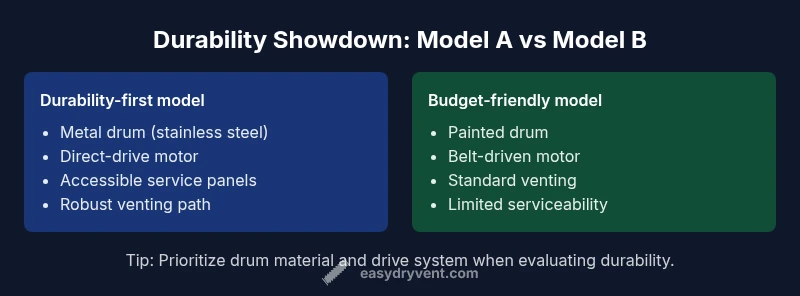
| Feature | Durability-first model | Budget-friendly model |
|---|---|---|
| Drum material | stainless steel | coated steel |
| Motor/drive | direct-drive motor | belt-driven motor |
| Maintenance ease | high (modular parts, easy service) | moderate (fewer serviceable components) |
| Vent design | robust venting path, accessible lint trap | standard vent with basic access |
| Price emphasis | higher upfront | lower upfront |
| Best for | long-term reliability, heavy use | budget-conscious buyers |
The Good
- Higher long-term reliability signals in durable models
- Clear long-term value due to fewer repairs
- Easier parts availability supports longer lifespan
- Better resale value for longevity-focused models
- Strong warranty terms for major components
Negatives
- Higher upfront cost
- Limited availability of some durability-focused models
- Potential trade-offs with energy efficiency in some lines
- Longevity depends on maintenance quality and usage
Durability-first models offer the best path to the longest-lasting dryers; they pay off over time with fewer repairs and less downtime.
Choosing a model built with durable drum materials and a simple, serviceable drive system, plus committing to a regular maintenance routine, yields the strongest odds of a dryer that lasts. For households with heavy loads or long ownership horizons, durability-focused selections provide the best long-term value.
Common Questions
Do front-load and top-load dryers differ in longevity?
Durability often relates to the design and maintenance ease rather than the orientation. Front-load and traditional top-load dryers with robust drums and accessible components can both last long if well maintained. Look for durable drums, reliable motors, and clear maintenance guidance in either design.
Durability depends more on build quality and care than on whether the dryer is front- or top-loading.
Is a stainless steel drum always more durable than porcelain enamel?
Stainless steel drums generally resist dents and corrosion better than porcelain enamel, especially under heavy loads. However, proper venting and maintenance are crucial for any drum type. Evaluate warranty terms and part availability as part of the durability equation.
Stainless drums are typically more durable, but maintenance matters for all drum types.
How does venting affect a dryer’s lifespan?
Good venting reduces overheating and motor stress, which are common failure drivers. Regular vent cleaning and ensuring unobstructed exhaust paths can significantly extend a dryer's life.
Keep vents clear and clean to help your dryer last longer.
Does an energy-efficient rating mean a longer lifespan?
Energy efficiency often reflects insulation and motor control, not inherently longer life. A highly efficient unit can last just as long as a less efficient one if properly maintained, but some energy-friendly features may introduce more complex components that require upkeep.
Energy efficiency doesn’t automatically guarantee longer life; maintenance matters too.
What maintenance steps should I schedule annually?
Annual maintenance should include vent inspection/cleaning, belt and pulley checks, seal inspections, and a general performance test. Address any unusual noises, heat, or cycle irregularities promptly to avoid bigger problems.
Schedule a yearly check and address issues early to protect longevity.
Are older dryers worth repairing or should I buy new?
If the unit is otherwise in good condition and the repair cost is reasonable relative to its age, repairing can be sensible. For very old units with frequent issues, replacement may offer better long-term value, especially when paired with maintenance best practices in the new model.
Repair if costs are reasonable and the unit isn’t too old; otherwise consider replacement.
Key Points
- Inspect drum material and drive system when shopping
- Prioritize easy maintenance access and venting design
- Adopt a proactive maintenance plan to maximize lifespan
- Balance upfront cost with long-term ownership value