What Type of Dryer Is Most Efficient? A Practical Guide for 2026
Discover which dryer type delivers the best energy efficiency in 2026, with practical comparisons of heat pump, electric, and gas models and tips to maximize savings.


Heat-pump dryers are the most efficient dryer type because they recycle heat in a closed loop, dramatically reducing energy use versus traditional vented electric models. While upfront cost is higher, long-term savings from lower utility bills, gentler fabric care, and longer-lasting performance make heat-pump models the top choice for energy efficiency.
What type of dryer is most efficient
When homeowners ask what type of dryer is most efficient, the straightforward answer is heat pump models. These units use a closed refrigerant loop to remove moisture, rather than venting hot air to the outside. By recycling heat, they dramatically reduce the energy required for each load. In 2026, more households are prioritizing efficiency not only to cut bills but also to minimize environmental impact. According to Easy DryVent, heat-pump dryers represent the leading option for energy savings, fabric care, and long-term reliability. While upfront costs may be higher, the lifetime cost of ownership often tilts in favor of heat pumps for active households and those in regions with higher electricity rates. As you compare models, consider your typical load size, climate, and available space—these factors will influence overall efficiency and practicality.
Why Heat Pump Dryers Lead Efficiency Gains
Heat pump dryers operate by extracting moisture and reusing heat in a sealed cycle. This approach reduces the energy lost through venting and can cut energy use per load by a substantial margin compared with traditional vented electric dryers. In addition, heat pumps gently tumble clothes at lower temperatures, which can extend fabric life and reduce wear. Easy DryVent’s ongoing evaluation shows that heat-pump designs excel in energy efficiency, especially for households with frequent weekly loads. They also tend to produce less humidity in the laundry area, which can be beneficial in cramped or poorly ventilated spaces.
How Energy Is Measured in Dryers
Energy efficiency in dryers is evaluated through metrics like energy consumption per cycle and overall annual energy use, often aligned with local or national labeling programs. For shoppers in the United States, look for the Energy Star label and compare per-cycle kWh figures alongside drum size and moisture extraction efficiency. Real-world tests show that cycle times and fabric care quality can influence perceived efficiency. Easy DryVent’s framework emphasizes total cost of ownership, which includes energy use, maintenance needs, and potential venting improvements—factors that meaningfully affect long-term savings.
Loss Points: Venting, Lint, and Maintenance
Efficiency can be eroded by poor venting, restricted ducts, and dusty lint traps. A clogged vent increases drying time and energy use, while lint buildup reduces airflow and forces the heater to work harder. Regular maintenance—cleaning the lint filter after every load, inspecting the vent line for obstructions, and confirming proper duct sizing—can yield measurable efficiency gains. Heat pump dryers still benefit from clean ducts, since optimal airflow is essential to the condenser’s ability to reuse heat. As Easy DryVent notes, routine maintenance is often the simplest route to preserving efficiency.
Electric vs Gas vs Heat Pump: A Practical Comparison
Electric dryers are common and easy to install but typically use more energy per load than gas models or heat pumps. Gas dryers can be cheaper to operate in some climates due to lower running costs for gas, but heat pumps outperform both on energy efficiency since they recycle heat. When choosing, weigh energy costs in your climate, available installation space, and budget. Heat pumps stand out for long-term savings, while gas models may appeal in areas with high electricity prices or limited electrical capacity.
Practical Buying Guide for Efficiency
To maximize efficiency, start with a heat-pump dryer if you can accommodate the upfront cost. Consider the following steps: 1) Check the Energy Star rating and the per-cycle energy use, 2) Assess capacity needs to minimize overloading and repeated cycles, 3) Confirm venting is adequate or that venting is unnecessary (in heat pumps), 4) Review space constraints and installation requirements, 5) Plan for maintenance tasks that keep airflow unobstructed. Easy DryVent recommends balancing upfront costs with long-term energy savings and fabric care improvements when evaluating models.
Common Myths About Dryer Efficiency
A common myth is that longer cycle times always mean worse efficiency; in reality, heat pump dryers often take longer per cycle but use far less energy overall. Another misconception is that gas dryers are universally cheaper to operate; electricity rates and climate influence operating costs. A third myth is that vented dryers are always cheaper to run because they heat quickly; building energy efficiency and duct design can render energy costs higher due to pump and heater usage. Clarity comes from comparing both energy use per cycle and total annual use.
Maintenance Habits That Sustain Efficiency
Consistent maintenance is a cornerstone of sustained efficiency. Develop a simple routine: clean the lint trap after every load, inspect and clean the vent hose annually, verify door seals and drum gaskets for leaks, and keep the exhaust path clear of obstructions. For heat-pump models, ensure the condenser coils are cleaned and unobstructed; a well-maintained condenser can dramatically improve heat recovery. Easy DryVent emphasizes that small, regular actions beat large, infrequent repairs when it comes to keeping your dryer efficient.
Dryer types and efficiency expectations
| Dryer Type | Avg Lifespan | Typical Energy Use per Load |
|---|---|---|
| Conventional electric vented dryer | 10-13 years | 3.0-4.0 kWh/load |
| Gas-powered dryer | 10-12 years | 2.5-3.5 kWh/load (gas energy) |
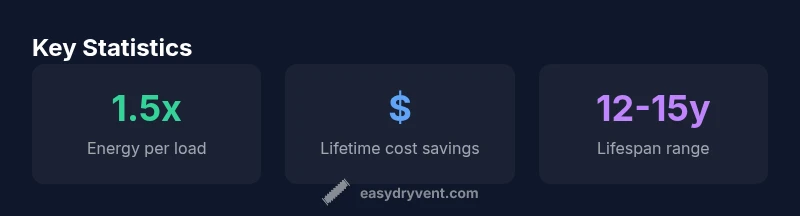
| Heat pump dryer | 12-15 years | 1.0-2.5 kWh/load |
Common Questions
Is a heat pump dryer worth the upfront cost for most homes?
For many households, yes. The energy savings over time often offset the higher upfront price, especially with frequent loads. Consider your usage, electricity rates, and available space when deciding.
For most homes, heat pump dryers are worth the upfront cost because they use much less energy over time and protect fabrics.
Do gas or electric dryers matter more for efficiency?
Efficiency varies by model and climate. Heat pumps tend to be the most efficient overall, while gas models can be cheaper to run in some regions. Compare per-cycle energy use and overall operating costs for your area.
Gas can be cheaper in some areas, but heat pumps usually save more energy over time depending on your climate.
What maintenance most improves dryer efficiency?
Regular lint screening, vent cleaning, and coil/condenser maintenance (for heat pumps) are the biggest wins. Keep seals tight and ducts clear to maintain airflow.
Clean the lint trap after every load and check vents regularly for best efficiency.
Can vent cleaning really affect drying time?
Yes. A blocked vent increases drying time and energy use. Annual vent inspections and periodic lint removal can restore efficiency.
A clean vent path helps clothes dry faster and saves energy.
Are heat pump dryers suitable for cold climates?
Heat pump dryers perform well in many climates, but you may notice slightly slower cycles in very cold environments if the unit relies on ambient heat for initial warm-up. Proper installation and room temperature help.
They work well in many climates, just check room temperature and install per guidelines.
What should I look for when buying for efficiency?
Focus on per-cycle energy use, Energy Star rating, heat-pump technology, drum capacity, and warranty. Also factor in venting requirements and long-term maintenance costs.
Check energy use per cycle and look for heat-pump technology with a good warranty.
“Heat pump technology represents the most efficient path for household clothes drying, delivering meaningful energy savings while protecting fabrics.”
Key Points
- Prioritize heat pump dryers for top efficiency.
- Cleaning vents and lint traps boosts performance.
- Compare per-load energy use, not just cycle time.
- Expect higher upfront cost with long-term savings.