What is Perm Press on Dryer vs Delicate: A Practical Comparison
Explore the differences between Perm Press and Delicate cycles on your dryer, including heat, agitation, fabric care, and practical tips for safer, more efficient laundry. Learn when to choose each setting for better results.


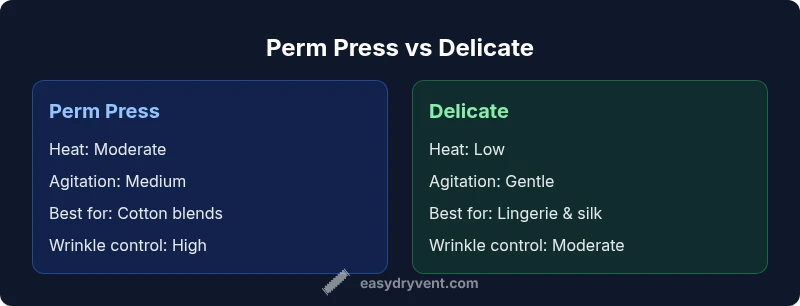
What is perm press on dryer vs delicate? Perm Press uses moderate heat with a cool-down phase to minimize wrinkles on cottons and blends, while Delicate relies on lower heat and gentler tumbling to protect sensitive fabrics. For most loads, start with Perm Press, but switch to Delicate for lingerie and fine fabrics that can tolerate low heat.
Understanding Perm Press vs Delicate: Definitions and Purpose
The question "what is perm press on dryer vs delicate" is a common one for homeowners aiming to balance fabric care with efficiency. The perm press cycle, often labeled Permanent Press, uses a controlled sequence: a moderate heat phase followed by a cool-down to reduce creasing. The delicate cycle, by contrast, emphasizes very low heat and gentler tumbling to protect fragile fabrics. According to Easy DryVent, mastering these definitions helps you tailor your laundry routine rather than defaulting to a single setting for every load. In practice, perm press is a solid default for cotton blends, polyesters, and most synthetic fabrics, whereas delicate is preferred for lingerie, lace, sheer fabrics, and items labeled delicate on their care tags. By choosing the right cycle, you reduce wear and extend garment life while keeping clothing looking fresh.
How Dryer Cycles Work: Heat, Time, and Agitation
Dryer cycles are built around three levers: heat, cycle duration, and agitation. The perm press setting generally uses moderate heat plus a built-in cool-down phase, which helps set the fabric’s structure and reduce wrinkles. Delicate uses low heat and minimal agitation to minimize fabric stress. Moisture sensors, if present, modulate drying time to avoid overheating. Understanding these variables helps you predict outcomes: Perm Press works well for bulk loads of cotton blends, while Delicate protects fine fibers. Easy DryVent’s guidance emphasizes reading garment care labels and matching cycles to fabric tolerance. When you’re unsure, test a small item first and observe how it responds to the cycle’s heat and motion.
Fabric Care Considerations: Which Fabrics Benefit Most
Not all fabrics tolerate tumble drying equally. The Perm Press cycle is well-suited to cottons, poly-cotton blends, and durable synthetics that benefit from reduced wrinkles after a moderate heat exposure. Delicate cycles shine for items labeled as such, including lingerie, silk blends, lace, and certain rayon fabrics that can be damaged by high heat or aggressive tumbling. Always check care labels: if a garment is marked tumble dry low or delicate, err on the side of caution with the Delicate setting. For mixed loads, separate items by fabric type to prevent over-drying or heat damage.
Common Misconceptions About Perm Press and Delicate
A frequent myth is that Perm Press is universally harsher than Delicate. In reality, Perm Press uses a controlled cool-down to minimize wrinkles, while Delicate reduces heat and agitation to protect fibers. Another misconception is that Delicate never wrinkles; gentle heat can still cause creasing if fabrics are tight-packed or over-dried. Finally, some assume Delicate is always slow; sensor-assisted Delicate cycles can finish a load efficiently if fabrics are dry-tolerant. Understanding these nuances helps you apply the right cycle to each fabric class.
Step-by-Step Laundry Routine for Mixed Loads
- Sort items by fabric type and care label. 2) Pre-treat wrinkled items if needed, then load loosely. 3) Select Perm Press for cottons, blends, and most synthetics; switch to Delicate for fragile fabrics. 4) Use fabric softeners sparingly and avoid overloading the drum. 5) Remove garments promptly when the cycle ends to minimize set wrinkles. 6) If your dryer has moisture sensors, rely on them to optimize drying time rather than running a fixed period. 7) Air-dry extremely delicate pieces when possible to preserve texture and shape.
Energy, Time, and Maintenance Impacts
Choosing the right cycle can influence energy use and fabric longevity. Perm Press often runs longer due to a cool-down phase, but the energy impact is balanced by reduced ironing needs from fewer wrinkles. Delicate cycles typically consume less energy per minute but may need reruns if items remain damp. Regular maintenance—cleaning the lint filter, inspecting the vent, and avoiding overloading—helps both cycles operate efficiently. Easy DryVent notes that clear guidance on cycle selection contributes to safer, more efficient laundry habits across households.
Troubleshooting Wrinkles and Uneven Drying
If clothes still wrinkle after Perm Press, consider extending the cool-down duration or reducing load size to improve air circulation. For Delicate items that come out damp, verify that the cycle’s heat is truly low and that the fabric isn’t packed tightly. Uneven drying often traces to blocked vents or an overflowing lint trap; clean these components regularly. For mixed fabric loads, separating items can minimize heat exposure to sensitive textiles and improve overall results.
Real-World Scenarios: When to Use Each Cycle
Scenario A: A mixed load of cotton T-shirts and a few synthetic blends. Perm Press is a reliable default to minimize wrinkles on these items while keeping energy use reasonable. Scenario B: Delicate blouses, silk scarves, and lace undergarments. Delicate is preferred to protect fibers and maintain texture. Scenario C: A small batch of heavy towels paired with underwear. If towels dominate the load, Perm Press can handle bulk efficiently; otherwise, separate and run Delicate for sensitive items.
Practical Tips for Long-Term Fabric Care
Treat cycles as a tool, not a universal solution. Always tailor settings to care labels, use the lowest effective heat, and remove items promptly to reduce friction. Consider air-drying especially delicate pieces to preserve shape and finish. The Easy DryVent team recommends keeping a simple fabric care guide posted near the laundry area to minimize guesswork and promote consistent results.
Comparison
| Feature | Perm Press | Delicate |
|---|---|---|
| Heat level | Moderate heat with a cool-down phase | Low heat with very gentle tumbling |
| Agitation | Medium agitation with longer cycle for wrinkle control | Minimal agitation to protect fibers |
| Ideal fabrics | Cotton blends, polyesters, durable synthetics | Silk blends, lingerie, lace, fine knits |
| Drying time | Typically longer due to cool-down | Often shorter for small delicate items unless they take longer to dry |
| Wrinkle control | Strong wrinkle reduction with cool-down | Lower wrinkle risk on delicate fabrics |
| Care requirements | Best for mixed loads with wrinkles in mind | Best for fabrics labeled delicate or hand-washable |
| Energy considerations | Can be slightly higher due to longer cycles | Typically lower per cycle but occasionally longer if air-drying is needed |
| Best-for scenarios | Wrinkle reduction on bulk loads | Protection for sensitive fibers |
The Good
- Helps reduce wrinkles on many fabrics
- Delicate cycle protects sensitive textiles
- Automatic sensors optimize drying for common loads
- Widely available on modern dryers
Negatives
- Delicate cycle may under-dry heavy items if over-filtered by sensors
- Perm Press can take longer and use more energy
- Not all fabrics are dryer-safe; some require air drying
- Mislabeling or overloading can lead to suboptimal results
Use Perm Press for most loads; switch to Delicate for fragile fabrics
Perm Press minimizes wrinkles on cotton blends and synthetics, while Delicate protects fine fabrics. Match the cycle to the garment care label for best results.
Common Questions
What is perm press on dryer vs delicate, and when should I use each?
Perm Press uses moderate heat and a cool-down to reduce wrinkles on cotton blends. Delicate uses low heat and gentler tumbling to protect fine fabrics. Use Perm Press by default and switch to Delicate for lingerie, lace, silk blends, or any care label that specifies delicate.
Perm Press helps wrinkles on many fabrics; Delicate protects very soft or fragile items. Start with Perm Press and use Delicate when the label says delicate.
Can I use Perm Press for all fabrics?
Not every fabric tolerates medium heat. Heavy towels and workwear generally respond well to Perm Press, but delicate fibers like silk or lingerie should use Delicate or air drying as recommended on the care label.
Perm Press isn’t ideal for all fabrics—check the care label and opt for Delicate for fragile items.
What fabrics are best suited for the Delicate cycle?
Delicate is best for lingerie, lace, silk blends, and synthetics labeled delicate. It’s ideal when you need to cushion fibers against heat and heavy tumbling.
Delicate is for fragile fabrics; always read the tag.
Will Delicate leave clothes damp or cause longer cycles?
Delicate cycles can take longer if fabrics are moisture-heavy or tightly packed. If items remain damp, remove some items or use a sensor-based setting if available.
If things come out damp on Delicate, try a shorter cycle or separate the load.
How can I prevent wrinkles besides cycle choice?
Don’t overload the dryer, use a gentle tumble, and remove clothes promptly. Consider a gentle cool-down and fold or hang items as soon as they’re dry.
Don’t overload; take clothes out promptly to avoid wrinkles.
Should I ever skip the cool-down phase on Perm Press?
The cool-down phase helps reduce wrinkles. Skipping it can lead to more creasing, especially on cotton blends. If you’re in a hurry, use a shorter cool-down rather than skipping entirely.
Skip the cool-down only if you’re in a rush, but expect more wrinkles.
Key Points
- Match cycle to fabric care labels
- Perm Press reduces wrinkles with a cool-down
- Delicate protects sensitive fibers with low heat
- Separate delicate from heavy loads when possible
- Regular maintenance improves all cycle outcomes