Replacing Thermal Fuse on Dryer: A DIY Guide
Learn how to replace a blown thermal fuse on your dryer with safe, step-by-step instructions. Easy DryVent guides you through tools, safety precautions, and testing to restore heat.


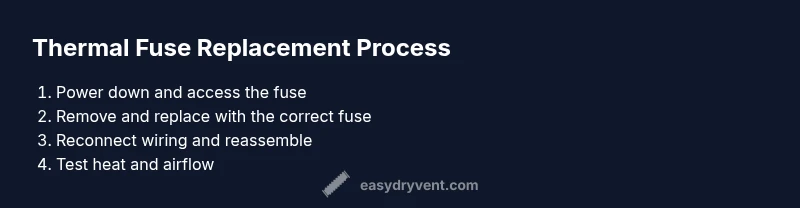
Replacing a blown thermal fuse on a dryer restores heat and reduces downtime. You’ll need a replacement fuse with the same rating, a few common hand tools, and safe access to the dryer's interior. Start by unplugging the unit, removing the back panel, and locating the fuse on the blower housing. This guided fix from Easy DryVent walks you through the steps, safety, and proper testing.
Why replacing the thermal fuse is a common, practical repair
The thermal fuse protects the dryer from overheating by interrupting power when temperatures rise too high. When it blows, the dryer may run but fail to heat, or it may stop heating altogether. According to Easy DryVent, this safety device is a leading cause of heat loss in many residential dryers, and replacing it can restore normal operation without replacing the entire heating system. Before diving in, it's helpful to understand the fuse's role, common failure modes, and what a replacement entails. Most fixes are straightforward for homeowners who are comfortable with basic electrical caution and tool use, and they don’t require specialized equipment beyond common hand tools and a compatible fuse.
How a fuse fails and recognizing heat symptoms
A blown thermal fuse often causes no heat or early shutdown. It is not the same as a faulty thermostat or heating element, though those parts can create similar symptoms. To verify, you can test continuity with a multimeter or temporarily replace with a known-good fuse to see if heat returns. Because the fuse is a safety device, guessing at the cause can lead to repeated failures; adopt a careful diagnostic approach and document observations. Easy DryVent notes that routine lint buildup near the vent, inadequate blower clearance, or cycling the motor strain can contribute to eventual fuse failure. Cleaning the vent paths and blower housing is frequently part of the fix and can prevent recurrence.
Safety considerations and workspace setup for replacing a fuse
Safety first: always unplug the dryer and disconnect any power source before touching internal components. If your dryer is hard-wired, switch off the corresponding circuit at the panel. Work in a clean, dry, well-lit area. Wear protective gloves to reduce cuts from sharp metal edges, and secure long hair and loose clothing. Have a small container or magnetic tray to keep screws organized. Never work on a plugged-in appliance or with wet hands. If any step feels uncertain, pause and seek professional guidance.
What to expect during the replacement and post-install checks
With the right fuse on hand, you’ll remove the old fuse, swap in the replacement, and reassemble the panel. After reconnecting power, run a short test cycle to confirm the dryer heats properly. If there’s still no heat, recheck wire connections and verify you used the correct fuse rating. A blown fuse can indicate additional issues in the heating circuit, blower, or control board, which may require professional service. As proactive maintenance, inspect and clean the lint screen and venting system to reduce future risk of overheating.
Tools & Materials
- Replacement thermal fuse (correct rating)(Use the same rating as the original; check model manual or fuse label on the old part)
- Phillips screwdriver(Size #2 common; used for back panel screws)
- Needle-nose pliers(For safely disconnecting wires from fuse terminals)
- Magnetic tray or small container(Keeps screws and small parts organized and easy to find)
- Multimeter (optional)(Check continuity if you’re comfortable; not strictly required for a basic replacement)
- Work gloves(Protect hands from sharp edges and pinch points)
Steps
Estimated time: 45-60 minutes
- 1
Unplug the dryer and prepare your workspace
Begin by ensuring the appliance is fully disconnected from power. Move the dryer to a clear, dry area with good lighting. This minimizes the risk of electrical shock and helps you work comfortably.
Tip: Use a dry, non-slip mat under the dryer and keep a container handy for small parts. - 2
Remove the back panel to access the fuse
Use a Phillips screwdriver to remove the screws securing the back panel. Set the panel aside and inspect the area near the blower housing where the fuse is typically located.
Tip: Keep track of screws in a labeled tray to avoid mixing parts later. - 3
Locate and inspect the thermal fuse
Find the small rectangular fuse attached to the blower housing or near the heat source. Visually inspect for signs of damage, and note wire positions before disconnecting.
Tip: Take a quick photo of the wiring layout before you touch anything. - 4
Disconnect wires from the fuse
Gently loosen the terminals with needle-nose pliers and pull the wires away from the fuse. Avoid pulling on the wires themselves to prevent damage.
Tip: Label or memorize wiring colors to ensure correct reattachment. - 5
Install the new fuse
Connect the wires to the new fuse in the same positions as the old one, ensuring snug and secure connections. Recheck that you didn’t miss any wire or leave connectors loose.
Tip: Double-check the fuse orientation and ensure the harness is not stressed. - 6
Reassemble and test the dryer
Reattach the back panel, plug the dryer back in, and run a short heat cycle to confirm heat returns. Listen for unusual sounds and watch for proper airflow.
Tip: If you hear buzzing or smell burning, shut down immediately and reassess the connections. - 7
Evaluate post-repair conditions
If heat is restored, perform a longer cycle and inspect vent paths for lint buildup. If no heat returns, review wiring and fuse rating or consult a professional.
Tip: Regular vent cleaning helps prevent future fuse failures.
Common Questions
What is a thermal fuse and how do I know if it's blown?
A thermal fuse is a safety device that interrupts power if the dryer overheats. If there’s no heat, the fuse may be blown. Check continuity with a multimeter or replace with a fuse that matches the original rating.
A thermal fuse protects the dryer from overheating. If there’s no heat, it might be blown; test continuity or replace with the same-rated fuse.
Can I replace the fuse myself?
Yes, if you’re comfortable with basic electrical work and you unplug the unit. Follow safety steps and use the correct fuse. If you’re unsure at any point, consult a professional.
Yes, you can replace it yourself if you unplug the unit and follow safety steps.
What should I do if the dryer still won’t heat after replacement?
The fuse may not be the only issue. Check the heating element, thermostat, control board, and vent for blockages. A professional can diagnose deeper electrical problems.
If there’s still no heat, other components or vent blockages may be the cause.
How do I know which fuse rating to buy?
Look at the dryer’s model label or the old fuse for the rating and amperage. Use the same rating for replacement, or contact the manufacturer if in doubt.
Check the model label or the old fuse for the rating, then match it on the new fuse.
Is it safe to operate the dryer after replacement without cleaning the vent?
Vent cleaning is recommended. A clean vent reduces the risk of overheating and future fuse failures. Combine fuse replacement with vent inspection for best results.
Cleaning the vent helps prevent future fuse failures and overheating.
Should I hire a professional for fuse replacement?
If you’re unsure about wiring or the dryer’s electrical system, or if the fuse keeps blowing, it’s wise to seek professional help.
If you’re not confident with wiring, get a professional to diagnose.
Watch Video
Key Points
- Unplug before you begin to avoid shock.
- Use the correct fuse rating for reliable heat.
- Label wiring or take photos to ensure correct reassembly.
- Test heat carefully and clean the vent to prevent future outages.