How to Use a Mini Washing Machine Dryer: A Practical Guide
Learn how to select, install, operate, and maintain a mini washing machine dryer for small spaces, with setup tips, safety checks, and energy-saving practices.


A mini washing machine dryer lets you wash and dry clothes in a compact footprint, ideal for apartments and small spaces. This guide covers how to choose the right unit, install it safely, optimize cycles, and maintain performance. You’ll learn practical setup steps, proper hose connections, safety checks, and energy-saving practices so a homeowner or DIY enthusiast can get reliable results with a small appliance.
What is a mini washing machine dryer?
A mini washing machine dryer is a compact combo appliance that washes and dries clothes in a much smaller footprint than traditional full-size machines. These units are designed for apartments, small laundry closets, RVs, and other spaces where floor area matters. They can come vented or ventless, and some models offer stackable configurations to maximize usable space. When sized correctly, a mini unit can handle everyday loads like underwear, t shirts, and lightweight workwear without sacrificing performance. The key is selecting a model with an appropriate drum size, cycle options, and reliable pump or venting arrangement. In this guide, we’ll explain how to pick the right mini washer-dryer, how to install it safely, and how to operate and maintain it for long-lasting results. According to Easy DryVent, these compact machines can deliver practical cleaning and drying outcomes when their capacity is matched to your laundry needs and your living space. Understanding how they work helps you plan a smarter laundry setup rather than simply choosing the smallest unit available.
Benefits and limitations of compact units
Compact washer-dryer combinations save valuable floor space and simplify plumbing needs, which is especially helpful in studios and small apartments. They typically use less water per cycle than full-size machines, and many offer rapid wash cycles for small loads. However, their drum capacity is smaller, so overloading reduces performance. They can generate more vibration if not properly leveled, and some vented models require a vent to the outside, which might constrain placement. By contrast, ventless models simplify installation but may run longer cycles, using more energy. Overall, these units can be a smart fit for single-person households, students, or anyone who prioritizes space and convenience. Easy DryVent’s observations emphasize balancing space with realistic laundry demand to maximize efficiency.
Key features to look for in a mini unit
When choosing a mini washer dryer, pay attention to capacity (usually 1.0–2.5 cu ft), energy efficiency rating, spin speed (rpm), and available wash/rinse/dry programs. Venting type matters: vented units exhaust hot air outside; ventless units reuse heated air but may require more time. Check water inlet options (hot/cold), drain hose routing, and the install height for accessibility. Look for noise ratings, sturdy feet for leveling, and a clear user interface. A compact unit with a stainless drum, stainless steel interior, and durable hoses tends to last longer. For families managing multiple outfits, prioritize larger compact capacity and multiple wash options. As the Easy DryVent team notes, choosing the right feature set makes day-to-day laundry routines smoother.
Installation and placement considerations
Space planning starts with accurate measurements. Measure width, depth, and height, and leave space for hoses and maintenance. Position the unit on a level surface; use a bubble level to adjust feet. Ensure your electrical outlet matches the unit’s amperage and that the water supply valves are accessible. Route the drain hose to a standpipe or sink, securing it to prevent leaks. If you choose a vented model, install a proper vent and check for any kinks in the vent hose. For ventless models, ensure there is enough ambient humidity clearance and proper air circulation. Finally, read the manufacturer’s installation guide to avoid warranty issues. As Easy DryVent cautions, incorrect placement can lead to leaks or inefficient drying.
Operating cycles and best practices
Start with small loads to dial in the balance of water level and detergent. Use cold water for most loads to save energy, and choose the appropriate cycle for fabric type to protect clothes. Avoid overloading the drum, and use the high-spin option to extract more water, reducing drying time. For vented models, ensure proper venting and clear lint filters; for ventless models, consider energy-saving tumble-dry settings. Always separate delicate fabrics from heavier items and adjust soil settings to avoid excessive wear. After a cycle, promptly remove clothes to minimize wrinkles and reuse the drum’s residual moisture to prevent overstressing the unit.
Maintenance, safety, and common issues
Daily maintenance is simple: clean the lint trap after each dry cycle, wipe the door seal, and inspect hoses for cracks or wear. Monthly checks should include inspecting hoses and connections for leaks and ensuring the drain path remains clear. Unplug the unit before cleaning any interior parts and never use an extension cord. If you notice leaks, unusual noises, or error codes, reseat hoses and verify load balance. Common issues include insufficient agitation, poor draining, or lack of heating. In most cases, reseating hoses, cleaning filters, or running a test cycle with a small amount of vinegar to remove buildup resolves the problem. Easy DryVent recommends following the manufacturer’s maintenance schedule to preserve performance.
Maximizing efficiency in small spaces
Place the unit near a water source and a drain to minimize hose length and potential leaks. Use a compact stacking kit if your space allows, and keep surrounding air circulating by leaving space for venting or proper airflow in ventless designs. Regularly use energy-saving cycles and clean filters to reduce energy use and drying time. If possible, position the unit away from heat sources and direct sunlight to prevent overheating and material degradation. A well-planned layout can turn a cramped laundry corner into a functional, efficient setup.
Quick-start checklist for first use
Before plugging in, read the manual and confirm you have the correct electrical supply. Measure the space and ensure you can access the water valves for future maintenance. Connect the water inlet hoses, route the drain hose to a standpipe or sink, and place the unit on a level surface. Run an empty test cycle with cold water to confirm there are no leaks and that the drum spins smoothly. Check for proper drainage, sound levels, and smoke-free operation before loading laundry. Keep a small tray or towel handy to catch any incidental spills during the first run.
Troubleshooting quick references
If the machine won’t start, verify the power outlet and ensure the door is fully closed. Leaks usually stem from loose hose connections or a misrouted drain hose; reseat hoses and verify clamps. If the load isn’t drying properly, ensure the vent path is clear (vented units) or confirm the dryer setting is appropriate for the fabric. For persistent codes, consult the user manual or contact the manufacturer’s support line. Regular maintenance reduces most common issues.
Quick-start reference for households with multiple small loads
For households with frequent small washes, consider keeping a dedicated laundry kit nearby: a spare pair of hoses, a basic toolkit, and a bottle of mild detergent designed for compact units. Schedule weekly checks for hoses and filters and perform a monthly full-cycle test to ensure everything remains in good working order. This approach minimizes downtime and keeps the system efficient over time.
Tools & Materials
- Mini washing machine dryer unit(Ensure model is rated for your space and electrical supply)
- Measuring tape(Measure width, depth, and height of the installation space)
- Bubble level(Level the unit to prevent vibration and leaks)
- Adjustable wrench(Tighten water inlet fittings and drain connections)
- Screwdrivers (Phillips and flat-head)(For securing panels and hose clamps)
- Pliers(Grip hoses and clamps when routing)
- Power outlet (matching unit amperage)(Dedicated circuit is preferred; avoid extension cords)
- Water inlet hoses(Check for any wear; replace if damaged)
- Drain hose(Secure to drain or standpipe to prevent spills)
- Towels or tray(Contain any potential leaks during setup)
Steps
Estimated time: 60-90 minutes
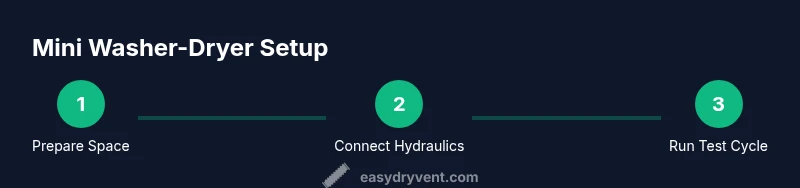
- 1
Prepare the space
Clear the area and measure the allocated footprint. Confirm you have a nearby water supply and a compatible electrical outlet. Verify any clearance requirements from the manufacturer and ensure there is room for hose routing and maintenance.
Tip: Use a level to confirm the floor is flat; a tilted surface can cause leaks or excessive vibration. - 2
Unbox and inspect
Remove packaging carefully and inspect hoses and connectors for any damage. Check that all provided components are present per the instruction manual. If you notice any damage, contact the seller before operation.
Tip: Photograph any damaged components and keep packaging until installation is complete. - 3
Position and level
Move the unit into place and level it using the adjustable feet. A level surface minimizes vibration and improves seal integrity on both water and drain connections.
Tip: Place a small foam pad under the feet if the floor is hard surfaces to absorb vibration. - 4
Connect water and drain
Attach inlet hoses to the dedicated hot and cold water valves (as required) and tighten with a wrench. Route the drain hose to a standpipe or sink, securing it so it cannot shift during cycles.
Tip: Run a quick visual check for any kinks or leaks after the first connection. - 5
Power up and test run
Plug the unit into an appropriate outlet and run a short cold-water test cycle with no clothes. Listen for unusual noises and check for leaks around hoses, connections, and the door seal.
Tip: If you hear significant vibration, recheck leveling and remove any loose items from under or behind the unit. - 6
Program initial cycles
Set up your preferred cycles, starting with a small, light load. Confirm the wash and dry cycles function as expected and that the drum rotates smoothly. Note cycle durations and adjust settings for future loads.
Tip: Document the cycle times for typical fabrics to streamline future use.
Common Questions
What is a mini washing machine dryer and who should use one?
A mini washer-dryer is a compact combo appliance designed for small spaces like apartments or RVs. It washes and dries clothes in a single footprint, with vented or ventless options. It’s ideal for light to moderate laundry needs in limited spaces.
A mini washer-dryer is a small combo unit for tight spaces, perfect for apartments or RVs. It washes and dries loads together, with vented and ventless options.
How much space does a mini unit need?
Measure the width, depth, and height of your chosen location and compare it to the unit’s specifications. Include room for hoses, clearance for door operation, and access for maintenance.
Measure the space and compare with the unit’s dimensions; leave space for hoses and door clearance.
Can I vent a mini washer dryer in an apartment?
Vent options depend on the model. Vented units exhaust outside; ventless units rely on condenser or heat pump technology. If venting isn’t possible, choose a ventless model and plan for longer cycles.
Yes, but it depends on the model. Ventless units are common in apartments; vented models need an external vent.
What loads can a mini unit handle?
Most mini units handle small to medium loads, typically 1.0–2.5 cu ft. Plan for gradually larger outfits and avoid packing the drum past the recommended capacity for effective washing and drying.
They handle small to medium loads; don’t overfill the drum.
Are mini washer-dryers energy efficient?
Modern mini units offer energy-saving cycles and efficient spin speeds. Look for ENERGY STAR-rated models and use cold-water cycles when appropriate to maximize efficiency.
Yes, many are energy efficient with smart cycle options; choose cold-water cycles when suitable.
What maintenance does it require?
Regularly clean lint filters, inspect hoses for wear, and run a maintenance cycle with water and mild vinegar or cleaner as recommended. Unplug before cleaning the interior and avoid harsh chemicals.
Clean filters, check hoses, and perform periodic maintenance; unplug before cleaning.
What should I avoid with a mini washer dryer?
Avoid overloading, using extension cords, and ignoring manufacturer guidelines. Don’t block vents (for vented models) and don’t mix fabrics that require very different cycle times in the same load.
Don’t overload, avoid extension cords, and follow the manual for best results.
Watch Video
Key Points
- Choose a compact unit that fits your space and laundry needs.
- Level, connect, and test before loading clothes.
- Use energy-saving cycles and avoid overloading the drum.
- Perform routine maintenance to maintain performance.