How to Use a Dryer Without Damaging Clothes
Learn practical steps to prevent damage when using your clothes dryer, including load sizing, cycle selection, fabric care, lint management, and routine vent maintenance for safer, more efficient drying.


You will learn how to use a dryer without damaging clothes. This quick guide covers how to assess fabric, how to load properly, what cycles to choose, how to set temperatures, and how to manage lint and vent maintenance to keep garments safe, colors bright, and the dryer running efficiently.
Safe loading and fabric assessment
According to Easy DryVent, the first step in learning how to use a dryer without damaging clothes is to inspect fabrics and care labels. Start by sorting items by fabric type, colorfastness, and drying recommendations. Cottons, synthetics, and blends respond differently to heat and tumbling, so separate heavy towels from delicate tops. Before loading, empty pockets, close zippers, and fasten hooks to prevent snagging. Check garment labels for drying instructions; some fabrics require air-drying or flat drying rather than tumbling. When you understand the fabric base, you can tailor heat, time, and cycle settings to protect fibers and colors. This step minimizes shrinkage and reduces wear, elongating garment life while preserving fit and finish.
In addition to sorting, check for stains and set aside pieces that may require pretreatment. A small amount of pre-wash or stain treatment can help you avoid repeated wash cycles. Regular maintenance of the dryer, including lint screen cleaning and vent checks, improves airflow and reduces heat buildup—a foundational practice for safe daily drying. Easy DryVent’s guidance emphasizes a proactive approach: less guesswork, more informed settings. By starting with fabrics and labels, you create a safer drying environment for every load.
Choosing the right cycle and temperature
Selecting the correct cycle and temperature is essential to avoid fabric damage and color fading. For mixed loads, use a Perm Press or Normal cycle on medium heat, which balances drying speed with fabric care. For delicate fabrics like polyester knits or rayon blends, choose a Delicate cycle on low heat or use sensor dry if your model includes it. Some towels can tolerate higher heat, but avoid combining them with delicate garments in the same cycle, as fibers transfer friction and wear between fabrics. If your dryer offers moisture sensing, rely on it to stop the cycle when clothes reach the desired dryness, rather than running on a fixed time. This reduces over-drying, which is a leading cause of fiber damage and color loss over time.
Practice with a test item from each fabric family to calibrate your expectations. For example, a cotton T-shirt may tolerate a longer air-dry finish after a sensor-dry cycle, while synthetics like nylon or spandex respond best to shorter, cooler cycles. Always read fabric labels and use lower heat for blends to preserve elasticity and prevent shrinking. Easy DryVent notes that correct cycle choice is as important as temperature; the right pairing protects fibers, reduces pilling, and keeps colors vibrant over repeated washes.
Handling different fabrics
Different fabrics demand tailored treatment to prevent damage during drying. Natural fibers such as cottons and linen are generally sturdier but can shrink; synthetic blends (polyester, nylon) require gentler handling to avoid warping or heat set. Wool and cashmere should almost always air-dry or use a very gentle, low-heat cycle if your dryer supports it. Denim and towels have higher heat tolerance but still benefit from load separation to reduce friction and flatten creases. When drying shirts with delicate prints or embroidery, turn garments inside-out to protect surface designs. Always avoid drying heavily soiled items with clean delicate items, as oils and soils can transfer and cause staining or uneven drying. By recognizing fabric needs in advance, you minimize dye transfer, fiber fatigue, and damage from overheating, keeping clothes looking newer longer.
Load sizing, tumbling, and distribution
Load size and distribution play a critical role in even drying and fabric safety. Overloading a drum leads to longer drying times, uneven heat exposure, and more abrasion as fibers rub against each other. Aim for about 80% of the drum capacity for a mixed load, allowing room for tumbling and air circulation. Distribute bulky items evenly and mix them with lighter pieces to promote consistent airflow. If you notice laundry bunching up into a tight cluster, pause the cycle to rearrange or divide the load. This practice reduces lint buildup and minimizes wrinkles. For best results, shake garments before placing them in the drum or flip items inside-out to ensure an even finish. With proper load management, you’ll see faster, more uniform drying and less fiber stress.
Timing, moisture sensing, and end-of-cycle care
Rely on moisture sensors or cycle duration guidelines rather than guessing. If your model lacks a sensor, check the load halfway through to gauge dryness and remove items that are dry, continuing with the rest. Ending cycles while fabrics are still slightly damp helps prevent overheating and fiber damage, especially for cottons and blends. Avoid leaving clothes in the drum after the cycle ends, as this can lead to wrinkling and potential heat-induced wear. Immediately point-drying damp garments in a separate warm area or hang-dry items that finish early. This approach preserves fiber structure and color integrity. Easy DryVent highlights the value of awareness: understanding moisture signals is a practical shield against over-drying and garment damage.
Post-drying care and lint/vent maintenance
Always clear the lint trap before loading, and perform a quick vent inspection periodically to ensure unobstructed airflow. Clean vents improve efficiency, reduce drying times, and minimize heat buildup that can contribute to fabric stress. After drying, promptly fold or hang garments to prevent set-in wrinkles and reduce the need for ironing. For items prone to static, consider fabric softener sheets sparingly or use wool dryer balls to accelerate drying and soften fibers without chemical residues. Regular lint removal and vent maintenance are critical steps to keeping your dryer safe and effective. Easy DryVent’s guidance emphasizes that consistency in post-drying care sustains appliance performance and garment longevity.
Troubleshooting common dryer damage signals
If you notice excessive lint, unusual heat, or persistent shrinking, re-evaluate load size and cycle choices. Signs of potential damage include color fading, fabric stiffness, or pilling that worsens over time. Shrinking textiles may indicate heat exposure that’s too high or cycles that run too long. When you observe such clues, switch to lower heat, shorter cycles, or separate items by fabric type for future loads. If odor or burning smells arise, immediately stop the cycle, unplug the dryer, and inspect for dryer vent obstructions or lint buildup. Regular preventive care, not reactive fixes, is the best strategy to prevent lasting damage to clothes.
Tools & Materials
- Dryer appliance (electric or gas)(Ensure venting is installed and unobstructed.)
- Lint trap brush(Useful if your lint screen is hard to clean.)
- Fabric softener sheets or wool dryer balls(Use sparingly on sensitive fabrics.)
- Moisture sensor or smart timer (built-in or external)(If available, rely on it for optimal dryness.)
Steps
Estimated time: 40-60 minutes
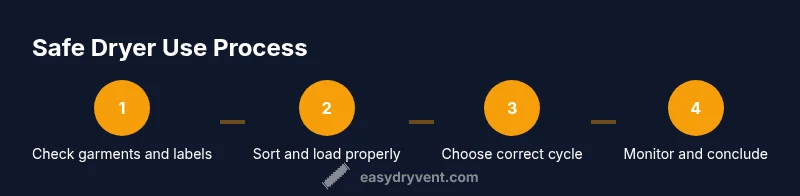
- 1
Pre-screen fabrics and sort
Check care labels, separate items by fabric type, and remove items with zippers or hooks that could snag others. This prevents damage during tumbling and helps you tailor cycles to each load.
Tip: Always empty pockets and fasten zippers before loading. - 2
Load evenly and don’t overfill
Distribute garments evenly to avoid piling and tangling. A good rule is to fill no more than about 80% of the drum for a typical mixed load.
Tip: Mix bulky items with smaller ones to promote even drying. - 3
Select cycle and temperature appropriately
Choose a cycle suited to the most delicate item in the load; use low or medium heat for synthetics and mixed fabrics, and sensor dry when available to avoid over-drying.
Tip: When in doubt, start with a Delicate or Perm Press cycle on low heat. - 4
Monitor the cycle and check moisture
If your dryer has a moisture sensor, rely on it; otherwise check halfway through the cycle to gauge the dryness. Remove items that are dry and continue with the rest to avoid overheating.
Tip: Reshuffle if needed to prevent scorching. - 5
Promptly remove and air-separate
As soon as cycles end, remove clothes promptly to minimize wrinkling. Shake garments and fold or hang as appropriate to finish drying evenly.
Tip: Don’t leave clothes in the drum after the cycle ends. - 6
Lint trap and vent care after each load
Clean the lint trap before every load and periodically inspect the venting for knots or debris. A clean vent improves airflow and reduces heat buildup that can damage fabrics.
Tip: Vacuum the vent opening if accessible and schedule a professional vent cleaning annually.
Common Questions
Can drying on high heat damage clothes?
Yes. High heat can shrink, warp, or fade fabrics, especially synthetics. Use lower heat or sensor dry for delicate items.
High heat can damage fabrics; opt for lower heat or sensor drying for delicate clothes.
How do I prevent shrinking?
Read care labels, dry on a low heat setting, and remove items while slightly damp to finish air-drying.
Read labels and use low heat; remove clothes while slightly damp for air-drying.
Should I use dryer sheets or fabric softener?
Dryer sheets can help reduce static, but use sparingly on heat-sensitive fabrics. Consider wool dryer balls as an alternative.
Dryer sheets reduce static but use sparingly; fabric alternatives exist.
Is it safe to dry towels with clothes?
It's generally fine to dry towels with other cotton items, but towels dry quickly and can cause friction. Balance loads and consider separate cycles if needed.
You can mix towels with other cottons, but watch for drying time.
How often should I clean the lint trap and vent?
Clean the lint trap before every load and inspect the vent system regularly. A clean system improves efficiency and reduces fire risk.
Clean lint trap before each load and check vents regularly.
What about delicate fabrics like silk or wool?
Delicate fabrics require special care. Use the Delicate or Hand Wash cycle if available, or air-dry those items to prevent damage.
Delicate fabrics should be air-dried or dried on delicate cycles.
Why does my clothes take longer to dry than expected?
This can indicate overloading, a clogged vent, or poor airflow. Check the vent, reduce load size, and ensure proper settings.
Long drying times point to load, vent, or airflow issues.
Watch Video
Key Points
- Sort fabrics before loading to protect fibers
- Choose cycles and temps by fabric type
- Remove items promptly to reduce wrinkles
- Keep lint screen and vent clear to prevent damage
- Use moisture sensing to avoid over-drying