How to Dry and Orange: A Practical Home Guide for Kitchens
Learn how to dry and orange safely at home using dehydrators or ovens. This Easy DryVent guide covers prep, slicing, timing, texture, and storage with practical tips for DIY enthusiasts.


By the end of this guide, you will know how to dry and orange into flavorful, shelf-stable slices using a dehydrator, oven, or air-dryer. You'll learn prep, uniform slicing, drying temperatures, and safe storage. Gather fresh oranges, a sharp knife, parchment or silicone mats, and a thermometer if available. Easy DryVent's guidance emphasizes maintaining low heat, even air flow, and clean surfaces to prevent mold or bitterness.
Why drying oranges is a practical skill for home kitchens
Drying citrus, including the classic orange, is more than a nifty kitchen trick. It concentrates sweetness, extends shelf life, and creates colorful garnishes for beverages, desserts, and savory dishes. If you’re curious about how to dry and orange, you’re tapping into a method that preserves aroma and flavor without additives. The technique also reduces waste by turning ripe fruit that might otherwise go to waste into a versatile ingredient. According to Easy DryVent, mastering at-home drying can keep kitchen costs down while expanding recipe options. This skill also supports hobbyist cooks who enjoy DIY pantry projects and want to experiment with texture—from chewy to crisp—depending on heat and time. The practice aligns with broader food-preservation principles and complements other drying projects like herbs and vegetables. For homeowners, learning this process builds confidence in equipment like dehydrators and oven-based setups and reinforces clean handling to avoid spoilage or mold.
null
Tools & Materials
- Oranges (ripe but not overripe)(Qty: 2–4 for a batch; pick fruit with thin skin for tenderness.)
- Sharp knife and cutting board(A 60–75 mm blade works well for even slices.)
- Mandoline slicer (optional)(Ensures uniform thickness at about 3 mm (1/8 inch).)
- Dehydrator (preferred) or oven with heat-safe racks(Set dehydrator to 52–57°C (125–135°F) if possible.)
- Parchment paper or silicone mats(Prevents sticking and makes flipping easier.)
- Baking sheets or drying racks(Use in an oven-based setup.)
- Airtight containers or glass jars(Store in a cool, dark place after drying.)
- Cooling rack (optional)(Supports even air circulation during cooling.)
- Lemon juice (optional)(Dip slices to prevent browning and preserve color.)
Steps
Estimated time: 3-6 hours
- 1
Gather and prep your workspace
Clear a clean workspace and assemble all tools and oranges. Rinse the fruit quickly under cool water and pat dry to remove any surface wax or residue. A tidy station helps prevent contamination and speeds up the drying process, especially if you’re handling multiple batches.
Tip: Have a timer handy and designate a tray for flat, even slices. - 2
Trim, peel, and remove seeds
Trim any irregular ends and remove seeds if present. If you prefer zest-free slices, peel thinly to minimize pith, which can impart bitterness and slow drying.
Tip: Peel with a sharp knife to avoid wasting fruit. - 3
Slice oranges to uniform thickness
Use a sharp knife or a mandoline to cut slices around 3 mm (1/8 inch) thick. Consistency ensures even moisture loss and uniform texture across all slices.
Tip: Aim for consistent thickness to avoid some slices drying too fast. - 4
Optional: pre-treat to reduce browning
Dip cut slices in lemon juice or a light acidic solution for color retention. This step is optional but can help keep a bright, appealing appearance during storage.
Tip: Keep dipping time short to prevent flavor changes. - 5
Arrange slices on drying surface
Lay slices in a single layer on parchment-lined trays or dehydrator sheets. Ensure space between pieces for air to circulate and moisture to escape.
Tip: Do not overlap slices; crowded trays slow drying. - 6
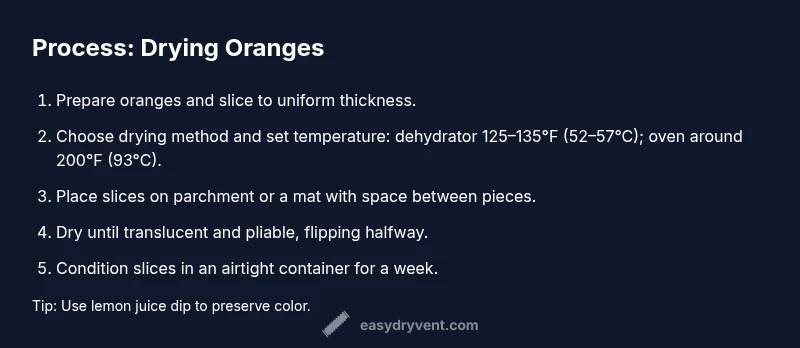
Choose your drying method and set temperature
If using a dehydrator, set to about 52–57°C (125–135°F). In an oven, preheat to 93–107°C (200–225°F) and use a rack to keep air circulating.
Tip: Avoid high heat; high heat scorches the fruit and concentrates sugars unevenly. - 7
Dry until pliable and translucent
Monitor progress every 1–2 hours. Slices should be flexible, lightly translucent, and free of stickiness when fully dried. Flip slices halfway to promote even drying.
Tip: Texture should be leathery, not soggy or brittle. - 8
Cool and condition the slices
Let slices cool completely on racks, then transfer to airtight containers. Condition by keeping containers closed for a week, shaking daily to equalize moisture.
Tip: Conditioning helps prevent moisture pockets and mold. - 9
Store properly for shelf life
After conditioning, store in airtight jars away from light. Properly dried and stored slices can last several weeks to months, depending on humidity and storage conditions.
Tip: Label with date to track freshness. - 10
Clean up and maintain your gear
Wash dehydrator trays or oven racks with warm soapy water and dry thoroughly. Wipe down work surfaces to prevent cross-contamination and prepare for your next batch.
Tip: Dry gear completely to prevent rust or mold growth.
Common Questions
What is the easiest way to dry oranges at home?
The simplest approach is to use a dehydrator set to 125–135°F (52–57°C) until the slices are pliable. An oven can work with a low temperature around 200°F (93°C) on a rack. Avoid high heat that browns or burns the fruit.
Use a dehydrator for easiest results, or an oven set to low heat for a similar outcome.
Should I peel the oranges before drying?
Peeling is optional but helps if you want a milder, less bitter slice. Leaving the zest on provides color and aroma, but the pith can affect texture.
Peeling is optional; keep the zest if you want more aroma.
How long do dried orange slices last?
If stored in airtight containers in a cool, dark place, dried orange slices can stay good for several weeks to months, depending on humidity and storage conditions.
They last for weeks to months when stored properly.
Can I dry oranges in a microwave?
Drying in a microwave is possible but can be uneven and quick to burn. If using a microwave, apply short bursts, check frequently, and consider finishing in a low oven to even out texture.
Microwaves can dry slices, but they’re less reliable than dehydrators or ovens.
Should I pre-treat the slices to preserve color?
Dip slices in a lemon juice solution or a 1–2% ascorbic acid solution to help maintain color and reduce browning risk during drying.
A quick lemon juice dip can help keep color.
What texture should I aim for—chewy or crispy?
That depends on drying time and technique. Shorter times yield chewier slices; longer times can produce crisper, more candy-like textures.
Chewy or crisp? It depends on how long you dry and the heat you use.
Watch Video
Key Points
- Slice oranges evenly for uniform drying.
- Use a dehydrator for best consistency and speed.
- Store dried slices in airtight containers away from light.
- Optional lemon juice dip helps preserve color.
- Experiment with flavor additions like spices for variety.