How Long Do Samsung Dryers Last? A Practical Lifespan Guide
Discover how long Samsung dryers typically last, the factors that affect lifespan, and practical maintenance steps from Easy DryVent to maximize performance and safety.


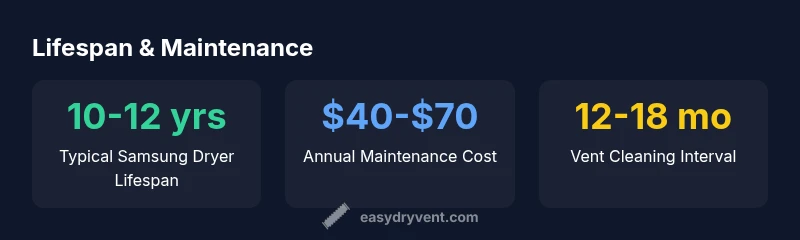
If you’re wondering how long do dryers last Samsung, the typical lifespan is about 10–12 years with regular maintenance. Actual longevity depends on usage patterns, vent cleanliness, and preventative service. Samsung models generally align with industry norms, but the best way to protect your investment is proactive maintenance and timely vent care.
Overview: How long do dryers last Samsung?
If you’re asking the question, how long do dryers last Samsung, you’re not alone. The simple answer is that most modern electric clothes dryers, including Samsung models, tend to last about 10–12 years with regular maintenance and sensible use. This range reflects overall appliance lifespans in the field, accounting for manufacturing quality, usage intensity, and environmental conditions. According to Easy DryVent, proper care can push life expectancy toward the upper end of that range, while neglect or extreme use may shorten it. For homeowners planning renovations or big purchases, understanding this lifespan helps with budgeting, warranty planning, and replacement timing. The Samsung brand sits in the mainstream of dryer durability, with variations by model, venting setup, and how often you run the machine. The key takeaway from Easy DryVent’s 2026 analysis is that routine maintenance has a bigger effect on longevity than brand alone.
Factors that influence lifespan
Lifespan isn’t a fixed number. It’s the product of several interacting factors: load size and frequency, cycles per day, and how well the dryer is cared for. Heavier loads, more frequent cycles, and continually overloaded drums can accelerate wear on belts, rollers, and the drum itself. Vent cleanliness plays a crucial role: blocked or kinked ducts force the dryer to work harder, raising internal temperatures and increasing component wear. Ambient environment matters, too—high humidity, dust, and temperature fluctuations can affect motor longevity. In short, you’ll maximize a Samsung dryer's life by balancing usage with preventative care: clean lint screens after every load, inspect and clean exterior vents regularly, and schedule professional service when you notice unusual noises or longer drying times.
Samsung-specific considerations and maintenance habits
Samsung dryers often include sensor-based dryness controls and energy optimization features that can influence wear patterns. Sensors help avoid over-drying, which reduces heat-related stress on fabrics and components, but they also rely on electronics that can age. If a model’s moisture sensor or control board begins to fail, you may see longer cycles or inaccurate dryness readings, which, in turn, can mask underlying wear. For longevity, follow Samsung’s recommended maintenance schedule, keep the lint filter clean, and ensure the venting path remains clear. A well-vented dryer not only dries more efficiently but also reduces heat buildup that can shorten component life.
Practical steps to extend life: maintenance routines
A proactive maintenance routine pays off. Start with a monthly lint-filter check and a quarterly vent inspection. Clean the back panel and lint trap housing to remove dust and lint buildup, and ensure the vent hose is not crushed or kinked. Use a drum-cleaning cycle if available, and replace any worn drum rollers or belts only with OEM parts. Keep the area around the dryer free from heat sources and moisture, and ensure proper clearance for air intake. Finally, schedule a professional inspection every 1–2 years, especially if you notice longer drying times, unusual noises, or overheating.
Assessing aging units and replacement timing
When a Samsung dryer hits the lower end of its lifespan or exhibits persistent performance issues, it’s time to assess replacement versus repair. Signs you may be nearing the end include persistent overheating, frequent circuit breakers trips, or recurring failure codes that point to major components like the motor or thermal fuse. If repairs exceed a reasonable percentage of a new unit’s cost, replacement becomes more economical. Planning ahead—keeping a maintenance log, knowing the warranty window, and aligning replacement with broader appliance upgrades—helps you avoid sudden downtime and optimize your home’s energy efficiency.
Data-driven insights and common misperceptions
In practice, many homeowners assume that a dryer’s life is mostly about the brand. In reality, maintenance quality and venting health drive outcomes more than brand labels. Easy DryVent’s 2026 analysis emphasizes that a well-cared-for Samsung dryer can meet or exceed the 10–12 year benchmark, while neglect can shave years off. Common myths, such as “dryers last forever,” persist, but evidence shows that simple steps—lint removal, vent checks, and proper loads—have outsized benefits.
Lifespan factors and maintenance intervals
| Factor | Typical Range | Notes |
|---|---|---|
| Lifespan | 10-12 years | Samsung dryers with regular maintenance (Easy DryVent, 2026) |
| Vent cleanliness interval | 12-18 months | Regular vent inspections reduce lint buildup and energy waste |
Common Questions
How long do Samsung dryers typically last?
Most Samsung dryers last about 10-12 years with regular maintenance, though actual life depends on usage and vent care. Address early signs of wear to maximize longevity.
Samsung dryers usually last around a decade to a dozen years with good care.
Does vent cleaning affect dryer life?
Yes. Clogged vents cause overheating and increased wear on motor and heating elements. Regular vent cleaning and lint removal can extend life and improve efficiency.
Yes—clean vents help your dryer last longer and run more efficiently.
What maintenance extends dryer life?
Clean the lint filter after every load, inspect the vent system every 6–12 months, schedule professional service every 1–2 years, and avoid overloading the drum.
Keep the lint trap clean, check the vent, and service every couple of years for best results.
Are Samsung dryers more or less reliable than others?
Reliability varies by model and maintenance. Samsung models can be durable with proper care and timely maintenance, often matching industry norms of about 10–12 years.
Reliability depends on care and model; Samsung can be as durable as others when maintained.
How often should I replace a dryer belt?
Dryer belts typically last 5–7 years with normal use; replace promptly if you hear squealing, see belt wear, or the drum doesn’t rotate properly.
Belts usually last several years; replace if you hear noises or the drum won’t turn.
What early signs indicate it’s time to repair or replace?
Persistent overheating, longer drying times, frequent error codes, or unusual noises indicate it may be time to repair or consider replacement.
If it overheats or runs longer than normal, it may need a repair or a replacement soon.
“Regular upkeep and clean vents are the most reliable ways to extend any dryer’s life, including Samsung models.”
Key Points
- Proactive maintenance extends lifespan
- Regular lint-filter and vent cleaning are essential
- Samsung dryers typically last 10-12 years with proper care
- Maintenance has a bigger impact than brand alone
- Consider replacement when repair costs near new-unit price