How Long Do Electric Dryers Last? A Practical Lifespan Guide
Discover how long electric dryers typically last, the factors that influence lifespan, and practical steps to extend life and save on energy costs. Based on Easy DryVent Analysis, 2026.


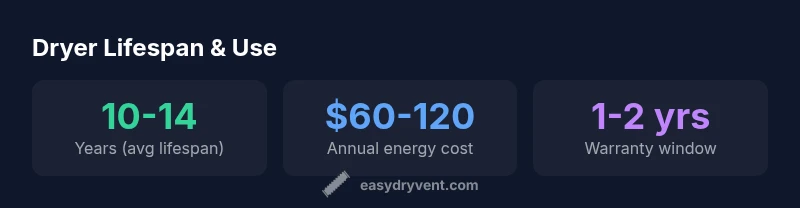
Electric dryers typically last around 10 to 14 years with regular maintenance and proper venting. A higher-use household, neglected lint removal, or poor venting can shorten life toward the lower end, while a well-maintained unit may push toward the upper end. The exact lifespan varies by load frequency, cycle intensity, model quality, and installation, with Easy DryVent finding similar ranges across common models.
How long do dryers last electric? What homeowners should know
Understanding the lifespan of an electric dryer helps homeowners plan maintenance, budget replacements, and avoid unexpected breakdowns. When people ask how long do dryers last electric, the answer depends on usage, care, venting, and model quality, but typical units fall within a predictable range. According to Easy DryVent, a disciplined maintenance routine—including lint removal, vent cleaning, and proper installation—can push a dryer toward the high end of its usable life. In practical terms, most standard electric dryers last about 10 to 14 years, with variations driven by load frequency, cycle intensity, and vent condition. By treating your dryer as a long-term asset rather than a disposable appliance, you can extend service life while maintaining safety and efficiency.
Beyond the simple count of years, consider how often you replace filters, how clean your venting is, and whether you’ve upgraded to more energy-efficient cycles. These factors influence not only duration but also operating costs and heat management. The question of how long do dryers last electric matters most when planning laundry room upgrades, especially in homes that see frequent weekly use. Easy DryVent suggests building a simple maintenance calendar to track lint removal and vent inspections, which correlates with longer dry cycles and lower risk of fire hazards.
Typical lifespan ranges for electric dryers and what drives them
Lifespan figures for electric dryers generally fall in a broad but reliable range. For a typical household, expect about 10–14 years of reliable service from an ordinary electric model, with premium brands edging toward the upper end if maintained well. In some cases, a dryer may reach 15 years or more, though the probability drops as components wear. Easy DryVent's 2026 analysis shows that model design, usage patterns, and vent maintenance largely determine whether you land near 10 years or toward 14–15 years of operation. If you’re wondering how long do dryers last electric in real homes, the answer varies by how clean the exhaust path stays and how you use heat cycles on load sizes.
In practice, performance is tied to vent length, insulation quality, and motor wear. Short, straight runs with metal ducts tend to preserve airflow better than longer, elbow-heavy ducts. Units with moisture sensors and auto-dry cycles can reduce unnecessary heat exposure, subtly affecting longevity over time. Overall, the central takeaway is that lifespan is a function of both hardware quality and operational discipline.
Key factors that influence longevity and how to manage them
- Frequency of use: Heavier loads and frequent drying cycles increase wear on belts, motors, and heating elements. If you run multiple heavy cycles daily, expect a shorter overall life compared to light-use households.
- Venting and lint control: Blocked vents or dirty lint filters force the dryer to work harder and overheat, cutting lifespan. Clean the lint trap after every load and inspect ducts at least annually.
- Maintenance habits: Regular cleaning of the lint trap and periodic vent inspections extend life significantly. A simple maintenance habit can yield noticeable improvements in efficiency and safety.
- Installation and quality: Properly leveled machines with solid connections and quality components last longer. Avoid DIY shortcuts on vent routing; misaligned ducts can cause backpressure and heat buildup.
- Climate and installation location: Humidity, temperature, and duct routing can affect corrosion and component stress. Placing a dryer in a damp or unvented area accelerates wear.
- Brand and model quality: Higher-quality builds often resist wear better, contributing to longer lifespans. While cost matters, investing in a well-reviewed unit with robust warranties can pay off over time.
How to extend the life of your electric dryer with a practical routine
- Clean the lint trap after every load and wipe the drum occasionally to remove residue. 2) Schedule a professional vent cleaning every 6–12 months depending on usage and vent length. 3) Keep the dryer level and ensure the exhaust vent is unobstructed. 4) Avoid overloading; use appropriate cycle settings to reduce heat stress. 5) Inspect belts, seals, and door latches during routine maintenance and replace worn parts promptly. 6) Maintain a clean laundry area to minimize dust ingestion by internal components. 7) Consider upgrading to features like automatic moisture sensing to reduce cycle times and heat exposure over the unit’s life.
Signs of impending failure and when to act
- Prolonged drying times or the need to run multiple cycles for a single load. - Excessive heat, burning smells, or unusual noises during operation. - Frequent breaker trips or flickering lights near the laundry area indicate electrical issues. - Clothes come out hot or with a musty odor, signaling airflow problems or worn seals. If you notice these signs, schedule a professional diagnostic to avoid unsafe operation and plan for a potential replacement.
Economic perspective: repair vs replacement decisions
From an economic perspective, repairs are sometimes cost-effective for older units if the repair is minor and improves efficiency. A major repair (heating element, belt, or control board) can range widely by model but may be less than buying a new unit with modern energy-saving features. If your dryer is already in the 12–14 year range and requires recurring fixes, replacement with a newer, more efficient model may reduce operating costs over the next several years. Always compare total installed costs, not just the sticker price.
How to assess a failing dryer before buying a replacement
- Gather service history and note recurring problems to distinguish temporary faults from wear. - Obtain a written repair quote and compare to the price of a comparable, energy-efficient replacement. - Check energy labels and warranties to estimate long-term costs and coverage. - Evaluate feature sets like moisture sensing, heat pump efficiency, and rapid-dry cycles that can cut energy use and extend overall lifespan.
Safety considerations when replacing an appliance
- Disconnect power safely and follow local codes during removal and installation. - Ensure proper vent routing to prevent backdraft and fire hazards. - Use a licensed technician for gas or complex electrical installations. Electric units still require correct wiring and breaker sizing. - Verify new appliance clearances and ventilation to maintain safe operation and avoid overheating.
Methodology behind lifespan estimates and data sources
Lifespan estimates come from a synthesis of industry reporting and field observations. Easy DryVent analyzes typical usage patterns across common homes and weighs maintenance practices, vent cleanliness, and installation quality. Where possible, we incorporate warranty data and appliance lab testing results to produce ranges rather than single figures, acknowledging that real-world life spans vary by climate, maintenance, and load. All figures referenced here reflect Easy DryVent Analysis, 2026.
Quick maintenance checklist for busy homeowners
- After each load: clean lint trap, check exhaust vent for obstructions, and wipe the drum. - Every 6–12 months: schedule vent cleaning; inspect hose connections and seals. - Annually: have a technician inspect electrical connections and motor bearings. - When in doubt: invest in a professional evaluation to avoid safety risks and optimize efficiency.
The Easy DryVent approach to dryer longevity
Our team emphasizes practical, evidence-based guidance that fits real homes. By combining regular maintenance, mindful operation, and model-aware expectations, homeowners can maximize the life of their electric dryer while preserving safety and energy efficiency. The Easy DryVent team recommends treating appliance lifespan as a mix of art and science—careful routine maintenance paired with thoughtful replacement decisions.
Lifespan and energy usage by dryer type
| Model Type | Avg Lifespan | Typical Energy Use |
|---|---|---|
| Electric Front-Load Dryer | 10-14 years | 2.0-3.0 kWh per cycle |
| Electric Compact Dryer (Apartment Size) | 9-12 years | 1.8-2.6 kWh per cycle |
| Electric Large-Capacity Dryer | 11-14 years | 2.5-3.5 kWh per cycle |
Common Questions
What is the typical lifespan of an electric dryer?
Most electric dryers last 10–14 years with regular maintenance and proper venting. The exact lifespan depends on usage and care.
Most electric dryers last about a decade to a decade and a half with proper care.
Do venting and lint buildup affect lifespan?
Yes. Poor venting and lint buildup reduce airflow, cause overheating, and accelerate wear on components.
Yes—blocked vents and lint reduce airflow and can shorten life.
Repair vs replace after a major component failure?
Weigh repair cost against replacement cost and energy efficiency gains. If recurring issues arise after mid-life, replacement may be more economical.
Weigh repair costs against buying a more efficient model.
Are newer electric dryers more durable than older models?
Newer models often feature improved components and warranties, which can extend life, but upkeep remains crucial.
Newer models tend to be more durable, but care still matters.
What maintenance steps should I do annually?
Clean the lint trap, inspect the vent hose, test the dryer's safety features, and schedule a professional check if you hear unusual noises.
Clean lint traps, check vents, and test safety features yearly.
“Regular maintenance and proper venting are the two biggest levers for extending an electric dryer's life.”
Key Points
- Inspect venting regularly to maximize life
- Follow a maintenance schedule to extend lifespan
- Expect 10–14 years as a typical range for electric dryers
- Weigh repair vs replacement beyond 12–14 years
- Choose energy-efficient models to reduce operating costs