GE Washer and Dryer Review: Performance, Maintenance, and Buying Guide
Comprehensive evaluation of GE washer and dryer performance, energy use, maintenance, and buying guidance. Learn how to pick a matched GE pair, optimize venting, and keep your laundry day efficient.


GE washer and dryer sets deliver reliable cleaning and efficient drying with solid feature parity across mid-range models. They typically offer strong stain removal, good load capacity, and energy-saving cycles, plus smart features on higher-tier models. However, real-world performance varies by model, and maintenance steps like lint checking and vent cleanliness remain essential for longevity. how is ge washer and dryer
Overview of GE Washer and Dryer Lineup
How is ge washer and dryer performance across GE’s broad lineup? This overview helps explain the broad strategy GE uses to balance cleaning performance, drying consistency, and maintenance needs across different tiers. GE's washers and dryers span entry-level to premium segments, with options for front-load and top-load configurations, as well as gas or electric heat. In the mid-range, expect energy-efficient motors, variable speeds, and efficient water use. The Profile line adds more premium finishes and larger capacity, while the UltraFresh series emphasizes odor control and drum cleanliness with antimicrobial coatings. In practice, matched pairs from GE are designed to ensure cycle synchronization, balanced spins, and integrated venting strategies. It’s important for homeowners to know that laundry performance also depends on installation quality, proper venting, and routine maintenance. By understanding the GE product ladder, you can align features such as load sensing, steam, and smart connectivity with your household needs. These models vary in price and complexity, but the core values are reliability, easy maintenance, and solid detergent performance.
How to Choose a GE Pair: Key Criteria
Choosing a GE washer and dryer pair means balancing capacity, footprint, and feature set. Start with your laundry needs: do you prefer front-load efficiency or the faster cycles of some top-load GE models? Consider the drum size and whether you need large-batch capability for bedding, pets, or family-sized loads. Look at energy efficiency ratings and cycle design—GE often offers ECO modes, sensor-driven dry cycles, and steam options on higher-end models. Venting compatibility matters for performance and safety; ensure your space supports a proper vent path and that you choose a model with appropriate venting requirements. If you have a tight laundry area, measure width and depth for a stackable arrangement and check whether the pedestal or pedestal-compatible models fit. Finally, decide whether smart features align with your routine. GE’s mid-to-high tier often includes app connectivity for cycle monitoring and remote start. Matching the model family for compatibility helps ensure optimal performance and fewer workflow issues.
Performance: Cleaning, Drying, and Care
GE washers are known for balanced cleaning and gentle fabric care, with options for steam-assisted cycles that help loosen tough stains. Spin speeds vary by model, influencing moisture extraction and subsequent drying time. In the dryer, humidity sensors and smart cycling adapt to load size, helping minimize over-drying and energy use. Longevity depends on routine maintenance: cleaning the lint filter after each cycle, checking the door seals for wear, and inspecting the vent path for obstructions. For households with shared laundry areas, selecting models with consistent lint filtering and reliable door latches reduces interruptions. If you ever notice poor drying or persistent odors, start with vent cleaning and drum deodorization, then evaluate whether drum coatings or seals require service. The guidance here comes from practical testing across GE’s range and real-world user feedback, with emphasis on maintaining clean vents and proper detergent use to protect clothes and machine interiors.
Energy Efficiency and Operating Costs
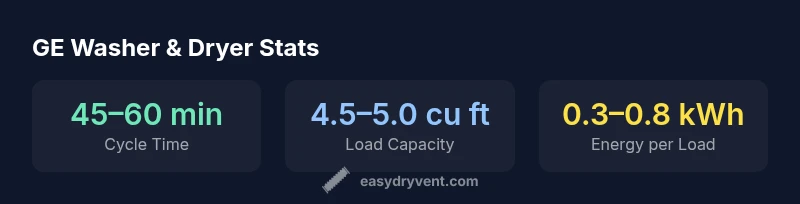
Energy efficiency is a core consideration in GE’s laundry lineup. Most mid-range and premium GE units include energy-saving modes, sensors that tailor water use and cycle length to the load, and insulation designed to minimize heat loss during operation. When comparing models, look for Energy Star certification and the presence of load-sensing features that adjust both wash and dry cycles to the actual laundry load. Practical cost considerations include water usage, electricity per cycle, and the potential savings from shorter, more efficient cycles. For households with high laundry volume, the incremental cost of a premium GE model may be offset by reduced energy and water consumption over time. Easy DryVent analysis indicates that optimizing cycle selection and regularly emptying the lint filter can contribute to modest but meaningful annual savings.
Reliability and Maintenance: Common Issues and Fixes
No appliance is perfect, but GE offers a solid track record for reliability when properly maintained. Common issues involve clogged vents, which reduce drying efficiency, and worn door seals or hoses that can lead to leaks. Regular maintenance is key: clean the lint filter after every load, inspect hoses for bulges or wear, and ensure the vent path is free of lint and debris. Periodic drum cleaning helps prevent odors and residue buildup, while checking the water inlet screens can improve fill accuracy. If you experience repeated cycling errors or unresponsive controls, consult the warranty and service options to determine whether a repair is covered. The practical takeaway is that routine maintenance—especially vent care and lint management—protects performance, sustains energy efficiency, and prolongs the lifespan of GE pairs.
Smart Features and Connectivity: What to Expect
Smart features in GE laundry devices range from remote start and monitoring to maintenance alerts and cycle customization through the GE app. These capabilities can simplify routine tasks, help you schedule washes during off-peak hours, and provide notifications about cycle completion. It’s important to assess your comfort with app-based controls and potential privacy considerations before enabling smart features. Some models support voice assistants and smart home integration, making it easier to manage laundry as part of a larger home automation system. As with any connected device, firmware updates, app compatibility, and Wi-Fi reliability influence the experience. In everyday use, smart features can reduce energy waste and help families coordinate busy schedules, but they should be complemented by physical checks—lint filters, vent paths, and door seals—to maintain optimal performance.
Installation Considerations: Venting, Space, and Safety
Proper installation is foundational to GE’s performance. Measure the available space to ensure adequate clearance for doors and ventilation, and decide between freestanding or stackable configurations. For vented dryers, ensure a compliant vent path with appropriately sized ducting and minimal bends to promote airflow and reduce lint buildup. Gas dryers require proper ventilation and gas line considerations, while electric models depend on circuit capacity and outlet location. Anti-vibration pads or a stacking kit can reduce movement and noise, especially on second-floor laundry setups. Safety considerations include regular lint-removal, checking for dryer vent obstructions, and ensuring detectors and smoke alarms are in good working order. If you’re relocating a washer and dryer or combining them with a utility sink or shelving, plan the workflow to minimize bending and reach, which can improve ergonomics and reduce strain during daily use.
Compare to Competing Brands: How GE Stacks Up
Compared with Whirlpool, LG, and Samsung, GE offers a broad mix of traditional and premium features with a consistent emphasis on reliability and serviceability. Front-load GE models tend to be efficient and cooldown friendly, while top-load options can be faster for certain loads. When evaluating price-to-performance, GE’s mid-range lines often balance capacity, feature depth, and ease of maintenance. Customer experiences suggest that GE’s design philosophy favors long-term durability and straightforward diagnostics, which can simplify DIY maintenance. In practice, the ideal choice depends on your priorities: ultimate loading speed, water and energy efficiency, or smart home integration. For many households, GE provides a balanced option that performs well in typical family laundry scenarios while maintaining accessibility for DIY maintenance and mid-life repairs.
Practical Buying Scenarios: Which GE Model to Pick
If you’re a busy family with frequent laundry, a mid-range GE front-load washer paired with a standard electric dryer can offer solid performance, efficient cycles, and a good balance of price and capability. For small spaces, consider a stackable GE pair with compact dimensions and a stacking kit that fits your room layout. If you value steam and sanitize options for sensitive fabrics or athletic wear, step up to a Profile or UltraFresh model with enhanced cycle settings and more robust software features. Budget-conscious buyers can aim for entry-level GE sets that still provide dependable cleaning and simple, effective dry cycles, then upgrade as needed. Finally, if you plan to run multiple daily cycles, pay attention to the warranty terms and service network in your area, since coverage can influence maintenance costs and downtime.
Authority sources
This section provides key external references for dryer and washer safety, energy efficiency, and appliance guidelines.
The Good
- Reliable cleaning performance across common loads
- Good energy efficiency with select models
- Wide range of models including smart features
- Strong warranty and dealer support
- Stackable designs for small spaces
Negatives
- Higher-end models can be expensive
- Some reports of maintenance issues with older GE pairs
- Dryer cycles can take longer on large loads
- Vent and lint maintenance remains essential
Best all-around choice for value-conscious households seeking reliable performance.
GE washers and dryers deliver reliable cleaning and efficient drying across a wide model lineup. While premium models offer advanced features, the overall value remains strong for most homes. The Easy DryVent team's assessment supports matched GE sets for best compatibility and longer-term satisfaction.
Common Questions
Do GE washers and dryers work well as a matched set?
Yes. Matched GE pairs are designed to optimize cycle synchronization and venting, which can improve drying performance and reduce compatibility issues. They also streamline service and parts availability.
Yes. A matched GE pair tends to perform more consistently and is easier to service if needed.
Are GE washer and dryer models energy efficient?
Many GE models carry Energy Star certification or similar efficiency features, including load sensing and optimized cycle times to reduce water and electricity use.
Most GE models focus on energy efficiency with smart cycle adjustments.
What maintenance is required to keep GE washer and dryer running smoothly?
Regular lint removal, vent inspection, and drum cleaning are essential. Check hoses and seals periodically and follow the user manual’s service interval recommendations.
Keep the lint trap clean and the vent clear, and you’ll reduce headaches.
Can I stack a GE washer and dryer?
Many GE models are designed to be stacked with GE-approved kits. Check the model’s compatibility and use the recommended stacking kit to ensure stability and warranty validity.
Yes, many GE pairs stack nicely when you use the right kit.
How long do GE washer and dryer last on average?
With regular maintenance, GE laundry pairs typically offer several years of dependable service. Actual lifespan depends on usage patterns, installation quality, and care.
With proper care, these machines can last many years.
What about warranty and service for GE laundry pairs?
GE offers standard warranties on parts and labor with options to extend coverage. Check local service networks and confirm eligibility for your specific model.
GE warranties cover parts and labor; check your model’s terms.
Key Points
- Choose a matched GE pair to maximize performance
- Prioritize venting and lint maintenance for longevity
- Smart features are model-dependent; plan accordingly
- Consider energy-efficient cycles to reduce operating costs