Dryer 120v: Practical Guide for Small‑Space Drying
Discover how a dryer 120v fits compact spaces, its limitations, venting best practices, and maintenance tips for safe, efficient drying in apartments and small homes.


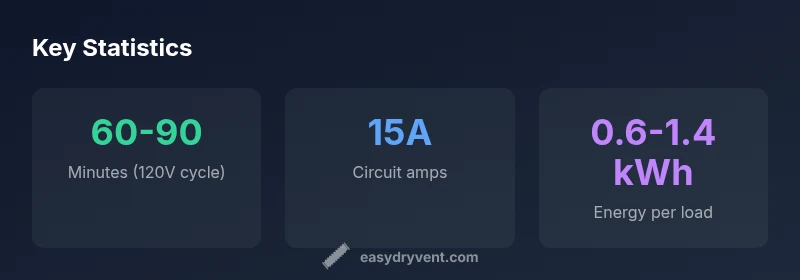
Most 120V dryers operate on a standard 15‑amp circuit, making them suitable for small spaces and light loads in apartments. They are a convenient, space‑saving option, but expect longer cycle times than a full‑size 240V model. For safety and efficiency, plan for proper venting, dedicated circuit, and regular lint maintenance.
Why a dryer 120v fits small spaces
A dryer 120v is a compact, space‑saving appliance designed for apartments, cottages, and other dwellings where a full‑size 240v unit isn’t practical. In most homes today, a 120v dryer operates on a standard 15‑amp circuit and can handle everyday wardrobe cycles for individuals or small households. The tradeoff is runtime: because the unit draws less power, cycles often take longer, particularly for bulky fabrics. For homeowners, this means choosing a model with a sensible drum size (typically smaller than full‑size models) and planning its placement where venting is straightforward. According to Easy DryVent, the key to efficiency is pairing load size with run time and ensuring the unit has a dedicated circuit to avoid nuisance tripping.
Electrical and venting considerations for 120v models
When selecting a 120v dryer, the electrical setup matters almost as much as the drum capacity. A dedicated 15‑amp circuit is strongly recommended to avoid overloading circuits in tight apartments or older homes. Do not run a 120v dryer on extension cords or shared circuits, as voltage drop can lengthen dry times and create heat buildup. Venting is equally important: use a smooth, properly sloped vent path with 4‑inch ducting where possible, and avoid crushed hoses. Regular vent inspections, especially in older buildings, help prevent lint accumulation and fire hazards. Easy DryVent’s methodology highlights vent integrity as a primary safety factor for 120v appliances.
Venting best practices for 120v dryers
- Keep the vent run as short and straight as possible; minimize bends to reduce lint buildup.
- Use rigid or semi‑rigid metal ducting rather than flexible foil ducts.
- Ensure exterior louvers or backdraft dampers are functioning to prevent air entry when the dryer is off.
- Clean the lint trap before every cycle and schedule quarterly vent checks if you use the dryer frequently.
- Consider a vent hood with a back‑draft damper to prevent cold air from entering the home in winter.
- If you need to install the vent through walls or ceilings, seal penetrations to prevent moisture migration. These steps help maintain performance and reduce fire risk, which is especially important for compact, 120v units that often run longer.
Maintenance routines that keep a 120v dryer safe
- Clean the lint screen after every load and inspect for tears or deformation in the door seal.
- Periodically vacuum the exhaust vent outlet and the surrounding area to remove lint that escapes the trap.
- Check for signs of overheating, such as a musty smell, excessive heat on the cabinet, or a warm drum after cycles.
- Inspect the vent hose for kinks or blockages, and replace damaged sections promptly.
- Schedule professional vent cleaning or inspection at least once a year if you use the dryer heavily. Regular maintenance minimizes fire risk and helps the unit dry more consistently, even on longer 120v cycles.
Load strategies and efficiency tips for 120v dryers
- Dry small loads in a single go; multiple light loads back‑to‑back can be more efficient than overloading a single cycle.
- Spin clothes in the washer on a high spin setting to reduce moisture before drying.
- Use the appropriate heat setting for fabrics (e.g., permanent press or delicate) to prevent extra tumble and energy use.
- Consider air‑fluff or no‑heat cycles for light items to save energy when possible.
- If you frequently dry bulky items (towels, blankets), group similar fabrics to reduce cycle time variance and improve overall efficiency.
Safety, code, and compliance notes for 120v dryers
- Follow the manufacturer’s installation instructions, especially regarding vent length, duct type, and clearances.
- Do not bypass safety features or use adapters that compromise voltage and circuit protection.
- Maintain clear space around the dryer to allow air circulation and prevent heat buildup near walls or cabinetry.
- Ensure the dryer is grounded, and verify outlet and plug compatibility with the unit’s rated amperage.
- If you live in a rental or under an HOA, confirm any restrictions on vent routing or appliance height. Following local codes protects you and your home while preserving performance.
Troubleshooting: when a 120v dryer takes longer than expected
- If cycles are consistently long, check the lint trap and vent for blockages and inspect the exhaust outlet for obstruction.
- Confirm the circuit has enough amperage and that the outlet is delivering expected voltage (a load meter can help).
- Verify you’re using the correct heat setting for the fabric type.
- Listen for unusual noises or vibrating panels; these can indicate loose panels or worn bearings that may require service.
- If drying time remains excessive after basic checks, consider professional inspection of the vent run and the dryer's internal heating element.
Practical upgrade paths: should you go 120v or upgrade to 240v?
For households with larger wardrobes or frequent bulky loads, a 240v dryer can dramatically reduce cycle times and energy use per load. If you’re short on space, a well‑vented 120v unit remains a viable option for light daily use. When upgrading, evaluate exhaust routing, available electrical panel space, and building codes. Easy DryVent recommends performing a load audit to determine whether the improved speed and efficiency of a 240v model justify the cost and space changes. For many urban homes, a 120v unit paired with a robust venting plan is sufficient for everyday needs.
Comparison of dryer types by cycle time and power draw
| Dryer Type | Typical Load Time (minutes) | Power Draw (amps) |
|---|---|---|
| 120V compact dryer | 60-90 | 15 |
| 240V standard dryer | 30-60 | 20-30 |
Common Questions
What is a dryer 120v best used for?
A 120v dryer is ideal for small spaces and light loads, such as single-person households or apartments. It’s designed for convenience and space savings, not rapid drying of bulky fabrics.
A 120v dryer is best for small spaces and light loads, like one person’s laundry in an apartment.
Do I need a dedicated circuit for a 120v dryer?
Yes. A dedicated 15‑amp circuit helps prevent nuisance trips and voltage drop, ensuring safe and consistent operation.
Yes. A dedicated 15‑amp circuit helps prevent trips and keeps it running safely.
Can a 120v dryer replace a standard 240v dryer?
Not for heavy daily loads. A 120v dryer can replace a 240v unit for light, infrequent use, but expect longer cycles for bulky items.
Not for heavy loads, but it can work for light daily use with longer cycles.
How long does it take to dry clothes in a 120v dryer?
Dry times typically run longer than 240v models, often an hour or more depending on load size and fabric. Batch planning helps.
Longer cycles than 240v models; plan for about an hour or more per load.
What maintenance is required for 120v dryer vents?
Clean the lint screen after every load, inspect the vent for blockages, and schedule periodic professional vent checks to prevent buildup.
Clean the lint screen after every load and check the vent regularly.
Is a 120v dryer energy efficient?
Energy efficiency depends on run time. Shorter runs on 240v models often use less energy per pound of laundry; 120v models may use more energy per item due to longer cycles.
It depends on usage—longer runs can use more energy per load.
“A 120v dryer can be a practical solution for apartments and small households when venting is well designed and maintenance is consistent. It won’t replace a full‑size 240v model for heavy use, but it can be safe and efficient for light, frequent loads.”
Key Points
- Choose a 120v dryer for small spaces and light loads
- Plan for a dedicated circuit and proper venting from day one
- Regular lint filtering and vent checks reduce fire risk
- Expect longer cycle times on 120v units; optimize loads accordingly
- Consider upgrading to 240v if you regularly dry bulky items