Can You Use Dryer Balls with Towels? A Practical Guide
Explore whether you can use dryer balls with towels, including benefits, best practices, and safety tips from Easy DryVent. Learn load strategies and care for soft, fluffy towels while saving time and energy.


Can you use dryer balls with towels? Yes. They help separate towels to improve air flow, reduce drying time, and soften fibers without chemical softeners. For a standard load, use 3–5 balls, avoid overloading the drum, and set the dryer to the fabric-care label’s recommended heat.
Why towels respond to dryer balls
Towels, especially cotton terry and waffle-weave varieties, can clump together during a tumble. This clumping blocks air from moving freely through the fabric, increases drying time, and can leave towels damp in the center. Dryer balls create space between towels so warm air circulates more efficiently. By lifting and separating fibers, they help towels dry more evenly and reduce damp zones. This is particularly noticeable with thicker bath towels or multi-ply fabrics, where air needs extra channels to reach every layer. According to Easy DryVent, using dryer balls with towels is a simple way to improve dryer performance without relying on chemical softeners, which can leave residues on fabric over time.
Key benefits when drying towels with dryer balls
- Faster drying times due to improved air flow around each towel.
- Softer towels without synthetic softeners, because mechanical action reduces stiffness.
- Fewer static shocks because the tumbling action helps dissipate static buildup.
- Reduced lint and fuzz transfer between towels when combined with an effective lint-trap routine.
- Potential energy savings if shorter cycles replace longer, repeated runs.
When you ask if you can use dryer balls with towels, you are not changing the towel fiber; you are optimizing how air moves through the load, which is the key to better drying results. Easy DryVent’s analysis suggests that the right balance of balls and load size can yield noticeable improvements without adding cost or complexity to your laundry routine.
Choosing the right dryer balls for towels
There are two common types: wool dryer balls and plastic or polyester blends. Wool balls are quieter, naturally soften fabrics through lanolin-like oils, and can last long with proper care. Plastic or hollow-core balls tend to be lighter and keep their shape, which some users prefer for heavily bodied towels. For towels, aim for medium-sized balls around 2–3 inches in diameter. Use enough to maintain separation, typically 3–5 balls for a standard load. Avoid extremely heavy or metal balls, which can create noises or scuff fabrics over time. Safety and performance improve when you select a ball density that allows air to flow while still gently tumbling fabrics.
Pre-drying preparation for towels
Before loading, shake out towels to remove excess water after washing, and sort by fabric weight where possible. A well-spun towel (with a lower moisture content) dries more quickly, leaving less dampness in the center. Empty the lint trap and ensure the dryer's vent is unobstructed for maximum airflow. If towels are stubbornly damp after a cycle, consider re-running a shorter cycle rather than extending heat, which can degrade fiber and waste energy. Proper pre-drying prep helps you see the true benefit of using dryer balls with towels.
How to load towels with dryer balls: a practical guide
Load towels loosely and evenly around the drum, ensuring there’s space for air to move. Place 3–5 dryer balls in the drum first, then add towels in a loose stack rather than a tight bundle. Avoid overfilling the drum; air must circulate for the balls to separate fibers effectively. If you’re washing a mix of heavy bath towels and lighter hand towels, consider loading them separately or at least balancing the heavier towels with some lighter items to prevent a dense pile. The goal is air gaps, not fabric compression.
Settings, timing, and energy considerations
Choose the towel-oriented cotton or normal drying setting and a medium to high heat only if the care label allows it. Towels typically tolerate higher heat, but very thick or plush towels may benefit from a lower heat to prevent shrinkage. Start with a standard cycle and check progress after about 20–25 minutes if you’re unsure. If towels come out still damp, you can run a quick additional cycle, but avoid back-to-back long cycles that waste energy. Removing towels promptly at the end of the cycle helps prevent wrinkles and makes folding easier.
Avoiding damp towels and wrinkles: finishing tricks
As soon as the cycle ends, remove towels from the drum promptly. A quick shake can reduce wrinkles and help align fibers for folding. If towels are just a bit damp, pop them back in for a short, cool or fluff-only tumble with 1–2 balls to finish. For wrinkled towels, lightly mist with water and tumble again on a low heat for a few minutes. Overdrying can damage fibers, so monitor drying progress rather than blindly running full cycles.
Alternatives to dryer balls for towel care
If you don’t have dryer balls, you can use clean tennis balls or clean sneakers with soft interiors; just ensure they won’t scuff fabrics. Some people prefer a damp cloth or a clean washcloth wrapped around a towel to create additional air pockets. However, dryer balls are designed to be gentle on fabrics while maintaining air gaps. Consider testing any alternative on a small towel first to ensure it does not leave impressions or damage the fabric.
Cleaning and maintaining dryer balls and towels
Regularly inspect dryer balls for wear, cracks, or large fibers pulling away. Clean them with warm soapy water if you notice a buildup of lint or residue, and air dry completely before the next use. Clean the lint trap before and after each load to maintain optimal air flow. Towels should be laundered per care labels, using the appropriate detergent amount and water temperature. Keeping both towels and dryer balls clean helps preserve softness and drying efficiency over time.
Tools & Materials
- Dryer balls (3–5)(Wool or wool-polyester blends; 2–3 inch diameter recommended for standard loads)
- Clean towels (bath and hand towels)(Ensure towels are fully laundered and spun to reduce moisture before drying)
- Dryer with adjustable heat(Use cotton/towels setting or normal heat compatible with towel care label)
- Lint trap and vent care supplies(Clear lint before loading to maximize airflow and efficiency)
- Timer or dryer monitoring device(Optional to prevent overdrying and save energy)
- Optional alternatives: tennis balls(Soft interiors only; ensure they won’t scratch fabrics)
Steps
Estimated time: 30-45 minutes
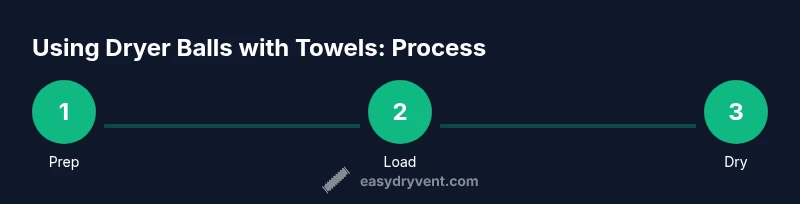
- 1
Prepare towels and gather materials
Inspect towels for wear, sort by thickness, and gather dryer balls and the dryer. This ensures you start with a balanced setup that maximizes airflow and minimizes fabric stress.
Tip: Have the lint trap nearby so you can clear it before loading. - 2
Place dryer balls in the drum
Add 3–5 dryer balls to the drum before loading towels. The balls should be evenly spaced so they can separate towels as they tumble.
Tip: If using wool balls, avoid overloading to prevent fibers from matting together. - 3
Load towels loosely
Place towels in a loose, even pile rather than cramming them together. Leaves room for air to circulate between items.
Tip: Balance lighter towels with heavier ones to maintain even tumbling. - 4
Select appropriate heat setting
Choose a towel-friendly setting (cotton or normal) per care labels. For very plush towels, a lower heat can prevent shrinkage.
Tip: Avoid high heat if any towel has a delicate weave or special finish. - 5
Start the cycle and monitor
Run the cycle and check progress midway (around 20–25 minutes for a typical load) to gauge dryness. Adjust if needed to avoid overdrying.
Tip: If you notice persistent dampness, ending with a short cool tumble can help finish without overheating. - 6
Finish and remove promptly
When complete, remove towels promptly to reduce wrinkling and set the fluff. Transfer to a drying rack or basket for folding.
Tip: A quick shake before folding helps restore fluffiness. - 7
Optional quick refresh for stubborn damp towels
If towels still feel damp, run a brief additional cycle on low heat with the balls to re-distribute heat and air.
Tip: Keep cycles short to avoid overheating fabrics. - 8
Clean up and store
Wipe down the drum edges and lint trap after the load. Store balls in a dry place to prevent moisture buildup.
Tip: Regular inspection reduces the risk of fabric pilling and lint migration.
Common Questions
Can using dryer balls with towels affect towel softness?
Yes. Dryer balls help separate fibers and reduce static, leaving towels fluffy without chemical softeners. They can improve softness over time, especially with regular use.
Dryer balls fluff towels and reduce static, helping towels feel softer without chemical softeners.
Do dryer balls speed up drying towels?
Generally, yes. The improved air circulation and separation allow towels to dry more evenly and quickly compared to a dense load.
Yes, dryer balls usually speed up drying by improving air flow in the drum.
How many dryer balls should I use for towels?
For a standard towel load, 3–5 balls are effective. Increase slightly for very large or thick towel sets, but avoid overloading.
Typically 3 to 5 balls for a standard towel load; adjust for larger or denser loads.
Are dryer balls safe for all towel fabrics?
Most cotton and cotton-poly blends used in common towels are compatible. Check the care label for delicate weave or embellishments, and avoid placing sharp items with towels.
For most towels, dryer balls are safe, but always check the fabric care label.
What should I do if towels come out wrinkled?
Remove them promptly, give a quick shake, and consider a short cool tumble. If wrinkles persist, fold while warm to minimize creases.
Shake and fold while warm; a short cool tumble can help reduce wrinkles.
Watch Video
Key Points
- Choose 3–5 dryer balls for standard towel loads.
- Keep towels loosely packed to maximize air circulation.
- Use the towel care setting and appropriate heat per label.
- Remove towels promptly to minimize wrinkles.
- Regular lint trap cleaning supports efficient drying and safety.