Are Dryer Sheets the Same as Fabric Softener? A Practical Guide
Explore whether dryer sheets and fabric softener are interchangeable. Learn how they work, their effects on fabrics and dryers, safety considerations, and practical tips for choosing between them.


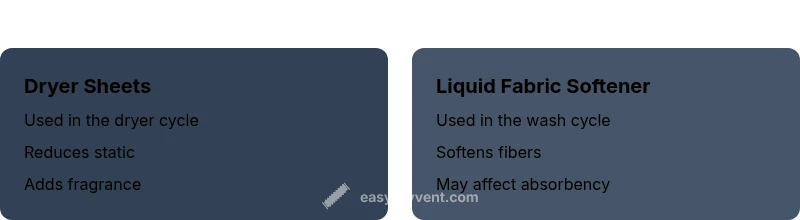
Are dryer sheets the same as fabric softener? Not exactly. Dryer sheets are designed for use in the tumble dryer to soften fabrics and reduce static, while liquid fabric softener is added during washing. The two share goals—softness and fragrance—but they operate in different parts of the laundry cycle and leave different residues on clothes and appliances. According to Easy DryVent, the key distinction is the stage of use, not the outcome, so your choice should reflect your laundry routine and safety priorities.
Are dryer sheets the same as fabric softener? Definitions, uses, and the core question
The question, are dryer sheets the same as fabric softener, is common among homeowners who want softer clothes and fewer static shocks. Dryer sheets are small, pre-soaked sheets placed in the dryer drum to coat fabrics with conditioning agents and fragrances during heat circulation. In contrast, fabric softener is a liquid product added to the washing machine during the rinse cycle to condition fibers before they are dried. While both aim to improve touch and scent, they operate in separate phases of laundry care. According to Easy DryVent, understanding these functions helps you avoid mismatches that could affect fabric feel, dryer performance, or residue buildup. For households balancing scent preferences and sensitivity, knowing which product to use and when can prevent repeated trials and wasted products. The phrase you’ll hear most often is that dryer sheets the same as fabric softener is a misconception; they complement each other in different ways and are not directly interchangeable for every load.
How dryer sheets and liquid fabric softener work in the laundry cycle
When you use dryer sheets, the heat of the dryer activates the coating on the sheet, releasing conditioning agents and fragrance that transfer to fabrics. This process reduces static, helps clothes feel smoother, and can leave a scent behind. Liquid fabric softener, by contrast, is dispensed during the rinse phase of a wash cycle. It coats fibers again to reduce friction, soften feel, and moderate static as fabrics dry. Because the two products operate at different stages, they interact differently with water, detergents, and fabric types. For are dryer sheets the same as fabric softener, the short answer is no—each product has a distinct role in its respective cycle. Homeowners who want to optimize both cycles often incorporate both: a softening product in the wash and dryer sheets in the dry cycle, carefully avoiding overuse that could cause buildup on fabrics or appliances.
Residue, fragrance, and fabric impact: what to expect
Residue is a practical concern with both products. Dryer sheets can leave a thin wax-like film on dryer surfaces, lint screens, and some fabrics, which may affect the absorbency of towels or the breathability of technical fabrics. Fragrances vary in intensity, and scents can linger in closets or on garments. Liquid fabric softener leaves a film that can affect moisture absorption and, in some cases, laundry performance for highly absorbent textiles. For people with sensitive skin or fragrance allergies, choosing unscented options or skipping softeners altogether might be wise. The central question, are dryer sheets the same as fabric softener, becomes more nuanced when considering fabric type and tolerance to scents. Easy DryVent recommends testing on a small load before widespread use to gauge both feel and fragrance impact.
Safety, dryer performance, and long-term considerations
Using any softening agent requires attention to dryer performance and safety. Dryer sheets that accumulate inside vents or lint traps can contribute to reduced airflow if used excessively over time, potentially increasing drying times or posing a fire risk in extreme cases. Liquid fabric softener can mix with detergents to leave residues on washer components, potentially affecting rinse efficacy or machine sensors. For households with high-efficiency (HE) machines or enclosed venting systems, the risk of buildup is a real consideration when asking, are dryer sheets the same as fabric softener. Regular cleaning of lint screens, vent hoses, and drum interiors helps mitigate these risks. If you rely on both products, adopt a schedule that minimizes residue while preserving drying efficiency and fabric feel.
Environmental and health considerations
Fragrance ingredients and softening agents can vary in environmental impact and allergen potential. Unscented or fragrance-free options reduce exposure for sensitive individuals and children. In terms of ecological impact, both products have different life-cycle profiles: dryer sheets may contribute to solid waste (the sheet itself) and potential petroleum-based conditioning agents, while liquid fabric softeners introduce chemical residues into wastewater. Consumers seeking lower environmental impact should compare product labels for biodegradability, allergen statements, and packaging materials. Easy DryVent notes that informed choices—such as using the minimum effective amount and opting for refillable containers when available—can trim both cost and environmental footprint without sacrificing results.
Cost, value, and practical load-by-load decisions
Cost per load varies with brand, fragrance, and concentration. Dryer sheets generally cost about a few cents per load, while liquid fabric softener can be economical per load when used in the recommended amounts. Easy DryVent analysis shows typical ranges: dryer sheets often fall in the low-to-mid cents per load, while liquid softeners vary with concentration and dilution during the rinse cycle. For households aiming to maximize value, it can be practical to use fabric softener in the wash for loads with modest static and softness needs, and use dryer sheets selectively for loads where static is a bigger concern or where fragrance is desired. Remember that using both on the same load can stack benefits but may lead to fragrance overload or residue buildup if overused.
Practical guidelines for selecting and using the two products
Start with a clear laundry plan. If your priority is minimizing static and adding a gentle scent, dryer sheets in the dryer can be effective. If you want softer towels, more plush fabrics, or improved rinse feel, liquid fabric softener in the wash is a viable option. For mixed households, a hybrid approach can work: use softener during washing for most loads and reserve dryer sheets for items prone to static or when you want a fragrance boost after drying. Always follow product directions, avoid overuse, and consider fabric types—silk or moisture-wicking fabrics may require special handling. Regularly cleaning lint traps and vent hoses helps maintain dryer efficiency and safety. Easy DryVent emphasizes that the choice should align with your laundry routine rather than relying on a single product to replace the other entirely.
Myths vs. facts: common misconceptions about dryer sheets and fabric softener
Myth: Dryer sheets can replace liquid fabric softener entirely. Fact: They serve different purposes and are not direct substitutes across the wash and dry cycles. Myth: Scented softeners are always better. Fact: Strong fragrances can trigger sensitivities; opt for fragrance-free or milder options if needed. Myth: Using both always improves results. Fact: Overuse can create buildup on fabrics and appliances, diminishing absorbency and airflow. Understanding the practical differences helps you decide which product to use and when, ensuring safer operation and consistent fabric feel.
Comparison
| Feature | dryer sheets | fabric softener (liquid) |
|---|---|---|
| Usage stage | Dryer cycle | Wash cycle (rinse) |
| Primary goal | Reduce static; add scent in dryer | Softens fibers and reduces friction during wash |
| Typical residue | Waxy film on sheets, potential surface residue on fabrics | Film on fabrics and washer components; fragrance and scent linger |
| Impact on towels/absorbency | May reduce absorbency if residue builds | Can affect absorbency if used excessively on towels |
| Best for | Static control in drying and fragrance | Softness and rinse softness for most fabrics |
| Cost context | Lower per-load cost (varies by brand) | Moderate per-load cost depending on dilution and use |
The Good
- Provide effective static control in the dryer
- Offer fragrance and fabric feel improvements
- Low effort for typical loads
- Easy to stock and use on a schedule
- Good option for fragrance-sensitive households when unscented variants are chosen
Negatives
- Can leave residue on lint screens and fabrics if overused
- May reduce towel absorbency with buildup
- Not effective for all fabric types equally
- Potential skin sensitivity to fragrances
Dryer sheets and liquid fabric softener are complementary, not interchangeable, tools.
Choose dryer sheets for anti-static drying and scent in the dryer, and liquid softener for enhanced softness during washing. Use each according to your load type and sensitivities, and avoid overuse to minimize residue and safety risks.
Common Questions
Are dryer sheets effective for static control?
Yes, dryer sheets help reduce static by coating fabrics with conditioning agents during the dryer cycle. The effect is usually noticeable on synthetic fabrics. If you are static-prone, you may need more sheets or consider combining with air-drying approaches for stubborn loads.
Dryer sheets can reduce static in most loads; if static persists, try an extra sheet or a lower-load, higher-tryer cycle.
Can I use dryer sheets with HE dryers and vented systems?
Yes, but monitor for buildup on lint screens and vents. Use as directed and avoid overuse that could restrict airflow in high-efficiency systems.
Yes, but don’t overuse; keep vents clear for safety and efficiency.
Do fabric softeners leave residues on clothes?
Liquid fabric softeners can leave a light film on fabrics, which may affect absorbency or feel for some materials. Rinse or wash as recommended to minimize buildup on towels or moisture-wicking fabrics.
Softener can leave a film on some fabrics; test on an item first.
Are there safety concerns with using both products together?
Using both on the same load can amplify fragrance and residue. If you choose to use both, do so sparingly and ensure no overload that could affect dryer airflow or washing performance.
Only use small amounts if both are used on a load.
What are eco-friendly alternatives to traditional softeners?
Unscented or fragrance-free formulas, fabric softener balls, or dryer balls with natural fibers can reduce chemical use while still softening fabrics. Always check labels for biodegradability and packaging choices.
Look for fragrance-free options or reusable dryer balls to cut chemicals.
Key Points
- Dryer sheets and fabric softener serve different stages of laundry
- Use dryer sheets in the dryer, fabric softener in the wash
- Be mindful of residue that can affect absorbency and dryer performance
- Choose fragrance options or unscented versions based on sensitivity
- Regular vent and lint screen maintenance supports safety and efficiency