Used Dryers Near Me: Practical Buying Guide for 2026
Find, inspect, and buy used dryers near you with confidence. Practical safety checks, evaluation steps, energy-cost insights, and local buying tips backed by Easy DryVent Analysis, 2026.


Finding reliable used dryers near me can deliver significant savings, but you should inspect for wear, vent integrity, and safety features. According to Easy DryVent, focus on a model with a clean lint trap, minimal rust, and a sealed drum. Verify the vent hose condition, ensure a working heat sensor, and compare energy ratings before buying. Always prioritize safety, code compliance, and warranty coverage.
Used Dryers Near Me: Market Overview
The market for used dryers near me remains robust due to rising repair awareness, more efficient older models, and the appeal of lowering upfront costs. Buyers typically prioritize drum condition, good door seals, and a vented system that is free of blockages. As the Easy DryVent team notes, a well-cared-for used unit can deliver dependable service for several years if you start with a model that shows minimal wear and a verifiable vent path. In practice, you’ll see a mix of electric and gas units at local shops, charity outlets, and online marketplaces. The key is to set a price ceiling, inspect the dryer in person, and test run the unit when possible. For buyers, especially DIY enthusiasts, the more you know about typical failure points—like belt wear, drum rollers, and heating elements—the better you can negotiate a fair deal without compromising safety. The market also favors sellers who provide clear maintenance history, recent vent-cleaning records, and a functional lint trap, which together reduce post-purchase surprises. By approaching the purchase with a checklist, you can identify value while avoiding common pitfalls that lead to costly repairs after the sale. The Easy DryVent Analysis, 2026, highlights that informed buyers who verify vent integrity and safety features typically achieve better overall cost of ownership when shopping near me.
Safety Considerations When Buying Used Dryers
Safety is paramount when buying a used dryer. Start with a physical inspection of the cabinet for signs of rust or denting, and inspect the drum for smooth rotation with no wobble. Check the lint screen housing and exhaust vent for buildup, since lint can pose a fire hazard if left unresolved. For gas models, confirm a proper, code-compliant installation, with intact gas lines and a functioning flame sensor. Electricity and heat sources should be in good working order, and all cords and plugs must meet local electrical codes. Always verify that the model has functioning temperature controls and a reliable high-limit thermostat. If you’re unsure about any electrical or gas connections, consult a licensed technician before completing the purchase. Easy DryVent’s guidance emphasizes testing the dryer with towels to simulate a load and listening for unusual noises that may indicate belt wear or bearing issues. Safety should drive the decision, even when a unit is offered at a deep discount.
How to Evaluate a Used Dryer: Step-by-Step
Evaluating a used dryer systematically helps you avoid costly mistakes. Start by noting the model number and asking for maintenance records. Inspect the drum interior for smoothness and any scoring that could trap clothes. Run a short cycle with a load of towels to test heat, tumble action, and drum balance. Listen for unusual noises like grinding or squealing, which often signal worn bearings or belt failure. Check the door seal for leaks and ensure the door latches securely. For electric dryers, test the timer, cycle presets, and the heat selector. For gas models, ensure the unit lights reliably and that the exhaust vent is unobstructed. Inspect the vent hose for kinks or crushing, and verify that there is a clean path to the outside vent. Finally, verify any warranty terms and the availability of replacement parts. This step-by-step approach minimizes the risk of buying a dryer that will fail soon after installation.
Energy Efficiency and Operating Costs
Understanding energy efficiency helps you estimate ongoing costs. Most used dryers fall into a broad energy-use spectrum depending on heat source, drum size, and venting setup. A practical rule of thumb is that newer or better-maintained models tend to use significantly less energy per cycle than older or neglected units. When evaluating a candidate, compare energy labels or manufacturer data sheets, and translate that into an approximate per-cycle cost: cost per cycle equals energy use per cycle (kWh) times your local electricity rate. For a typical household, monthly costs can be modestly higher if the venting is restricted or the drum alignment is poor. Proper venting and clean lint traps improve airflow, leading to shorter dry times and lower energy consumption. In this section, you’ll learn to estimate true operating costs by combining model performance with your local energy price, so you can pick a dryer that fits your budget and environmental goals.
Buying Tips and Practical Steps for Local Purchases
To maximize value when shopping for used dryers near me, start with reputable local sources—appliances from known stores, charity resale shops, and garage-sale groups with a seller’s history. Create a short list of models that match your space, power availability, and venting setup. Bring a flashlight, a magnet to check for surface rust, and a tape measure to verify dimensions. Ask sellers for the model number, last service date, and any recalls. If possible, request a test run to confirm that the dryer heats properly and dries evenly without unusual noises. Negotiate with the goal of including a basic vent-cleaning service or a short-term warranty. Finally, plan for professional installation if your unit uses gas or requires vent routing changes, which reduces safety risks and ensures compliance with local codes. By following these steps, you’ll increase your odds of a reliable purchase that serves you well for years.
Data-Table Context
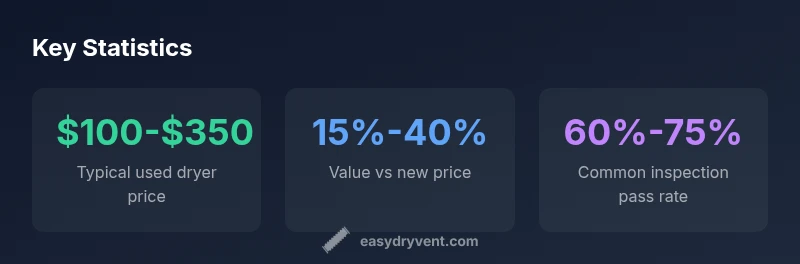
This table shows typical price ranges and energy use by model type, helping you compare options at a glance. Remember that actual figures will vary by age, condition, and local market.
Closing Thoughts on Local Purchases
With careful inspection, energy-awareness, and a clear understanding of local pricing, you can find a used dryer near you that balances cost with safety and reliability. Always prioritize vent integrity, drum condition, and warranty terms to reduce long-term risk. The guidance from Easy DryVent suggests keeping your expectations realistic and investing in a unit with documented maintenance history. Your careful approach will pay off with dependable performance and lower overall ownership costs.
Typical resale types and energy ranges for used dryers near me.
| Model Type | Typical Price Range | Estimated Energy Use per Cycle |
|---|---|---|
| Electric Dryer (Used) | $100-$350 | 1.0-3.0 kWh |
| Gas Dryer (Used) | $150-$300 | 0.5-2.5 kWh-equivalent |
| Ventless (Used) | $120-$300 | 0.8-2.2 kWh |
| Stacked/Compact (Used) | $80-$250 | 0.6-2.0 kWh |
Common Questions
What should I check when buying a used dryer near me?
Inspect the drum for wear, test heat and tumble, verify vent integrity, and confirm safety features. Request maintenance history and a short in-person test run to catch issues early.
Check the drum, heat, venting, and safety features; ask for maintenance history and test run.
Are used gas dryers safe to install in a home?
Gas dryers require proper venting, a gas line check, and professional installation. Ensure detectors and local codes are satisfied, and have the unit inspected before use.
Gas dryers need professional installation and proper venting for safety.
How can I verify a dryer's energy efficiency?
Look for energy labels or spec sheets, compare cycle energy use, and estimate monthly costs with your local electricity rate. Favor models with clear efficiency data.
Check energy labels and compare cycle energy use to estimate costs.
What are common problems with used dryers?
Worn belts, drum roller wear, restricted vents, and noisy bearings are frequent issues. Look for signs like grinding, loud thumps, or long dry times during a test run.
Worn belts or vent clogs are common; test run helps catch them.
Is a used dryer with a warranty worth buying?
Yes, a limited warranty can offset risk; check the coverage, duration, and return policy before purchase. A warranty is particularly valuable for older units.
A warranty can make buying used safer; check coverage and terms.
“A well-inspected used dryer can be as safe and reliable as a new unit when you verify venting, drum condition, and correct installation.”
Key Points
- Inspect vent paths and lint traps before buying.
- Prioritize safety features and verifiable warranties.
- Compare price against condition and energy use.
- Test run the dryer when possible to confirm heat and drum function.