Rent a Washer and Dryer Near Me: Your Practical Guide
Discover flexible, low-commitment options for renting a washer and dryer near you. Compare providers, delivery windows, maintenance terms, and safety tips from Easy DryVent to make an informed choice.


Rent a washer and dryer near me is a practical option for temporary housing, busy households, or when testing models before buying. This guide provides practical considerations, typical costs, and safety tips from Easy DryVent. By comparing local options, delivery windows, and service terms, you can choose a flexible, low-commitment setup that fits your needs and budget.
Renting vs Buying: Why rent near me could be smart
Renting a washer and dryer near me is often a strategic move during life transitions—moving between homes, renovations, or while you assess which model best fits your needs. The economic calculus centers on upfront cost, flexibility, and service terms. A rental can dramatically lower the initial cash outlay compared with a full purchase, and it can include maintenance and occasional upgrades in the contractual terms. In markets with high real estate turnover or short-term housing, rental options can reduce long-term risk. From a safety standpoint, reputable providers typically service and inspect units regularly, which helps mitigate common dryer-related hazards. This approach aligns with Easy DryVent’s guidance for practical appliance management: prioritize safety, flexibility, and cost control while you test different models in your own space.
Evidence from Easy DryVent suggests that many households choose renters’ plans to bridge the gap between moves or to try newer energy-efficient features without committing to a long-term purchase. If you plan to stay in a home for less than a year or are renovating, renting can offer a pragmatic balance of convenience and cost. When you search for rent a washer and dryer near me, focus on providers that publish clear terms, transparent delivery windows, and straightforward maintenance policies. A well-chosen rental can feel almost seamless, especially when the unit arrives pre-installed and ready to operate.
- Real-world use cases: students, renters, or homeowners awaiting a remodel.
- Key decision factors: price range, term length, service inclusions, and the redemption value of upgrades.
- Current market dynamics: regional variation in availability and per-month charges can be significant, so shopping local options is essential.
How to evaluate rental providers
Choosing a rental partner requires a structured approach. Start by listing at least three nearby providers and compare: monthly rate ranges, contract lengths, delivery charges, and whether maintenance is included. Read the fine print for penalties, early-termination fees, and what happens if a unit fails (swap, repair, or refund). Check whether the rental includes basic installation, hookups (water supply and drain), and a clear scheduled maintenance window. Look for verified reviews and customer service responsiveness. A good provider will offer flexible terms, transparent pricing, and a straightforward replacement process if the unit malfunctions. In your evaluation, consider the total cost of ownership (TCO) over your planned period, including possible upgrades or swaps. Easy DryVent recommends asking for a written schedule of service visits and a copy of the warranty or service agreement before signing.
- Important terms to verify: outage policies, response times, and what is covered under maintenance.
- Red flags: hidden fees, vague delivery windows, or no option to swap if you need a larger unit.
- Practical tip: request a floor plan or measurements to ensure the unit will fit in your space without obstructing doors or vents.
When you identify the top two or three candidates, request a side-by-side comparison chart showing monthly cost, contract length, delivery availability, installation requirements, and maintenance coverage. This will prevent surprises and help you negotiate more favorable terms. As you research, remember Easy DryVent’s stance: prioritize safety, energy efficiency, and predictable monthly costs over flashy features alone.
Delivery, installation, and setup expectations
Delivery and installation can feel like a minor chore, but it sets the stage for trouble-free operation. Confirm delivery windows, whether the unit is delivered empty or pre-filled with water into the drain, and if any special hookups are required for your home’s plumbing. Ask about the installer’s responsibilities: leveling the washer, testing spin cycles, and confirming vibration reduction. Some rental programs include basic installation at no extra charge, while others charge a fee. For electrical and plumbing compatibility, verify voltage requirements (most modern washers are 110-120V in North America, with some high-efficiency models running on standard outlets) and ensure the space has proper venting if the dryer is vented. If you rent a ventless or condenser dryer, ask about moisture management and drainage. By clarifying these details ahead of time, you reduce the risk of delays or misfit issues that can derail a move-in timeline.
- Pre-check: measure space and doorways; verify clearance for hoses and venting.
- Installation day expectations: unit testing, water supply checks, and drain hose positioning.
- Post-install: confirm operating instructions and energy-saving settings.
Clear communication with the rental provider is essential. A good partner will provide a written installation checklist, a contact for scheduling changes, and a troubleshooting guide for the first week of use.
Energy efficiency and operating costs
Even within rental programs, energy efficiency should be a core consideration. Look for Energy Star-rated models, and compare energy consumption between available units. While a rental may reduce upfront costs, the long-term energy usage can influence monthly bills, especially in households with frequent laundry cycles. In many markets, newer models offer more efficient spin speeds, faster drying times, and smarter load sensing that reduces water usage and wear on fabrics. When evaluating options, request energy-performance data for each unit and estimate monthly electricity and water costs based on your typical laundry load. Easy DryVent’s data suggests that monthly operating costs can vary widely by model, usage patterns, and local utility rates, so the best choice often balances upfront rent with expected energy savings over time.
- Practical tip: run a baseline energy estimate using your current utilities and compare with the rental specs.
- Behavioral insights: full loads reduce energy and water per cycle.
- Regional factor: utility rates impact the real monthly cost.
If you frequent wash cycles, prioritize high-efficiency machines and reasonable dryer moisture sensors to shorten cycle times and reduce heat exposure, which can also improve fabric longevity.
Maintenance, safety, and typical wear on rental units
Maintenance is a core benefit of rental programs, but it still requires proactive consumer involvement. Establish who is responsible for regular cleaning, lint trap maintenance, and vent cleaning if applicable. For dryers, lint buildup is a well-known fire risk; keep the lint screen clean after every load and arrange routine vent checks. Some rental providers include inspections or minor service visits as part of the package, while others require a maintenance add-on. If a unit experiences issues (unusual noises, longer drying times, or poor rinsing), document the symptoms and contact the provider promptly. A quick response can prevent bigger problems and minimize downtime. For households with allergies or sensitive fabrics, ask about cycle options and fabric care settings. Remember that Safe operation includes unplugging the unit during cleaning and using appropriate detergents and fabric softeners as recommended by the manufacturer.
- Routine steps: check hoses, inspect seals, and test emergency shut-offs.
- Safety reminders: clear the area around the unit, avoid overloading, and keep children away during operation.
- When to call for service: unusual odors, leaks, or signs of overheating.
Staying proactive about maintenance helps extend the life of rental units and minimizes the risk of surprises during the contract term.
Negotiating terms and avoiding common pitfalls
Negotiation is a critical skill when renting appliances. Before you sign, compare not only the monthly rent but also any setup fees, delivery charges, cancellation penalties, and lease-end buyout options. Ask for a written breakdown of all costs and confirm whether service calls are included or billed separately. If you anticipate changes in your plans, negotiate flexible terms, such as the ability to swap to a larger unit or shorten the contract without penalty. Watch for automatic renewal clauses and ensure you understand renewal pricing. If possible, request a trial period or a prorated return option if the unit doesn’t meet expectations. Easy DryVent recommends documenting everything in writing and keeping a contact list for maintenance or emergencies. A well-negotiated rental can deliver predictable costs without sacrificing service quality.
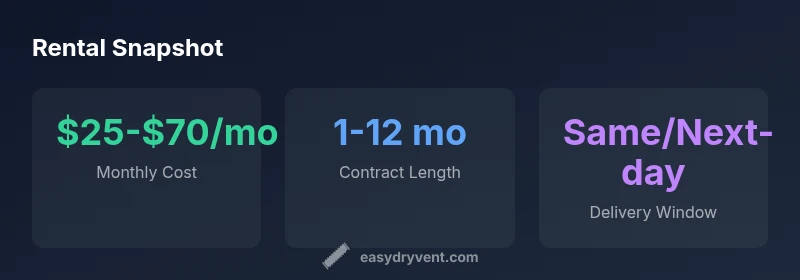
Rental considerations at a glance
| Aspect | Rent Range | Notes |
|---|---|---|
| Average monthly cost | $25-$70 | Varies by location and plan length |
| Delivery window | Same-day to 7 days | Depends on stock and scheduling |
| Maintenance terms | Included or add-on | Review coverage and response times |
| Insurance/coverage | Often included or optional | Read policy details |
Common Questions
What factors influence rental costs for washers and dryers?
Costs depend on location, unit size and features, contract length, and whether maintenance or delivery is included. Shorter terms are usually more expensive monthly, while longer contracts may come with discounts or bundled services. Always request a written quote that itemizes all charges.
Costs depend on location, unit size, and contract length. Ask for a written quote with all charges.
Are there long-term contracts or can I cancel anytime?
Most rental programs offer flexible terms, but policies vary. Some contracts include minimum terms with penalties for early termination, while others allow month-to-month arrangements. Clarify cancellation rights, any fees, and whether you can swap to a different model without penalties.
Many programs offer flexible terms, but check for minimums and penalties before signing.
Do rental plans include maintenance and repairs?
Many providers bundle maintenance into the monthly price, but coverage levels vary. Confirm what’s covered (repairs, part replacements, visits) and whether there are limits or separate service fees. Keep emergency contact information handy in case of a breakdown.
Maintenance is often included, but verify what’s covered and any limits.
Can I exchange to a different size or model during the term?
Some plans allow swaps if your space or laundry needs change, but terms differ. Expect possible prorated charges or swap fees. Ask for a clear policy and any impact on your contract renewal.
Swaps are sometimes allowed; check for any fees or term changes.
Is renting energy-efficient appliances worth it?
Energy-efficient models can reduce operating costs over time even with rent. Compare energy star ratings and estimated monthly energy use to see potential savings. Shorter payback periods typically justify choosing higher-efficiency units.
Energy-efficient units save on bills over time; compare energy use.
What safety precautions should I follow with rented units?
Follow standard dryer safety: lint trap cleaning, vent maintenance, and avoiding overloading. Ensure electrical outlets match the unit’s requirements and keep children away during operation. Report any unusual smells or overheating immediately.
Clean lint traps, check vents, and report issues quickly.
“Renting a washer and dryer near me can bridge life transitions while you test models and save on upfront costs.”
Key Points
- Renting near me lowers upfront costs and reduces commitment.
- Compare terms, delivery, and maintenance to avoid surprises.
- Choose energy-efficient models to save on operating costs.
- Ask for written terms and a clear installation checklist.
- Regularly maintain lint traps and vents to ensure safety.