Maytag Neptune Dryer Review: Maintenance, Performance, and Safety
In-depth evaluation of the Maytag Neptune dryer focusing on maintenance tips, venting considerations, and practical repair guidance for homeowners and DIY enthusiasts.


The maytag neptune dryer represents a notable option for DIYers who value simple, rugged performance and straightforward maintenance. In this review, we assess reliability, energy use, venting considerations, and common issues, with practical tips to keep an older Neptune dryer running safely and efficiently. According to Easy DryVent, preventive care matters most. This quick verdict helps homeowners decide whether to restore or upgrade.
Historical context and design philosophy
The maytag neptune dryer represents a era when appliances were built with heavy metal chassis and serviceability in mind. It belongs to a line that prioritized durability and straightforward mechanical systems over the digital features seen today. For homeowners and DIY enthusiasts, this translates into a repair-friendly architecture: large access panels, simple drum belt setups, and components that are easier to diagnose with a multimeter and basic tools. According to Easy DryVent, the Neptune ethos emphasized long life and straightforward maintenance rather than rapid feature turnover. This historical perspective helps explain why parts remain available for many units even decades after manufacture, though some models may diverge in layout and wiring. When evaluating a Neptune dryer today, consider whether you value a proven, repairable design or the convenience and efficiency offered by newer, automated models. For those who already own one, the design remains a practical platform for cost-effective upkeep, provided you follow a disciplined maintenance routine.
Performance and drying mechanisms
The Neptune dryer's performance hinges on a straightforward, mechanically driven design. Depending on age, it uses a drum, belt, and a selectable timer to determine drying duration rather than relying on a modern moisture sensor. This yields predictable results once you understand load dynamics, but it also means you must fine-tune cycles by fabric type and garment weight. In practice, a full-load cottons air or towels may require a longer cycle, while lighter synthetics dry quickly if the load is balanced and the lint filter is clean. The absence of automatic sensing can make under- or over-drying more likely for irregular loads, but it also gives the user tactile control over heat and time. The drum's capacity is usually generous for household use, which is convenient for families doing large laundry sessions. When the appliance is in good condition, you can expect steady operation provided the venting is unobstructed and the cleaning schedule is followed. The key is to view performance as a blend of simple controls and disciplined maintenance.
Energy efficiency and cost of operation
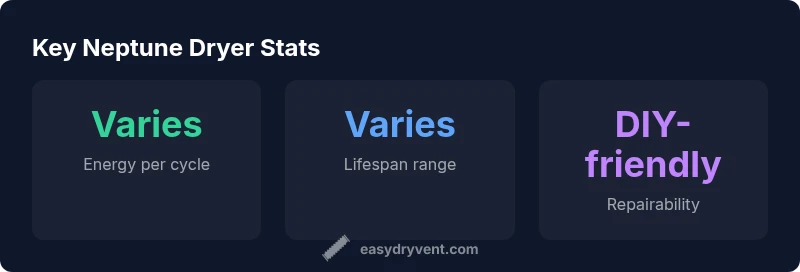
Older Neptune models typically lag modern ENERGY STAR dryers when it comes to energy efficiency. With no advanced moisture sensing and older heating elements, cycles tend to run longer, and hotter settings can waste energy if used carelessly. For budget-conscious households, this means higher electricity or gas costs over time, especially with frequent loads or large families. On the upside, the simple design reduces electronics failure points, which can limit repair costs for some households that prioritize DIY fixes. Practically, homeowners can mitigate energy waste by:
- drying full loads to maximize cycle efficiency
- cleaning the lint screen before every run
- ensuring the vent path is short, straight, and free of obstructions
- using lower-heat settings when fabrics permit
In short, while Neptune dryers are not as gas or electricity-efficient as current high-efficiency models, careful loading, vent maintenance, and a disciplined approach to cycles can make operating costs reasonable for occasional use or as a budget option in a mixed laundry environment.
Venting requirements and installation tips
Vent efficiency is central to the Neptune dryer's performance. A clogged or overly long vent path erodes drying speed and increases energy use, while poor venting can trap moisture and lint, posing a fire risk. If you own an older Neptune, prioritize a dedicated exterior vent with a smooth interior duct and minimal bends. Regularly inspect for lint buildup near the vent opening and at the lint trap housing. When installing or repositioning, ensure there is at least 1 inch of clearance around the exhaust to allow heat to escape. Use rigid or semi-rigid metal ducting rather than flexible foil ducts, which are more prone to sagging and lint accumulation. For installations in tight spaces, you may need a vent booster or a properly sized elbow to maintain airflow. Finally, always disconnect power before touching electrical connections or removing panels, and verify that the dryer is properly grounded for safety.
Common issues and DIY maintenance steps
Many Neptune dryers reach the end of their component life, but with routine care, a surprising number of units continue to perform adequately. Common issues include worn drum belts hitching intermittently, worn drum rollers that create rumbling noises, and degraded door seals that reduce efficiency. Electrical components such as thermostats and thermal fuses can fail with age, leading to overheating or no heat. Addressing these issues at home typically involves:
- unplugging the unit and releasing power supply
- removing the front panel to access the belt and drum
- inspecting and replacing the belt, rollers, or seals if wear is evident
- testing fuses with a multimeter and replacing as necessary
- cleaning the lint screen and vent path to prevent overheating
If the unit exhibits persistent heating problems, or if you suspect terminal wiring faults, stop DIY repair and consult a qualified technician. Routine maintenance, including annual vent cleaning and lint removal, can dramatically extend service life.
Troubleshooting common faults
Troubleshooting a Neptune dryer involves a systematic check of heat, airflow, and timing. If the machine runs but does not heat, verify the selector settings, the circuit breaker, and the thermal fuse. If there is heat but no drum rotation, inspect the belt and motor coupling. If a cycle ends early or the drum stops midway, check the timer, main control, and any door switch interlocks that could prematurely cut power. For persistent odors or lint accumulation, inspect ductwork for kinks or blockages and clean accordingly. When in doubt, consult the user manual or seek parts through reputable suppliers, ensuring compatibility with your specific model. Safety first: never bypass safety switches or test electrical components without proper precautions; always unplug before service.
Comparison to modern dryers
Compared with current high-efficiency models, the Neptune dryer lags in energy efficiency, moisture sensing capability, and control sophistication. Modern front-load and many top-load dryers use advanced sensors, variable-speed motors, and electronically controlled cycles that optimize dry time while minimizing energy usage. On the other hand, Neptune units shine in terms of rugged mechanical design and ease of DIY maintenance—if you have the time to monitor cycles and a willingness to source hard-to-find parts. For households with limited access to professional repair services, the Neptune's modular approach may be preferable because you can address specific worn components without replacing the entire machine. If you are evaluating whether to keep or replace, weigh the cost of ongoing repairs and energy consumption against the price of a newer model with better efficiency, shorter cycle times, and contemporary safety features.
Parts availability and repair considerations
Part availability for the Neptune line varies by age and region. Some common wear parts—belts, seals, rollers, and thermostats—are still sold by third-party vendors or remanufacturers, but you may encounter gaps with very early or late production runs. When planning a repair, confirm the exact model number and get a parts diagram or exploded view from a reputable source. If you rely on a professional technician, request an upfront estimate that includes parts, labor, and diagnostic fees, as these elements can vary widely. Because Neptune models span a broad production window, compatibility with generic parts is not guaranteed; you may need to hunt for the correct part variant. For those who enjoy DIY, a robust online community of Neptune owners and repair technicians can be a helpful resource for troubleshooting and sourcing.
When to repair vs upgrading
Deciding whether to repair or upgrade depends on several factors. If the unit still dries reliably and you can source affordable parts with little downtime, repair can be cost-effective and preserve a familiar user experience. However, if you notice rising energy costs, frequent breakdowns, or limited service options in your area, upgrading to a modern, ENERGY STAR dryer may yield long-term savings and improved safety features. Consider the unit's age, the cost of parts and labor, and the potential resale value of a functional Neptune dryer when evaluating options. For households with special laundry needs or space constraints, a compact, energy-efficient replacement might be preferable to a costly, ongoing repair cycle.
Installation and space considerations
Installing a Neptune dryer requires careful attention to ventilation, clearance, and electrical compatibility. Ensure there is adequate space behind the unit for venting, with clean walls and unobstructed access for maintenance. Confirm that the electrical supply matches the unit's rating and that a dedicated circuit is available if required. Use proper venting materials and avoid crimped ducts, which can obstruct airflow and trap lint. If you are replacing an old unit, reuse or update the exhaust vent to ensure efficient moisture removal. For basement installations or closets, verify that the location provides enough air intake and overhead clearance to accommodate a large drum and heat generation. A professional assessment can help you determine whether a Neptune can be safely installed in your space without compromising code compliance.
Lint, vent, and duct care routine
Lint and vent care is central to safe operation and efficiency. Clean the lint trap before every load and perform a more thorough vent inspection on a monthly basis. Inspect the exterior vent cap for blockages and ensure the interior duct is free of folds and kinks. If you notice reduced airflow, stop using the appliance and clean or replace sections of ductwork. A well-maintained vent path reduces drying times and lowers the risk of fires. Consider installing a lint filter that can be easily removed for cleaning and store the spare parts in a labeled container to simplify future maintenance. Finally, schedule a yearly professional inspection if you operate the Neptune dryer frequently or have family members with allergies or sensitive clothes, to maintain optimal performance and safety.
Practical buying guidance for Neptune-era or similar models
If you're shopping used or restoring an older Neptune dryer, start by verifying model and serial numbers, confirming the appliance has not suffered from water damage or rodent intrusion, and inspecting the door seal and drum for wear. Request service history if available and check for recalls or safety advisories. Compare the unit's weight, capacity, and cycle options with a modern compromise: a compact, energy-efficient dryer with updated safety features. For DIYers, prioritize models with accessible panels and a simple belt system, which reduces repair complexity. If you decide to keep the Neptune, invest in a routine maintenance schedule and maintain a robust supply of venting parts to minimize downtime.
The Good
- Straightforward mechanical design eases DIY maintenance
- Rugged build quality from vintage Maytag construction
- Easy access lint filter and service panels for home repairs
- Wide model availability ensures parts compatibility (historical)
Negatives
- Lower energy efficiency compared to modern HE models
- Higher operating noise due to older drum and motor design
- Limited moisture sensing leading to over/under-drying risk
- Parts availability for very old Neptune models can be sparse
Best for DIYers who want a repair-friendly, budget-conscious option.
The Neptune's simple mechanics offer accessible maintenance and parts are often available for mid-range repairs. For new buyers, this model may not match modern efficiency, but for restoration projects it remains a capable choice when parts can be sourced.
Common Questions
Is the Maytag Neptune dryer energy efficient by today's standards?
No—these older models typically use more energy per cycle than modern units. Easy DryVent analysis shows the gap is mainly due to older heating elements and lack of auto-moisture sensing.
Older Neptune models use more energy per load; upgrading will usually save energy in the long run.
Can I repair a Neptune dryer myself?
Yes, many routine fixes like belt or lint-cleaning tasks are doable with basic tools. More complex repairs to thermostats or wiring should be done by a professional.
Basic fixes are doable; for electrical parts, consider a pro.
Where can I find replacement parts for Neptune series?
Replacement parts are available through third-party suppliers and some retailers, but the pool narrows with age. Confirm exact model numbers and source diagrams before ordering.
Look online and in vintage repair shops for parts; confirm model details.
What are common failure points on a Neptune dryer?
Common issues include worn belts, drum rollers, and seals, plus aging thermostats and thermal fuses that can cause overheating or no heat.
Belts, rollers, and fuses are the usual suspects.
Should I upgrade or repair a Neptune dryer?
If parts are affordable and downtime is minimal, repair can be sensible. If energy costs rise or repairs become frequent, upgrading to a modern dryer offers better efficiency and safety features.
Repair if costs & downtime are low; upgrade otherwise.
Are Neptune dryers safe to use?
As with any older appliance, ensure proper venting, lint removal, and electrical checks. Regular maintenance and a working lint filter reduce fire risk and improve efficiency.
Safety comes from proper venting and maintenance.
Key Points
- Inspect vent condition before powering on
- Prioritize parts availability when considering Neptune
- Compare energy use with modern dryers
- Schedule regular lint and vent cleaning