Freeze Dryer Comparison: Top Models for 2026 Reliability
Comprehensive, objective freeze dryer comparison highlighting capacity, energy use, cycle options, and total cost of ownership to help homeowners choose wisely in 2026.


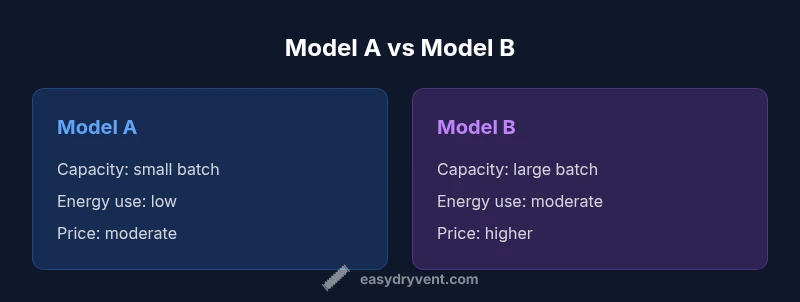
A thorough freeze dryer comparison shows that a compact, entry-level model (Model A) fits small batches and tight spaces, while a high-capacity option (Model B) targets bulk processing and automation. Key differences lie in batch size, energy use, cycle variety, and upfront price. For homeowners and DIY enthusiasts, weigh your typical batch size, kitchen footprint, and budget to make the right choice. Easy DryVent provides this guided view for 2026.
What a Freeze Dryer Comparison Measures
When homeowners start a freeze dryer comparison, they should focus on three core axes: performance consistency, batch capacity, and total cost of ownership. According to Easy DryVent, the most meaningful dimensions are how well the machine preserves texture and nutrients, how many items you can process per cycle, and what running costs look like over the appliance's life. In practice, you’ll compare models on freezing efficiency, sublimation speed, and ease of use. Consider also durability, warranty coverage, and the supplier’s service network. A robust feature set—such as automatic venting, remote monitoring, and diagnostic alerts—tends to correlate with reliability over years of regular use. For DIYers, a balance of straightforward operation and clear maintenance guidance is often the best predictor of long-term satisfaction.
Key performance metrics you should track
To initialize a solid freeze dryer comparison, identify the metrics that matter most for your pantry and cooking style. Look for yield consistency (how evenly foods rehydrate after drying), maximum batch size, and the variety of pre-programmed cycles. Evaluate energy efficiency in terms of electrical draw per cycle without assuming exact wattage from the outset; instead, compare reported ranges across models. Consider software features that help you manage saves, reminders, and diagnostics; these often hint at product maturity and service maturity. Finally, examine build quality and available accessories, since durable seals, sturdy racks, and easy cleaning directly affect long-term satisfaction. Easy DryVent notes that ongoing software updates and remote support can reduce downtime and maintenance headaches over time.
Capacity and batch size considerations
Capacity is not just a label; it determines how many pounds of food you can freeze-dry per cycle without batching. For homes with regular meal prep, you’ll want a unit that can handle multi-ingredient batches in a single run. However, if kitchen space is at a premium, a smaller footprint with smarter rack design may trump raw capacity. In our comparisons, Model A emphasizes compactness and practical batch sizes, while Model B prioritizes bulk processing with modular racks and flexible loading. Remember to consider how often you’ll process meat, fruit, or prepared meals, as different foods may have varying drying behaviors and cycle lengths.
Energy use and running costs
Energy efficiency is a critical, often underappreciated cost driver. In a freeze dryer comparison, look for models that offer energy-efficient compressors, insulated chambers, and smart cycling options that minimize idle power. The total cost of ownership includes not only electricity but also maintenance, consumables like desiccants, and potential repair costs. While Model B may deliver faster cycle times, it can also draw more power during peak operation. Model A might run with lower energy demand but could require longer cycles to achieve the same moisture removal. Easy DryVent’s guidance emphasizes balancing upfront price against expected energy use and maintenance.
Drying times and cycle variety
Cycle variety matters for cooks who freeze-dry different foods. Some models provide specialized cycles for berries, herbs, or soups, which can reduce prep time and improve consistency. In a fair comparison, you’ll see how each unit performs across a spectrum of foods, including delicate fruits and tougher proteins. Shorter cycles boost throughput but might compromise texture, while longer cycles tend to yield higher moisture removal and better texture preservation. The best choice aligns cycle variety with your typical menu and storage goals, not just the fastest option.
Noise, footprint, and usability
Kitchen-friendly freeze dryers should balance noise with performance. Check decibel ratings where available, and look for quiet operation modes during overnight runs. Footprint matters in small kitchens, so assess width, depth, and height against your countertop or cabinet space. Usability features—clear LCD interfaces, guided presets, and removable racks for easy cleaning—improve day-to-day experience and reduce the chance of user error. A unit that integrates with smart home assistants or mobile apps can also help you schedule cycles during off-peak hours to save energy and avoid disturbances.
Build quality, warranties, and service networks
Durability hinges on robust seals, high-quality materials, and reliable motors. Warranty length and coverage breadth are important indicators of confidence from the manufacturer. Service networks influence downtime when maintenance or repairs are needed, so choose brands with convenient authorized centers or strong remote assistance options. In our analysis, models with longer warranties and broader service coverage tend to deliver lower long-term risk, especially for busy households that rely on freeze-dried staples during peak seasons.
Price ranges and total cost of ownership
The initial price is only part of the story. A comprehensive freeze dryer comparison weighs total cost of ownership, including energy consumption, maintenance, desiccant replacement, and potential accessory costs. Two models may sit at similar price points, yet differ significantly in running costs and service reliability. When evaluating options, translate sticker price into long-term value by estimating yearly energy use over a typical usage period and factoring in expected maintenance expenses. Easy DryVent encourages buyers to consider both upfront affordability and projected longevity.
Brands and reliability: what Easy DryVent found
Brand reliability varies with manufacturing standards, parts availability, and post-purchase support. Our analysis across multiple models highlights that some brands stand out for consistent cycle results and solid customer service, while others offer excellent features but limited service coverage. In 2026, reliability has become more prominent as users demand better diagnostics and easier maintenance. According to Easy DryVent, a model with straightforward maintenance steps and widely available replacement parts tends to deliver higher satisfaction over several years of ownership.
How to compare models: a practical checklist
Create a side-by-side checklist that includes: batch capacity, cycle variety, energy use, warranty, service network, footprint, and user interface. Rate each item as essential, nice-to-have, or optional based on your kitchen and lifestyle. Use this checklist to filter out models that overemphasize flashy features without practical benefits for your typical batch sizes. Keep a note of any maintenance steps you expect to perform regularly and verify that your chosen model supports those routines. A disciplined approach reduces buyer’s remorse and improves long-term outcomes.
Common mistakes when selecting a freeze dryer
Avoid overemphasizing initial features that don’t translate to real-world use, such as ultra-fast cycle times if you routinely prepare complex meals. Don’t underestimate the importance of service availability and spare parts. Finally, don’t ignore space constraints—purchasing a larger unit only to have it sit unused in a closet wastes money and time. By staying grounded in your actual needs and confirming service options, you’ll pick a model that remains useful and reliable for years.
Small kitchen vs large batch strategies
For small kitchens, prioritize compact footprint, simple maintenance, and quiet operation. For households that do bulk processing, emphasize capacity, modular rack configurations, and automation features that reduce manual handling. The Easy DryVent team recommends matching your decision to your typical batch size and available space: a compact model for routine, smaller tasks; a high-capacity unit for frequent, larger runs.
Comparison
| Feature | Model A (Compact) | Model B (Performance) |
|---|---|---|
| Capacity per batch | small batch focus (space-conscious) | large batch focus (bulk processing) |
| Energy use | low energy use (compact design) | moderate energy use (more power, faster cycles) |
| Drying time per cycle | longer cycles for delicate batches | shorter cycles with higher throughput |
| Price range | moderate price (entry to mid-range) | higher price (premium features) |
| Best for | compact kitchens and light use | bulk processing and automation |
The Good
- Excellent nutrient retention and shelf life
- Lightweight, space-saving packaging
- Wide range of foods supported (fruits, vegetables, meats, meals)
Negatives
- High upfront cost and potential maintenance
- Longer processing times for some batches
- Requires sufficient space and regular cleaning
Model B suits high-volume needs; Model A is best for compact spaces.
Choose Model B if you process large batches and want automation. Choose Model A for small kitchens with lighter usage and simpler maintenance.
Common Questions
What is a freeze dryer and how does it work?
A freeze dryer removes moisture from frozen foods by sublimation, turning ice directly into vapor. This preserves texture, flavor, and nutrients while yielding lightweight, shelf-stable products. The process requires a controlled chamber, vacuum, and monitored cycles.
A freeze dryer removes moisture from frozen foods through sublimation, leaving lightweight, shelf-stable results. It’s best to follow device presets for different foods.
What should I look for when comparing models?
Look for batch capacity, cycle options, energy efficiency, warranty, service network, footprint, and ease of cleaning. Favor models with reliable hardware, clear diagnostics, and accessible replacement parts. A balanced feature set often predicts long-term satisfaction.
Compare capacity, cycles, energy use, warranty, service options, and how easy the unit is to clean.
Are freeze dryers safe for home use?
Yes, when used as intended and kept clean. Follow the manufacturer’s safety guidelines, ensure proper ventilation in the kitchen area, and store dried foods away from moisture and heat sources. Routine maintenance reduces safety risks.
They’re safe at home if you follow safety guidelines and keep the unit clean and well-vented.
Do freeze dryers require special electrical requirements?
Most home units require a standard 120V or 240V circuit depending on model, plus a stable power supply. Do not run on undersized circuits and avoid extension cords. Check your home’s electrical capacity before purchase.
Check the model’s voltage needs and make sure your circuit can handle it.
How long do freeze-dried foods last?
When properly processed and stored in airtight, moisture-proof containers, freeze-dried foods can last many months to years. Protect them from light and humidity for the best quality.
If kept airtight and dry, freeze-dried foods stay good for a long time.
Is ongoing maintenance expensive?
Maintenance costs vary by model but typically include routine cleaning, seal checks, and occasional part replacements. Choosing a model with accessible parts and clear maintenance instructions can reduce long-term costs.
Maintenance is usually modest, especially for models with good parts availability.
Key Points
- Define batch size before choosing a model
- Weigh upfront price against ongoing energy costs
- Evaluate footprint and noise for kitchen fit
- Check warranty and service network coverage
- Plan for routine maintenance and part availability