Electric Dryer for Sale: A Practical Buying Guide
Find an electric dryer for sale with practical guidance on energy efficiency, venting, and maintenance. Easy DryVent analyzes options for homeowners seeking safer, faster drying.


The best electric dryers for sale prioritize energy efficiency, proper venting, and load-sensing features. Start with a front-load, 7–8 cu ft model with moisture sensors, Auto Dry, and Energy Star certification. Pair with a well-sealed vent and regular lint-screen care for safer, faster drying. Easy DryVent Analysis, 2026.
Why an Electric Dryer for Sale is a Practical Choice
For homeowners evaluating options, an electric dryer for sale often offers straightforward installation, reliable performance, and broad model availability. In this guide from Easy DryVent, we explain how to pick a unit that dries clothes quickly without wasting energy. By prioritizing energy efficiency, sensible capacity, and a robust venting setup, you can achieve safer, faster drying in any home. The Easy DryVent Team notes that most households benefit from front-load designs with moisture sensors that adjust cycle length automatically. This reduces wear on fabrics and keeps utility bills in check while keeping your laundry area safe and comfortable.
Choosing an electric dryer for sale means considering the balance between upfront cost and long-term savings. A well-chosen unit integrates with standard laundry workflows and can adapt to varying load sizes. Look for models that offer auto-dry, sensor-based cycles, and clear indicators for lint trap cleanliness. In our experience, shoppers who start with a clear capacity target and a venting plan tend to make fewer costly returns. Easy DryVent emphasizes that a robust ventilation path is as crucial as any control feature for safety and efficiency.
Energy Efficiency: What to Look For
Energy efficiency is not just a badge; it translates to meaningful savings over years of use. Look for Energy Star certification, which indicates standardized performance across cycles, including auto-dry and moisture sensing. These features prevent over-drying and protect fabrics. In practice, a well-chosen electric dryer for sale with proper venting and efficient insulation reduces energy use by a measurable margin according to Easy DryVent Analysis, 2026. Also check door seals and drum insulation; small improvements here yield noticeable gains over time.
Energy-efficient dryers typically include multiple dryness settings and a responsive moisture sensor. These tools prevent wasting energy on cycles that over-dry or under-dry clothing. When evaluating models, compare the energy factor (EF) or the annual energy consumption (AEC) between two units. Easy DryVent recommends reading independent test results and the Energy Guide label to understand real-world performance beyond marketing slogans.
Sizing and Features That Match Your Laundry
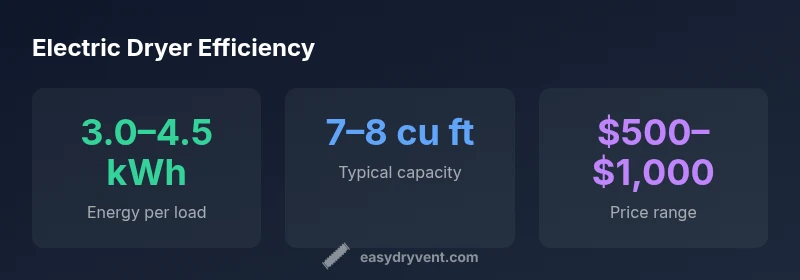
Capacity should align with how much laundry your household generates weekly. Most families find 7–8 cu ft drums balance load flexibility and drying speed, while smaller households may do fine with 5–6 cu ft units. Consider features like reversible doors, stackability, and a modern drum with a wide opening for easy loading. For a dryer you’ll see in many basements or laundry rooms, ensure it fits the space and allows proper vent routing. Easy DryVent Team notes that consistent venting and accessible lint traps reduce maintenance friction and improve safety over time.
Venting, Airflow, and Maintenance Essentials
Ventilation quality directly affects drying efficiency and fire safety. Use a 4-inch duct with a short, straight run whenever possible, and keep the vent path clear of bends and obstructions. Clean the lint trap after every load, and schedule periodic professional vent inspections to prevent buildup. Regular checks on seals, door latches, and drum rollers can extend dryer life and reduce energy waste. Easy DryVent’s guidance highlights that maintenance is a core part of any dryer’s performance—investing in it pays back in consistent drying times and lower running costs.
How to Compare Models: A Step-by-Step Evaluation
- Define capacity needs based on household size and typical laundry load. 2) Filter for Energy Star certification and moisture-sensing features. 3) Compare drum designs and noise ratings to fit your space. 4) Check venting compatibility and warranty terms. 5) Review total cost of ownership, including installation and maintenance. 6) Read consumer reviews focused on real-world performance. Easy DryVent recommends a side-by-side model comparison to surface any trade-offs before purchase.
Common Pitfalls to Avoid When Buying
- Focusing solely on upfront price while ignoring energy and venting costs over time. - Underestimating the importance of a proper vent path and lint trap maintenance. - Skipping real-world tests of moisture sensing and auto-dry cycles. - Ignoring space constraints that hinder vent routing or stacking compatibility.
Model comparisons for electric dryers
| Model Type | Capacity (cu ft) | Energy Star Certified | Typical Price Range | Vent Requirement |
|---|---|---|---|---|
| Front-load | 7-8 cu ft | Yes | $500-$900 | 4-inch vent |
| Top-load (HE) | 5-7 cu ft | Yes | $450-$750 | 4-inch vent |
| Compact | 3-4 cu ft | Yes | $300-$500 | 4-inch vent |
Common Questions
What features should I prioritize in an electric dryer for sale?
Prioritize energy efficiency, moisture sensors, auto-dry, and venting accessibility. Verify lint-trap cleanliness and door seals for long-term performance.
Look for Energy Star, moisture sensing, and a good vent path.
Is Energy Star certification worth it for dryers?
Yes. Energy Star indicates standardized efficiency, which translates to lower energy use over time. Compare models with and without the certification to see real differences.
Energy Star matters for long-term savings.
What capacity do I need for a small family?
For small families, a 5–7 cu ft model often suffices, but 7–8 cu ft accommodates larger loads without extra cycles.
A 5–7 cu ft dryer usually works for small households.
How often should I clean the lint screen?
Clean the lint screen after every load. Schedule vent inspections every 1–2 years depending on usage and home conditions.
Clean the lint screen after every load.
How important is venting in an electric dryer?
Ventilation is vital for safety and efficiency. Use a 4-inch vent and keep the path straight and clear of obstructions.
Ventilation is crucial for safe, efficient drying.
What maintenance tasks reduce fire risk?
Regular lint trap cleaning, vent cleaning, and inspection of seals and ducts reduce fire risk and extend dryer life.
Keep the lint path clear and schedule professional vent checks.
“A well-chosen electric dryer with proper venting and proactive maintenance delivers safer, faster drying and lower energy use.”
Key Points
- Prioritize Energy Star certification for long-term savings.
- Choose 7–8 cu ft front-load for family laundry.
- Ensure a proper 4-inch vent and regular lint-trap checks.
- Follow Easy DryVent maintenance tips to improve safety and efficiency.