Compact Dryers for Sale: A Practical Buying Guide (2026)
Explore compact dryers for sale: space-saving design, vented vs ventless options, energy efficiency, and practical buying tips from Easy DryVent for small spaces.


Compact dryers for sale are small, efficient laundry solutions designed for tight spaces like apartments and campers. They come in vented and ventless configurations and typically fit within standard 24-inch widths, offering around 3.0 to 4.5 cubic feet of capacity depending on model. Many models use moisture sensing to protect fabrics, with cycles tailored to delicates and heavy loads. When selecting, consider venting options, installation space, and ease of maintenance.
Why compact dryers for sale fit small spaces
For homeowners dealing with modest laundry rooms, balconies, or urban apartments, compact dryers for sale offer a practical balance between footprint and performance. These units are purpose-built to fit narrow closets or alcoves while still delivering reliable drying power. In many households, a compact dryer can replace a full-size unit by prioritizing essential cycles, moisture sensing, and efficient airflow. According to Easy DryVent, the appeal is not only the smaller footprint but also the ability to integrate with compact washing machines or stackable setups. For urban dwellers, this means fewer compromises on laundry throughput while preserving living space for other day-to-day activities. When evaluating options, weigh installation constraints, such as ceiling height, doorway width, and nearby ventilation paths, because even a small misfit can complicate routine use. The best compact dryers for sale will clearly advertise dimensional specs, cycle options, and serviceability to ease future maintenance. As with any appliance purchase, reading user reviews and verifying warranty terms can save time and money later.
Size, capacity, and footprint: what to know before you buy
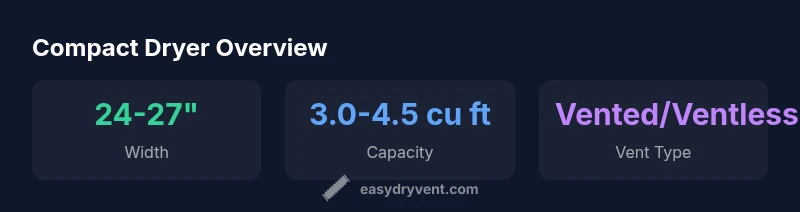
Compact dryers are defined by their ability to operate in tight spaces without sacrificing essential performance. Expect models in the 24-27 inch width range, with capacities typically around 3.0-4.5 cubic feet. This is enough for average weekly loads of mixed fabrics, cloth diapers, or small bedding items when space is at a premium. Look beyond raw capacity and examine drum design, moisture sensors, and accurate end-of-cycle indicators, which help prevent over-drying and fabric wear. Heights and depths vary by model, so measure the closet or laundry alcove carefully and account for door swing, venting clearances, and service access. For households with alternating indoor and outdoor living spaces, vented vs ventless options can influence installation practicality and running costs over time. In this context, Easy DryVent notes that ventless compact dryers can simplify placement but may extend cycle times on thicker items. Always confirm that the chosen unit fits through doorways and aligns with your ventilation strategy, whether you’re going with a traditional exhaust or a condensation-based solution.
Vented vs ventless: choosing the right setup for compact dryers
Vent options are a cornerstone of compact dryer selection. Vented units exhaust warm, moist air to the outdoors and often deliver shorter cycle times. They require a nearby vent path and space for vent hoses, but many consumers find a conventional duct route straightforward in single-family homes. Ventless models, by contrast, use condensation or heat-recovery techniques to remove moisture, which makes them ideal for apartments or rental spaces where external venting is impractical. However, ventless chemistry may result in longer drying times and sometimes higher energy use for dense loads. When possible, map your home’s venting constraints and power availability before shopping. Easy DryVent advises that for tight installations, ventless units are a lifeline—provided you accept the trade-offs in cycle length and potential humidity considerations in the laundry area. In all cases, verify that the exhaust path or condensation system complies with local codes and that the unit has accessible filters and cleanout ports for ongoing maintenance.
Energy efficiency and performance in small drying machines
Energy efficiency matters more in compact dryers than in larger models because every watt saved scales with the unit’s limited drum volume. Look for energy-saving features such as moisture sensing, low-heat cycles, and auto-shutoff to avoid over-drying. In practice, compact dryers with robust moisture sensors tend to deliver better fabric care and shorter overall run times for typical weekly loads. Compare energy guides and energy Star qualifications where available, but also consider real-world performance: a unit with a slightly longer cycle but better moisture detection can end up saving electricity and reducing heat buildup in a small room. Easy DryVent recommends prioritizing models with clear cycle descriptions and access to replacement parts, which supports long-term efficiency and ease of maintenance. Remember that installation layout can influence energy performance: a tight space with insufficient airflow may counteract even the most efficient design.
Installation, maintenance, and care for smaller clothes dryers
Installing a compact dryer requires accurate measurement of width, door clearance, and vent routing. Start by checking that your power outlet and circuit can support high-draw appliances, especially if you plan to stack the dryer with a companion washer. For vented models, ensure there is a clean, straight vent path to minimize lint buildup and reduce fire risk. Ventless units demand reliable condensate drainage or integrated moisture recovery systems; keep condensate reservoirs accessible for quick emptying. Routine maintenance is straightforward: clean lint filters after every cycle, inspect the vent hose for kinks, and schedule periodic lint-trap cleaning to maintain airflow. Easy DryVent emphasizes keeping a simple maintenance log, as small routine checks prevent bigger issues later and extend the life of compact units in spaces where airflow is already constrained.
Buying guide: selecting the best compact dryers for sale in 2026
When shopping for compact dryers for sale, start with your space, then compare cycle options, capacities, and venting constraints. Create a short list of models that fit the width of 24-27 inches and verify that the depth and height fit your footprint. Prioritize moisture sensing, multiple dryness levels, and auto-detect features that adjust time and temperature to the fabric type. If you live in a rental or a space with limited ventilation, lean toward ventless models with efficient condensation or heat-recovery systems. Check reviews that mention real-world performance with common loads, such as cotton towels and synthetic garments, to ensure reliable operation. Finally, confirm service availability and warranty coverage, as compact dryers range widely in build quality and after-sales support. This approach, guided by Easy DryVent’s buying framework, will help you pick a compact dryer for sale that meets your space, budget, and lifestyle needs.
questionShortMapToSentencesKeyForSeoAndVoicelinesCopyAsNeeded
Overview of common compact dryer configurations
| Aspect | Compact dryers | Notes |
|---|---|---|
| Width | 24-27 inches | Compact footprint designed for apartments and small laundry closets. |
| Capacity | 3.0-4.5 cu ft | Suitable for weekly loads of mixed fabrics. |
| Vent options | Vented and ventless | Depends on installation constraints and local codes. |
| Drying time | 30-60 minutes per cycle | Varies by model and moisture setting. |
Common Questions
What is the typical width of a compact dryer?
Most compact dryers are about 24 inches wide, with models ranging from 24 to 27 inches. Depths and heights vary by design, so always check the exact specs for your space.
Most compact dryers are around 24 inches wide, with a little variation. Always check the exact width for your space.
Should I choose a vented or ventless compact dryer?
Vented models exhaust moisture outside and usually finish cycles faster but require a vent path. Ventless models condense moisture inside or nearby and are ideal where venting is difficult, though cycles may take longer and some moisture remains in the room.
Vent or ventless? If you can vent, go with vented for speed; if not, ventless is a solid option.
Are compact dryers energy efficient?
Yes, many compact dryers offer moisture sensing and auto-shutoff to minimize energy use. Look for energy guides and any energy-star labeling, but verify real-world performance with reviews.
They can be energy savvy, especially with moisture sensing and smart cycles.
What installation considerations matter for compact dryers?
Measure space precisely, confirm doorway clearance, and ensure a suitable power outlet. If stacking with a washer, verify compatibility and install brackets per the manufacturer’s guidance.
Know your space, power needs, and stacking options before buying.
Do compact dryers reduce laundry capacity?
Compact dryers have smaller drum volumes, so you may run more frequent small loads. You can maximize capacity by sorting loads and avoiding overfilling, while selecting a model with efficient tumbling and cycle options.
You might run slightly more loads, but efficiency helps keep overall time similar.
“Compact dryers can deliver near-standard performance in tight spaces, but careful selection matters for reliability and energy use.”
Key Points
- Measure space before buying
- Choose vent type that fits your installation
- Prioritize moisture sensing for fabric care
- Look for energy-saving features and multiple cycles
- Ensure easy maintenance access