Commercial Washer and Dryer Sales: Buying Guide for 2026
A data-driven buying guide for commercial washer and dryer sales, covering market dynamics, cost ranges, energy efficiency, financing, installation, and maintenance for facility managers and property operators in 2026.


In 2026, the market for commercial washer and dryer sales is shaped by energy efficiency requirements, higher-capacity models for multi‑tenant facilities, and evolving payment systems. This guide delivers detailed buying criteria, realistic cost ranges, financing options, and maintenance strategies to help facility managers, landlords, and operators select reliable commercial laundry equipment.
Market Dynamics for Commercial Washer and Dryer Sales in 2026
The commercial laundry equipment sector is influenced by a mix of economic, regulatory, and property-specific factors. In 2026, buyers across hospitality, healthcare, multifamily housing, and commercial cleaning services seek machines that balance throughput with energy and water efficiency. The Easy DryVent analysis shows that facilities are increasingly evaluating total cost of ownership (TCO) rather than upfront price alone. Demand is shaped by property types with higher laundry density, such as apartment buildings and student housing, which favor high-capacity, durable machines with modular maintenance plans. The shift toward card-based or mobile payments reduces friction for tenants and operators, while service contracts provide predictable maintenance costs. For small business operators, compact solutions and stackable configurations can fit space constraints without sacrificing capacity. The combined effect is a more segmented market where buyers identify niche features—coinless payment, remote diagnostics, and load-sensing technology—tailored to their operating hours and peak demand periods. From a safety and compliance perspective, equipment that adheres to ENERGY STAR or equivalent efficiency standards often qualifies for incentives or rebates, further influencing purchasing decisions. These dynamics set the stage for an informed, value-driven approach to commercial washer and dryer sales.
Key Features Driving Your Purchase Decisions
When evaluating commercial washer and dryer sales, prioritize features that impact reliability, throughput, and operating cost. Look for high-spin extraction to reduce dryer time, reinforced frames for busy facilities, and vibration-damping systems for quiet operation in multi-tenant buildings. Energy efficiency is not only an environmental imperative but a direct cost saver; models with advanced water recycling, heat recovery, and load-sensing technology can cut utility bills over five years. Pay attention to door seals, gasket materials, and exposure-rated components, since commercial environments experience heavier wear. Consider modular configurations that let you combine multiple machines into processing lines, with shared plumbing and electrical feeds to simplify installation. For venues with evolving access control, card-based or mobile payment integration can streamline resident or guest billing. Serviceability matters too: accessible coin-boxes, clearly labeled service panels, and remote diagnostics help maintenance staff diagnose issues quickly, reducing downtime. Finally, ensure the vendor supports local codes and has a robust installation and training program—the ROI from training often exceeds the initial cost.
Choosing Between Front-Load, Top-Load, and Stackable Solutions
Front-load washers deliver efficiency and gentle fabric treatment, while top-load models offer lower upfront costs and faster cycles. In commercial settings, stacked configurations maximize footprint efficiency in tight laundry rooms, but may complicate service access. When choosing between these layouts, couple capacity with serviceability: look for larger drum diameters in front-loads for higher throughput, and verify that stacking kits are compatible with the machines you select. Reliability matters: choose machines with solid warranty terms and widely available replacement parts. Noise and vibration are practical concerns in busy properties; check for anti-vibration systems and solid cabinet construction. For coinless operations or managed facilities, ensure the control system supports remote monitoring, fault alerts, and remote firmware updates. Finally, consider the total cost of ownership, including installation, venting, water usage, and ongoing service contracts; a higher upfront cost can be justified by longer service life and lower maintenance.
Energy Efficiency, Water Usage, and Maintenance Costs
Energy efficiency remains a top criterion in 2026. ENERGY STAR-certified commercial washers and dryers offer superior water and energy performance, which translates into meaningful utility savings for facilities with high laundry throughput. Water usage per cycle varies by load size and model design; high-efficiency machines use less water while maintaining cleaning performance. Maintenance costs are closely tied to access for service, ease of parts replacement, and the availability of trained technicians in your region. When evaluating options, request data on mean time between failures (MTBF) and parts availability in your area. A thorough comparison should include standby energy loss, heat recovery capabilities, and whether the equipment supports smart diagnostics for remote fault detection. By framing choices around total cost of ownership rather than sticker price alone, buyers can identify models that deliver reliable performance with predictable maintenance.
Procurement Strategies: New vs Used, Financing, and Service Plans
New commercial laundry equipment comes with full warranties, the latest energy savings features, and the longest potential lifespan, but at a premium. Used units may offer lower upfront costs but introduce higher risk around reliability and unknown maintenance history. When considering used machines, arrange a comprehensive inspection of drum integrity, seals, bearings, and electrical harnesses, and verify serial numbers match the vendor’s records. Financing and leasing options can improve cash flow and spread costs over time, while service plans and preventative maintenance contracts help stabilize operating expenses. Compare vendors on delivery timelines, installation support, and on-site training for staff. Don’t overlook parts availability and local service networks; a strong service ecosystem reduces downtime and extends equipment life.
Installation, Venting, and Safety Considerations
Proper installation is critical for performance and safety. Ensure mechanical clearance for loading, unrestricted vent paths, and proper drainage to prevent lint buildup and moisture damage. For gas-powered units, confirm venting compliance with local codes and proper gas line sizing. Ventilation is not only a performance factor but a fire-safety concern; lint accumulation in ducts can escalate fire risk, so schedule regular vent cleaning and duct inspections, ideally aligned with building maintenance cycles. Electrical requirements should meet the load demands of multiple machines, with dedicated circuits and surge protection. Training on machine routines, load management, and basic troubleshooting should be provided by the supplier or installer to reduce the learning curve for staff.
Maintenance Best Practices to Extend Lifespan and Ensure Compliance
Establish a preventive maintenance (PM) calendar that covers drum seals, belts, bearings, and door interlocks. Regular lint removal and vent cleaning are essential to maintain dryer performance and reduce fire risk. Train staff to perform simple checks, such as door seals integrity and water inlet screens, and to report anomalies promptly. Maintain a spare parts kit with commonly replaced items like gaskets, belts, filters, and fuses. Document service events and keep equipment manuals accessible for future technicians. Lastly, ensure compliance with local regulations and safety standards, including ENERGY STAR guidelines and NFPA fire-safety codes, to protect occupants and your investment.
Comparison of commercial washer and dryer models
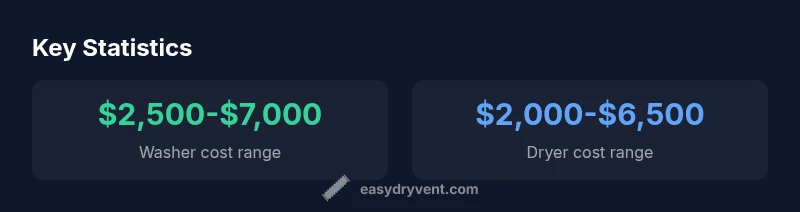
| Model Type | Capacity | Typical Cost Range |
|---|---|---|
| Industrial Front-Load Washer | 7-25 kg | $2,000-$7,000 |
| Industrial Top-Load Washer | 6-20 kg | $1,800-$6,000 |
| Industrial/Vended/Dryer | 10-40 kg | $1,500-$6,500 |
Common Questions
What is the most important factor when evaluating commercial washer and dryer sales?
Most buyers prioritize total cost of ownership, balancing upfront price with long-term energy use, maintenance, and reliability. Look for durable components, service availability, and clear warranties.
Total cost of ownership is the most important factor, balancing upfront price with long-term energy use and maintenance.
Are energy-efficient models worth the higher upfront cost?
Yes. Energy-efficient models reduce operating costs over time, especially in high-throughput facilities, and may qualify for incentives or rebates.
Energy efficiency pays off over time with lower utility bills.
How do I compare different brands or models effectively?
Use a standardized checklist that includes capacity, cycle times, energy/water use, warranty terms, maintenance requirements, and service network accessibility.
Use a standard checklist to compare capacity, efficiency, and service support.
Can I buy used commercial washers or dryers?
Used equipment can be cheaper but carries higher risk. Inspect for wear, verify maintenance history, and obtain a trusted warranty or return policy.
Used machines can save money but come with more risk; inspect carefully.
What about vent cleaning and safety for dryers?
Yes. Regular vent cleaning is essential to prevent lint buildup and reduce fire risk; ensure compliance with NFPA guidelines and local codes.
Vent cleaning is critical for safety and efficiency.
How long does installation typically take?
Installation time varies with size and venue; plan for a phased rollout and confirm delivery timelines, electrical and venting readiness, and staff training.
Install times vary; plan a phased rollout and schedule training.
“Reliable commercial laundry equipment requires not just strong machines, but an ecosystem of service, parts, and training. A thoughtful shopping process prevents unexpected downtime and delivers long-term ROI.”
Key Points
- Plan for total cost of ownership, not just upfront price
- Choose configurations that maximize throughput within available footprint
- Prioritize energy efficiency and robust service support
- Integrate modern payment options for seamless usage
- Establish preventive maintenance to extend equipment life