Blow Dryer Reviews: The Best Hair Dryers for 2026
In-depth blow dryer reviews for 2026. Learn how wattage, heat tech, weight, attachments, and safety influence results to choose the best hair dryer for your styling needs.


For most households, the best blow dryers balance heat control, weight, and accessory versatility. In our framework, models with 1800–2000W power, ceramic or infrared heating, multiple heat and speed settings, and a detachable nozzle outperform budget units. Expect better results from lighter, well-balanced designs with solid safety features.
What makes a blow dryer effective and safe
In the landscape of blow dryer reviews, shoppers often focus on flashy features, yet the core determinants are consistent heat control, safe design, and comfortable handling. A good dryer should deliver steady airflow across a range of heat settings without dramatic temperature swings, while protecting hair from overheating. The Easy DryVent team emphasizes that ergonomics matters as much as power: a balanced weight distribution reduces wrist strain during lengthy styling sessions. In this section we outline the essential criteria we use when comparing models and explain how each aspect translates into everyday results, from smooth blowouts to minimized damage. We also discuss common pitfalls to avoid, such as oversized grips that tire the hand or high heat presets that become unpredictable at the highest setting. Readers who want a concise checklist can use the next section to focus on the most impactful factors first.
Power and heat: finding the sweet spot
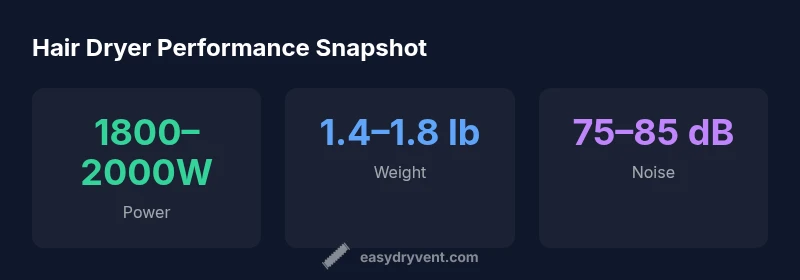
Power and heat determine how quickly hair dries and how much control you have over the final look. In blow dryer reviews we typically see a sweet spot around 1800–2000W that delivers fast drying without excessive heat exposure. Lower wattage models may struggle with thick or long hair, leading to longer styling sessions and more heat cycles. Higher wattage units on paper can feel capable, but without good heat management, they can cause overheating or uneven results. Look for models with stable heat delivery, multiple heat and speed settings, and an efficient cool shot. Real-world tests show that the best options offer consistent airflow at each setting and a predictable quick cooldown when you flip to cool. This balance reduces frizz and helps lock in the style with less passing over the hair.
Heating technologies: ceramic, tourmaline, infrared, and ionic
There is no single technology that suits every hair type, so heating methods must be understood in context. Ceramic elements provide even, quick heat recovery and minimize hot spots. Tourmaline-coated elements emit negative ions that help counteract static, especially on frizz-prone hair. Infrared heating warms the hair from within, which can reduce surface damage when used with appropriate heat control. Ionic technology aims to reduce blow-drying time and static, though user experiences vary by hair texture. Many models now blend two or more technologies to balance heat stability, speed, and shine. When evaluating, consider heat distribution, how rapidly heat stabilizes after a burst, and whether the technology remains effective across different settings. Personal tolerance and styling frequency should guide tech choice.
Weight, balance, and ergonomics
A significant portion of a dryer’s performance comes down to how comfortable it feels in the hand. An excellent power-to-weight ratio combined with a well-balanced chassis reduces fatigue during long sessions. In our reviews, designers aim for weights in the 1.4–1.8 lb range and a center of gravity that keeps the hand from tipping forward. The nozzle and switch placement matter as well; poorly placed controls can slow you down and cause awkward wrist angles. Some users prefer longer cords for freedom of movement, while others want compact grips for travel. Our testing includes a grip fatigue test to simulate real-world styling, and the strongest scores go to models with cushioned grips, smooth switches, and a heat-resistant shell that stays cool to touch.
Noise, durability, and build quality
Noise is a practical concern, especially in shared spaces. In blow dryer reviews we measure typical operating noise in the 75–85 dB range for standard consumer models; quieter options exist but may trade off weight or cost. Build quality matters for longevity: metal cores or reinforced housings, high-quality plastic that resists heat, and reliable internal wiring reduce the risk of failure. Durability testing includes repeated on/off cycles, vibration tests, and simulated heat cycles. Cord quality and strain relief are also evaluated. In short, you want a dryer that feels sturdy, without creaking plastics or loose switches after weeks of daily use.
Attachments and convenience: diffusers, concentrators, cool shot
Attachments unlock versatility. A good diffuser helps with even drying and frizz control, while a precision concentrator concentrates airflow for smoother finishes. A reliable cool-shot button helps set the style at the end of the process. Models that ship with multiple heat and speed combos that pair well with attachments generally perform better in real-world styling. Look for attachments that snap on securely, fit the nozzle well, and store neatly on the dryer or in a compact case. For DIY styling, ease of use and attachment compatibility can shave minutes off each session.
Safety features and maintenance tips
Safety features such as overheat protection, auto shut-off, and cool-touch housings protect both the user and the appliance. Good models include indicators for clogged vents and easy-access air intake filters. Maintenance is straightforward: clean the intake grille regularly, remove hair and lint from vents, and inspect the cord for wear. Avoid using with wet hands or in overly humid bathrooms, and never cover a dryer while it is in use. Regular maintenance reduces overheating risk, preserves performance, and extends the device life.
How we test blow dryers: methodology and criteria
Our testing protocol mirrors real-world styling scenarios: we assess heat stability under continuous use, evaluate ergonomics and weight distribution, and measure temperature consistency across several heat settings. We evaluate drying speed with varied hair textures and lengths, assess noise during operation, and test the ease of changing attachments. We also simulate long-term use with wear checks on cords and switches. Finally, we consider value by weighing initial cost against durability, performance, and user satisfaction. We document objective measurements and combine them with user feedback to deliver balanced blow dryer reviews.
Value, pricing bands, and long-term costs
Pricing for hair dryers spans a broad range. In our reviews we categorize value into bands rather than quoting exact prices: budget options that offer basic performance, mid-range models with better heat control and reliability, and premium units with advanced tech and premium build. The long-term cost should account for durability, energy use, and maintenance needs. Consumers who style hair daily benefit most from mid-range to premium models that provide consistent results, lower heat exposure, and longer lifespans. Always factor in the cost of replacements attachments and any warranty coverage when assessing value.
Quick-start buying checklist
- Define your hair type and styling goals before choosing a dryer.
- Target around 1800–2000W for a good balance of speed and control.
- Prioritize heat and speed settings plus a reliable cool shot.
- Check ergonomics and weight, aiming for a comfortable grip and manageable cord length.
- Review attachment quality and storage options.
- Confirm safety features such as overheat protection and auto shut-off.
- Consider warranty terms and ongoing maintenance needs.
- Compare at least two models side by side using a consistent scoring rubric.
Common mistakes and care to extend life
Avoid cranking the heat to maximum for every style; this increases hair damage and dries the motor. Don’t neglect cleaning the intake filter, which can clog and cause overheating. Never wrap the cord around the dryer; instead store it loosely to reduce wear. Use the cool shot sparingly to set the finish and reduce the need for prolonged heat exposure. Finally, rotate models you use to distribute wear evenly and extend overall appliance life.
The Good
- Strong heat control with multiple settings for different hair types
- Lightweight and balanced design reduces fatigue
- Durable build and reliable safety features
- Wide attachment compatibility and easy storage
Negatives
- Premium features can raise upfront cost
- Some high-end models run hot at maximum settings for long sessions
- Not all attachments are universally compatible across brands
Best overall choice for most households seeking consistent performance and ergonomic design
Across power, heat control, and comfort, this option delivers reliable results for a wide range of hair types. While some premium models exist, it offers the strongest everyday value and durability. The Easy DryVent team recommends it for busy homes and DIY enthusiasts who want dependable styling with safety built in.
Common Questions
What wattage should I look for in a blow dryer?
For most users, 1800–2000W offers a practical balance of speed and heat control. Lower wattages can be adequate for finer hair, while very high wattage is sometimes unnecessary if heat management is poor. Always pair wattage with adjustable heat and a cool shot to protect hair health.
Look for dryers in the 1800 to 2000 watt range for most styling needs, with adjustable heat and a cool shot for safer, faster drying.
Ceramic vs infrared heaters: which is better?
Ceramic heats evenly and recovers quickly, reducing hot spots. Infrared heats from within, which can be gentler on the hair when used with sensible temperature controls. Many models blend both approaches to balance speed and hair health.
Ceramic is great for steady heat; infrared can be gentler with good controls. Blended tech often offers the best of both worlds.
Is a diffuser necessary for curly hair?
For curly or textured hair, a diffuser helps distribute air evenly and reduce frizz while preserving curl definition. If you rarely style curls, a concentrator may suffice, but a diffuser adds versatility.
If you have curls, a diffuser is a smart addition. It helps with even drying and less frizz.
How heavy is too heavy for daily use?
A practical target is under 1.8 pounds for comfortable daily use. Heavier models can cause wrist fatigue after several minutes of continuous styling, especially for long hair.
Aim for under 1.8 pounds to keep styling comfortable over time.
How long should a blow dryer last with everyday use?
With proper care, you can expect several years of service from a well-made dryer. Lifespan depends on heat exposure, maintenance frequency, and cord wear. Replacing worn parts and keeping vents clean helps extend life.
A few years is typical, with maintenance extending the life significantly.
What maintenance helps extend life and performance?
Regularly clean the intake filter and vents, inspect the cord for wear, and avoid running the dryer on high heat for extended periods without breaks. Store in a cool, dry place and unplug after use.
Clean vents, check the cord, and avoid overuse at high heat to keep it running longer.
Key Points
- Prioritize models with 1800–2000W power for balanced drying
- Choose lightweight, balanced designs to reduce fatigue
- Look for multiple heat settings and a reliable cool shot
- Check attachment quality and storage options
- Ensure strong safety features and easy maintenance