Are Dryers All the Same Width? A Practical Guide
Explore how dryer widths vary between full-size and compact models, how width affects installation, venting, and space planning. Learn to measure accurately with practical tips from Easy DryVent.


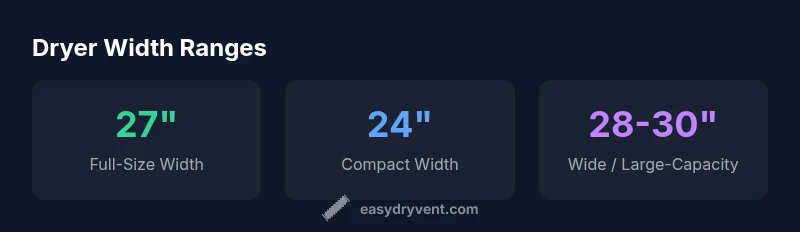
Are all dryers the same width? Not at all. Standard full-size models typically run around 27 inches wide, while compact apartment machines are commonly 24 inches. Some high-capacity or specialty dryers reach 28–30 inches. Width also interacts with depth, vent location, and door clearance, so always measure your space and compare exact specs rather than assuming a single universal width. Easy DryVent provides practical measurement guidance for safe, efficient installation.
Why Width Matters for Dryers
Are you wondering if all dryers are the same width? Not at all. Width choices reflect the model family, space constraints, and installation needs. Easy DryVent's field observations show that width differences influence everything from cabinet clearance to vent routing. In practice, a 27-inch full-size dryer will typically fit in a standard laundry alcove, but if you have a tight closet or want to stack with a washer, you may be looking at 24 inches for a compact model or slightly wider units for high-capacity designs. This is not trivia; width determines how you place the appliance, which doors you can open fully, and what kind of vent path is required. Homeowners who assume uniform width risk having to redo or reconfigure the entire laundry layout. For homeowners and DIY enthusiasts, understanding width is a first-principles decision that saves time and reduces retrofit costs. Throughout this guide, we will compare widths, discuss installation considerations, and offer practical measurement tips that reflect real-world layouts, space constraints, and venting requirements.
Full-Size vs Compact: Width Basics
Full-size, freestanding dryers typically measure around 27 inches wide, which is the standard in many homes and apartment buildings. Compact or apartment models are commonly 24 inches wide, designed to fit tighter closets and stack with washers that share similar width. Some high-capacity or premium lines push toward 28-30 inches to accommodate larger drums or special features, but such widths are less common in small spaces and require careful planning. When you compare models, also consider depth, door swing, and whether it’s a front-loading or top-loading configuration, since those factors interact with width to determine overall space needs. The Easy DryVent approach is to always align width with available clearance rather than assume your existing washer’s width will match the dryer. This helps prevent layout conflicts and ensures you can access doors and vents without obstruction.
Measuring Your Space: A Practical Guide
Start by measuring the rough opening: measure the width inside cabinets or alcoves from trim to trim, not just the appliance's nominal width. Record the narrowest clear width; subtract at least 1/4 inch for ventilation clearance and ease of installation, then add a buffer for door swing and vent hoses. Next, check the depth: most full-size units protrude about 30 inches, while compact models are typically shallower; confirm your cabinet depth so the machine does not protrude into the room. Also measure where the vent and exhaust path will exit the cabinet; a side vent or rear vent route may require extra space behind the unit. Finally, verify the space above the dryer for any lint traps, exhaust ducting, or heat vents. The goal is to avoid any tight spots that could impede the dryer’s door opening or vent path. With accurate measurements, you’ll narrow to width options that fit without costly modifications.
Venting, Doors, and Clearance: How Width Impacts Installation
Width is not just a number; it shapes the entire installation. A slightly wider unit demands more cabinet clearance and can affect the door swing room for both the dryer and the adjacent washer. Venting configuration matters too: some models need a rear exhaust with a straight path, while others offer side exhausts that demand more space behind the unit. If you’re installing a stacked configuration, alignment of widths across units matters; misalignment can cause gaps, air leaks, or difficulty removing lint. Always consult the manufacturer’s installation guide for required clearances around the sides and back; these specs are model-specific and can vary by airflow needs or vent diameter. In tight closets, consider doors that open outward rather than inward, or plan for a swing path that doesn’t collide with cabinetry. A thoughtful layout reduces the risk of heat buildup, improves efficiency, and helps prevent service calls later on.
Buying Guide: How to Choose the Right Width
Begin with a space plan: map the width you have available, plus the required clearance for doors and vents. If you’re replacing an old unit, measure the current width and compare against your desired new model; if you’re installing in a new space, start with an opening that fits standard 27-inch units and then look for compact options if needed. When shopping, review the product specs for exact width, and don’t rely on model family promises. Consider whether you will vent through the back, side, or top, which can influence the width needed for a clean install. If you intend to stack, verify that the stackable kit maintains width parity and aligns with your washer. Finally, balance width with other factors like energy efficiency, drum capacity, and noise. Easy DryVent recommends documenting your measurements and model options in a simple grid to compare widths side-by-side, avoiding last-minute surprises during installation.
Common Myths About Dryer Width
Myth 1: A dryer's width equals its space requirement in every room. Reality: the enclosure, vent path, and door orientation can alter the actual space needed. Myth 2: All wide dryers will not fit in small closets. Reality: many manufacturers offer 24-inch compact models that fit tight spots, and some 27-inch units can be slimmed through precise placement and venting planning. Myth 3: If you have enough space, width doesn’t matter. Reality: broader units often require larger rear vents and more robust ductwork, affecting airflow and performance. By busting these myths, you can focus on concrete plan changes, like adjusting cabinet depth, opening the closet, or choosing a model that better matches the available space.
Quick Reference: Width Ranges by Model Type
Here’s a concise reference you can bookmark when shopping: - Compact (Apartment): 24 inches wide. - Standard Full-Size: 27 inches wide. - Wide-Profile / Large-Capacity: 28-30 inches wide. Notice that most single units and stacked setups still center around standard widths; the real constraint often lies in depth, height, or vent routing rather than width alone. Use this range as a starting point, but always verify exact figures in the product specs, since manufacturers may use different cabinet designs or vent positions.
Width ranges by common dryer model types
| Model Type | Typical Width | Notes |
|---|---|---|
| Compact (Apartment) | 24 inches | Best for tight spaces |
| Standard Full-Size | 27 inches | Most common in residential spaces |
| Wide-Profile / Large-Capacity | 28-30 inches | Higher capacity and features |
Common Questions
Are standard dryer widths the same across brands?
No. While 27 inches is common for standard full-size models, exact widths vary by model and brand. Always check the product’s specification sheet before purchasing.
Widths vary by model and brand—always check the exact specs before you buy.
What width is typical for a compact dryer?
Most compact or apartment dryers are around 24 inches wide, but some models may be slightly wider or narrower. Always confirm the exact width in the model specs.
Most compact dryers are about 24 inches wide; verify the exact number in the specs.
Do width differences affect venting and installation size?
Yes. Width can influence how you route the vent and how much clearance you need for doors and cabinets. Check the installation guide for model-specific requirements.
Width can change vent paths and clearance needs—look at the installation guide for your model.
Can I modify a dryer’s width with trim kits?
No. Trim kits do not change the actual width of a dryer. If the width is a tight fit in your space, you’ll need a model that matches your opening.
Trim kits won’t change width—choose a model that fits your space.
How should I measure for a new dryer?
Measure the opening width, cabinet depth, door clearance, and vent path. Compare measurements to the exact width specs of potential models before buying.
Measure the opening and compare it to the model specs—don’t rely on guesswork.
“Width is a practical constraint that shapes every other design decision in laundry spaces. Measure once and plan around it for the best fit, venting, and accessibility.”
Key Points
- Measure your space before you shop
- Most households fit a 27-inch full-size or a 24-inch compact dryer
- Width interacts with venting, clearance, and door swing—plan accordingly
- Stacking or compact options offer space-saving flexibility
- Always verify exact width in product specs and installation guides